


Effects of a trans- or cis-cyclohexane unit on the thermal and rheological properties of semi-aromatic polyamides
文献信息
发布日期
2015-11-04
DOI
10.1039/C5PY01634G
影响因子
5.582
作者
Gang Zhang, Guang-Ming Yan, Hao-Hao Ren, Yan Li, Xiao-Jun Wang
查看原文
摘要
Semi-aromatic monomers containing a cyclohexane unit, prepared using a facile interfacial reaction method from 1,4-cyclohexanediamine (trans- or cis-) and 4-fluorobenzoyl chloride (4-FBC) at room temperature, were reacted with 1,1-bis(4-hydroxyphenyl)-1-phenylethane (BHPPE) to afford two kinds of semi-aromatic polyamide (BH-trans-BFCD and BH-cis-BFCD) in this work. An investigation of thermal properties confirmed high glass transition temperatures (Tg) of 224–265 °C and good thermal stability with initial degradation temperatures (Td) of 445 to 450 °C for the synthesized semi-aromatic polyamides, which were determined by differential scanning calorimetry (DSC) and thermogravimetric analysis (TGA) characterization. It was found that the properties (thermal and mechanical) of BH-trans-BFCD, containing a trans-conformation, were much better than those of BH-cis-BFCD, containing a cis-conformation. Comparing the thermal stability of the resultant semi-aromatic polyamides with a commercial product, PA6T-Dupont, the prepared polyamides treated at 220 °C for 7 h displayed a slightly reduced tensile strength as well as a smaller change in color. According to rheological testing, they were found to have better melt flowability (complex viscosities ranged from 210 to 3070 Pa s at 310 °C to 360 °C). Additionally, their thermal degradation kinetics and the thermal pyrolysis mechanism of these semi-aromatic polyamides were investigated by thermogravimetric analysis and Pyrolysis/Gas Chromatography/Mass (Py-GC/MS) analysis, which further indicated their higher thermal stability and processability.
期刊推荐
Chemistry of Heterocyclic Compounds
Doklady Chemistry
Journal of the American Chemical Society
Anti-Corrosion Methods and Materials
Chemical & Pharmaceutical Bulletin
Corrosion Science
Journal of the Chinese Chemical Society
Ferroelectrics
Advances in Colloid and Interface Science
Australian Journal of Chemistry
相关文献
Spin–orbit coupling as a probe to decipher halogen bonding
Jérôme Graton, Seyfeddine Rahali, Jean-Yves Le Questel, Gilles Montavon, Julien Pilmé, Nicolas Galland
2018-10-08
Paper
DOI: 10.1039/C8CP05690K
Oscillations of pH in the urea–urease system in a membrane reactor
František Muzika, Matěj Růžička, Lenka Schreiberová, Igor Schreiber
2019-04-02
Communication
DOI: 10.1039/C9CP00630C
How does the electric current propagate through fully-hydrogenated borophene?
Jutao Jiao, Yusheng Hou, Hui Wang, Dapeng Wu, Tianxing Wang, Zhaoming Fu, Guoliang Xu, Ruqian Wu
2018-07-30
Paper
DOI: 10.1039/C8CP04272A
Ionized water confined in graphene nanochannels
Belisa R. H. de Aquino, H. Ghorbanfekr-Kalashami, M. Neek-Amal, F. M. Peeters
2019-03-22
Paper
DOI: 10.1039/C9CP00075E
Polarized absorbance and Davydov splitting in bulk and thin-film pentacene polymorphs
Caterina Cocchi, Tobias Breuer, Gregor Witte, Claudia Draxl
2018-11-14
Paper
DOI: 10.1039/C8CP06384B
DNA-binding mechanism of spiropyran photoswitches: the role of electrostatics
Davide Avagliano, Pedro A. Sánchez-Murcia, Leticia González
2019-02-15
Communication
DOI: 10.1039/C8CP07508E
Self-adaptive multiscaling algorithm for efficient simulations of many-protein systems in crowded conditions
2018-10-29
Paper
DOI: 10.1039/C8CP05517C
Elucidating the morphological aspects and proton dynamics in a hybrid perfluorosulfonic acid membrane for medium-temperature fuel cell applications
Saeed Akbari, Mohammad Taghi Hamed Mosavian, Fatemeh Moosavi, Ali Ahmadpour
2018-11-05
Paper
DOI: 10.1039/C8CP05377D
Solvation of 2-(hydroxymethyl)-2,5,7,8-tetramethyl-chroman-6-ol revealed by circular dichroism: a case of chromane helicity rule breaking
Joanna E. Rode, Marcin Górecki, Stanisław Witkowski, Jadwiga Frelek
2018-08-15
Paper
DOI: 10.1039/C8CP02491J
您可能还喜欢
化合物问答
如何储存1,2-环己二酮环乙缩醛(CAS号:4746-96-7)?
1,2-环己二酮环乙缩醛应储存在阴凉、干燥、通风良好的地方,避免阳光直射。建议使用密封容器保存,并保持环境温度在室温范围内,远离火源和热源。
4746-96-71,4-Dioxaspiro[4.5]d...
化合物问答
Ecopladib(CAS号:381683-92-7)的市场或研究趋势如何?
Ecopladib作为一种新型的药物,主要应用于治疗高胆固醇等疾病。目前,市场和研究趋势显示,Ecopladib因其独特的药理作用而受到关注。随着对心血管疾病治...
381683-92-7Ecopladib
化合物问答
2,3-Dimethyl-3H-imidazo[4,5-c]pyridine(CAS号:52538-09-7)通常如何合成?
2,3-二甲基-3H-咪唑[4,5-c]吡啶通常通过咪唑和2,3-二甲基吡啶的缩合反应合成。具体来说,将咪唑和2,3-二甲基吡啶在适当的溶剂中进行加热或加压反应...
52538-09-72,3-Dimethyl-3H-imid...
化合物问答
2,3,4,5-tetrahydro-1H-3-苯并氮杂环;盐酸盐(CAS号:17379-01-0)的市场或研究趋势如何?
该化合物在药物化学和有机合成中有一定的应用。近年来,随着对新型药物化合物的需求增加,该化合物的研究趋势主要集中在探索其生物活性,尤其是其在神经系统疾病治疗中的潜...
17379-01-02,3,4,5-Tetrahydro-1...
68-90-6(2-Ethyl-1-benzofura...
化合物问答
如何储存盐酸甘氨酸丁酯(CAS号:13048-99-2)?
盐酸甘氨酸丁酯应储存在阴凉、干燥、通风良好的地方,避免阳光直射和高温环境,温度应控制在25℃以下。储存容器应密封,避免与空气中的水分和酸性物质接触,以防发生水解...
13048-99-2Butyl glycinate hydr...
化合物问答
什么是2-Iodo-N,N-dimethylbenzamide(CAS号:54616-46-5)?
2-碘-N,N-二甲基苯胺是一种有机化合物,化学名为2-Iodo-N,N-dimethylbenzamide。其分子式为C<sub>9</sub>H<sub>1...
54616-46-52-Iodo-N,N-dimethylb...
16817-90-6N-Cyclohexylglycinam...
化合物问答
5-溴-2-(4H-1,2,4-三唑-4-基)吡啶(CAS号:959240-99-4)的市场或研究趋势如何?
随着医药、农药和新材料领域的发展,该化合物作为关键中间体的应用日益增多。特别是在药物合成中,由于其独特的化学性质,可以用于合成多种药物分子。未来的研究趋势可能集...
959240-99-45-Bromo-2-(4H-1,2,4-...
化合物问答
2,4-二溴-6-三氟甲基嘧啶(CAS号:785778-00-9)通常如何合成?
2,4-二溴-6-三氟甲基嘧啶通常通过溴化反应合成。首先,将6-三氟甲基嘧啶与溴化剂(如液溴)在适当的溶剂(如二氯甲烷、四氢呋喃)中反应,加入适当的催化剂(如四...
785778-00-92,4-Dibromo-6-(trifl...
来源期刊
Polymer Chemistry

CiteScore:
8.6
自引率:
7.3%
年发文量:
457
Polymer Chemistry welcomes submissions in all areas of polymer science that have a strong focus on macromolecular chemistry. Manuscripts may cover a broad range of fields, yet no direct application focus is required.
推荐化合物
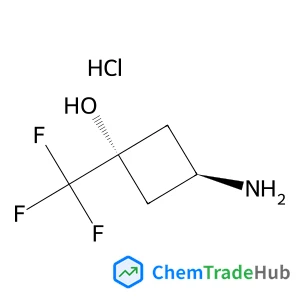
推荐供应商





免责声明
本页面提供的学术期刊信息仅供参考和研究使用。我们与任何期刊出版商均无关联,也不处理投稿事宜。如有投稿相关咨询,请直接联系相关期刊出版商。
如发现页面信息有误,请发送邮件至 support@chemtradehub.com 联系我们。我们将及时核实并处理您的问题。