



Synthesis and in vitro properties of iron oxide nanoparticles grafted with brushed phosphorylcholine and polyethylene glycol
文献信息
发布日期
2016-02-05
DOI
10.1039/C5PY02024G
影响因子
5.582
作者
Thomas Blin, Emily H. Pilkington, Angela Ivask, Feng Ding, John F. Quinn, Michael R. Whittaker, Pu Chun Ke
查看原文
摘要
Polyethylene glycol (PEG) is an established grafting agent for engineered materials deployed in aqueous environments including biological systems. Phosphorylcholine (PC) has shown promise as a viable strategy for enhancing the biofunctionality of surfaces and structures. Here we developed a new and facile strategy for grafting superparamagnetic iron oxide nanoparticles (IONPs) by phosphonic acid terminated poly(2-(methacryloyloxy)ethyl phosphorylcholine) brushes, synthetized by reversible addition–fragmentation chain transfer (RAFT) polymerization. Properties of covalently bound IONPs with PC, PEG or PEG : PC brush-like structures via a “grafting onto” approach through robust bidentate Fe–O–P bonds were compared. The presence of modified polymers on the functionalized IONP surfaces was proved using both ATR-FTIR and TGA. The resultant synthesized IONPs were characterized for their physicochemical and biological aspects. Interestingly, compared with PEG combs, specifically, PC brushes rendered comparable or enhanced suspendability, stability, biocompatibility and cellular distribution. We attribute these characteristics to the biomimetic nature and larger polarity of PC in contrast to the synthetic and hydrophilic PEG. These synthesis strategies and characterizations may prove beneficial to the design and applications of IONPs in nanobiotechnology and nanomedicine.
相关文献
Protonation structure of the photosynthetic water oxidizing complex in the S0 state as revealed by normal mode analysis using quantum mechanics/molecular mechanics calculations
Masao Yamamoto, Shin Nakamura, Takumi Noguchi
2020-10-15
Paper
DOI: 10.1039/D0CP04079G
Strong and efficient doping of monolayer MoS2 by a graphene electrode
Zuzana Melnikova-Kominkova, Katerina Jurkova, Vaclav Vales, Karolina Drogowska-Horná, Otakar Frank, Martin Kalbac
2019-11-05
Paper
DOI: 10.1039/C9CP04993B
Ultrafast pump–probe spectroscopy of neutral FenOm clusters (n, m < 16)
2020-10-16
Paper
DOI: 10.1039/D0CP03889J
Optical fingerprint of bright and dark localized excitonic states in atomically thin 2D materials
Maja Feierabend, Samuel Brem, Ermin Malic
2019-11-13
Paper
DOI: 10.1039/C9CP05763C
Mechanistic insights into the phenomena of increasing capacity with cycle number: using pulsed-laser deposited MoO2 thin film electrodes
Michael Fenech, Sean Lim, Jeffrey Cheung, Neeraj Sharma
2019-11-02
Paper
DOI: 10.1039/C9CP05718H
Designing the disorder: the kinetics of nonisothermal crystallization of the orientationally disordered crystalline phase in a nematic mesogen
Małgorzata Jasiurkowska-Delaporte, Maria Massalska-Arodź, Yasuhisa Yamamura, Kazuya Saito
2020-09-28
Paper
DOI: 10.1039/D0CP04002A
Enhancing the luminescence of carbon nanodots in films by tailoring the functional groups through alkylamine-functionalization and reduction
Minsu Kim, Phil Woong Kang, Sunjoong Park, Duk Young Jeon, Hyunjoo Lee
2019-11-07
Paper
DOI: 10.1039/C9CP05241K
Single-molecule kinetic studies of DNA hybridization under extreme pressures
2020-10-05
Paper
DOI: 10.1039/D0CP04035E
From the Linnett–Gillespie model to the polarization of the spin valence shells of metals in complexes
David I. Ramírez-Palma, Fernando Cortés-Guzmán
2020-08-04
Paper
DOI: 10.1039/D0CP02064H
Site energy distribution of sodium ions in a sodium rubidium borate glass
Martin Schäfer, David Budina, Karl-Michael Weitzel
2019-11-21
Paper
DOI: 10.1039/C9CP05194E
您可能还喜欢
化合物问答
P11(CAS号:848644-86-0)安全吗?
P11作为一种化学化合物,需要谨慎处理。一般来说,该化合物无毒,但在操作过程中仍需遵循实验室安全规定,避免皮肤接触和吸入。建议在通风良好的环境中操作,并佩戴适当...
848644-86-0L-Histidyl-L-seryl-L...
化合物问答
氨甲环酸杂质C(CAS号:330838-52-3)通常如何合成?
氨甲环酸杂质C通常通过氨甲环酸的衍生物与环己烯进行缩合反应合成。常见的合成方法包括一步合成法和多步合成法,其中多步合成法可以提高产物的选择性和产率。反应通常在无...
330838-52-34-(Aminomethyl)-1-cy...
化合物问答
(±)-茉莉酸(CAS号:221682-41-3)通常如何合成?
(±)-茉莉酸的合成通常采用生物合成或者化学合成的方法。化学合成方法中,可以通过2-戊烯-1-醇与环戊酮的缩合反应,再经过氧化反应得到目标产物。该反应需要温和的...
221682-41-3{3-Oxo-2-[(2E)-2-pen...
化合物问答
(4S,4'S)-2,2'-(1,1-环己烷二基)双(4-异丙基-4,5-二氢-1,3-噁唑)(CAS号:1373357-00-6)安全吗?
(4S,4'S)-2,2'-(1,1-环己烷二基)双(4-异丙基-4,5-二氢-1,3-噁唑)属于有机化合物,应遵循实验室安全规范。在操作时应佩戴适当的个人防护...
1373357-00-6(4S,4'S)-2,2'-(1,1-C...
化合物问答
什么是6-苄氧基-5-甲氧基-2-羧基吲哚(CAS号:2495-92-3)?
6-苄氧基-5-甲氧基-2-羧基吲哚是一种有机化合物,分子式为C16H15NO3。它是一种含有苄氧基、甲氧基和羧基官能团的吲哚衍生物。
2495-92-36-(Benzyloxy)-5-meth...
化合物问答
丙二酸丁酯乙酯(CAS号:17373-84-1)安全吗?
丙二酸丁酯乙酯属于易燃物质,具有一定的毒性。在操作时应佩戴防护眼镜和手套,避免接触皮肤和眼睛。储存时应远离热源和火源,避免阳光直射,以减少火灾和爆炸的风险。
17373-84-1Butyl ethyl malonate
化合物问答
2-碘-3-甲基吡嗪(CAS号:58139-08-5)的市场或研究趋势如何?
2-碘-3-甲基吡嗪作为一种特殊结构的化合物,目前在工业和学术研究中的应用相对有限。然而,随着对特定化学结构及其潜在应用的深入研究,预计未来可能在农药、医药等领...
58139-08-52-Iodo-3-methylpyraz...
化合物问答
千层纸素A-7-0-β-D-葡萄糖醛酸苷甲酯(CAS号:82475-01-2)的物理化学性质是什么?
千层纸素A-7-0-β-D-葡萄糖醛酸苷甲酯是一种白色结晶固体,分子量为616.27 g/mol。该化合物在水中溶解度较低,在有机溶剂中溶解度较高。其反应活性主...
82475-01-25-Hydroxy-8-methoxy-...
化合物问答
什么是7-苄基-4,7-二氮杂螺[2.5]辛烷(CAS号:1222106-45-7)?
7-苄基-4,7-二氮杂螺[2.5]辛烷是一种有机化合物,其结构由一个环状的7-苄基-4,7-二氮杂螺环和一个苯基组成。该化合物的分子式为C14H16N2。它具...
1222106-45-77-Benzyl-4,7-diazasp...
化合物问答
在合成中是否有丁酰胺酸甲酯(CAS号:53171-39-4)的替代品?
丁酰胺酸甲酯的合成中可能的替代品包括其他氨基酸衍生物,如乙酰胺酸甲酯或丙酰胺酸甲酯。这些替代品在某些合成路线中可能更为便利或成本更低。
53171-39-4Methyl 4-amino-4-oxo...
来源期刊
Polymer Chemistry

CiteScore:
8.6
自引率:
7.3%
年发文量:
457
Polymer Chemistry welcomes submissions in all areas of polymer science that have a strong focus on macromolecular chemistry. Manuscripts may cover a broad range of fields, yet no direct application focus is required.
推荐化合物
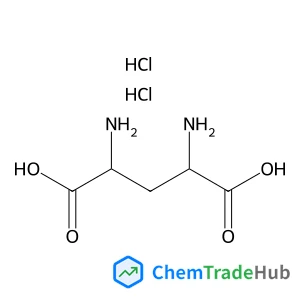
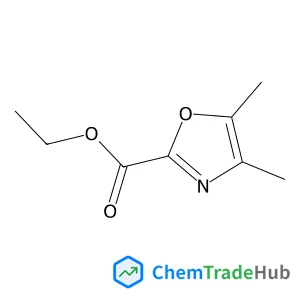
![5-Chloropyrrolo[2,1-f][1,2,4]triazin-4(3H)-one structure](https://cnstatic.chemtradehub.com/structs/888/888720-60-3-4f7c.webp "5-Chloropyrrolo[2,1-f][1,2,4]triazin-4(3H)-one structure")
推荐供应商





免责声明
本页面提供的学术期刊信息仅供参考和研究使用。我们与任何期刊出版商均无关联,也不处理投稿事宜。如有投稿相关咨询,请直接联系相关期刊出版商。
如发现页面信息有误,请发送邮件至 support@chemtradehub.com 联系我们。我们将及时核实并处理您的问题。