






![2-Methyl-2-propanyl [2-(2-oxa-6-azaspiro[3.3]hept-6-yl)ethyl]carbamate structure](https://cnstatic.chemtradehub.com/structs/141/1415562-38-7-c0a4.webp "2-Methyl-2-propanyl [2-(2-oxa-6-azaspiro[3.3]hept-6-yl)ethyl]carbamate structure")
2-Methyl-2-propanyl [2-(2-oxa-6-azaspiro[3.3]hept-6-yl)ethyl]carbamate
CAS号:
1415562-38-7
分子式:
C12H22N2O3
Elizabeth N. Ndunda, Boris Mizaikoff
Synthetic receptors and in particular molecularly imprinted polymers (MIPs) are gaining relevance as selective sorbent materials and biomimetic recognition elements for analyzing polychlorinated aromatic compounds (PACs) in the environment. PACs are still ubiquitous toxic pollutants requiring their continuous environmental assessment for protecting humans and animals from exposure. Since nowadays most PACs occur at ultra-trace concentration levels and in complex matrices, the selectivity of MIPs renders them ideally suited for facilitating either sample pre-treatment and quantitative enrichment, or acting as biomimetic recognition elements as an integral component of corresponding sensing schemes. Due to the diversity of PACs, imprinting polymers for these constituents appears particularly challenging. This review focuses on prevalent strategies towards successfully templating polymer materials towards polychlorinated biphenyls and their hydroxy forms, chlorophenols, dioxins and furans, and organochlorine pesticides, and successful applications of the polymer materials in monitoring of these compounds at trace-levels in real-world environmental matrices. Discussed are also group-selective sorbents for facilitating simultaneous detection and quantification of PACs.
P. Yadav, M. Saliba, M. Saski, S. M. Zakeeruddin, M. Grätzel
DOI: 10.1039/C7SE00094D
DOI: 10.1039/C7SE00298J
Nichole C. Erickson, Cale D. Hyzer, Mahlet Garedew, James E. Anderson, Timothy J. Wallington, Michael A. Tamor
DOI: 10.1039/C6SE00080K
Marco Piccini, Sofia Raikova, Christopher J. Chuck
DOI: 10.1039/C8SE00408K
Chong-Yong Lee, Yong Zhao, Caiyun Wang, David R. G. Mitchell, Gordon G. Wallace
DOI: 10.1039/C7SE00069C
Hao Zheng, Hans Peter Buchkremer
DOI: 10.1039/C8SE00436F
2-氨基戊烷,又名pentan-2-amine,是一种有机化合物,分子式为C5H11NH2。它是一种无色透明液体,有氨味。该化合物在工业和研究中有一定的应用。
该化合物为白色固体,分子量为552.31 g/mol。它在水中溶解度较低,在有机溶剂如乙腈、乙酸乙酯中有较好的溶解性。该化合物具有较高的化学稳定性,对酸和碱具有...
处理含有Pyrotinib dimaleate 的废料时,应遵循当地的法规要求。首先,收集废料并进行分类,确保没有与其他化学品混合。然后,采取适当的物理和化学处...
在合成过程中,可以考虑使用其他结构类似的化合物作为替代品,例如苯甲酸酯类化合物,如2-乙基-5-甲基噁二唑基苯甲酸乙酯等。这些替代品可能具有相似的化学性质,但在...
处理含有该化合物的废液时,应先确保其完全反应并转化为无害物质。对于未反应的化合物,建议采用中和处理后进行蒸馏回收,剩余物可使用化学氧化法或焚烧法进行无害化处理。...
目前该化合物主要应用于药物合成领域,尤其在开发新型抗癌药物方面具有潜在应用。随着制药行业的持续发展,对于高效、低毒的合成中间体需求增加,预计该化合物的研究和应用...
N,N-乙烯双(碘乙酰胺)是一种白色或类白色固体,易溶于乙醇、丙酮等有机溶剂,但在水中溶解度较低。该化合物具有较高的反应活性,可以与其他含有活性氢的化合物发生酰...
该化合物可以通过环合反应合成,首先合成吡啶和哌啶的衍生物,然后在合适的条件下进行环合反应得到目标化合物。常用的催化剂包括某些金属盐类,产率一般在70%-90%之...
在处理3-乙酰滇乌碱时,应穿戴适当的个人防护装备(PPE),如实验服、手套(丁腈手套或PVC手套)、护目镜和口罩。实验应在通风橱中进行,以减少吸入或皮肤接触的风...
2-溴-5-硝基-4-羧酸应存放在阴凉、干燥、通风良好的地方,远离火源和热源。避免与还原剂、碱性物质接触。储存容器应密封,防止吸湿。

Analyst publishes analytical and bioanalytical research that reports premier fundamental discoveries and inventions, and the applications of those discoveries, unconfined by traditional discipline barriers.
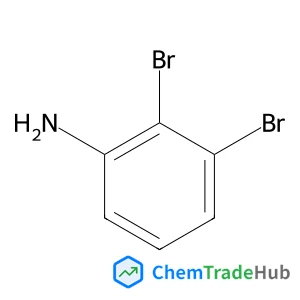
![2-Methyl-2-propanyl (2E)-5-chloro-2-[3-methoxy-4-(4-methyl-1H-imidazol-1-yl)benzylidene]pentanoate structure](https://cnstatic.chemtradehub.com/structs/122/1225232-42-7-ee03.webp "2-Methyl-2-propanyl (2E)-5-chloro-2-[3-methoxy-4-(4-methyl-1H-imidazol-1-yl)benzylidene]pentanoate structure")
![(3-{[4-(Aminomethyl)-6-(trifluoromethyl)-2-pyridinyl]oxy}phenyl)[(3R,4R)-3-fluoro-4-hydroxy-1-pyrrolidinyl]methanone structure](https://cnstatic.chemtradehub.com/structs/200/2007885-39-2-affc.webp "(3-{[4-(Aminomethyl)-6-(trifluoromethyl)-2-pyridinyl]oxy}phenyl)[(3R,4R)-3-fluoro-4-hydroxy-1-pyrrolidinyl]methanone structure")