







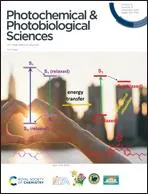
Detection of evoked acetylcholine release in mouse brain slices
文献信息
发布日期
2016-10-03
DOI
10.1039/C6AN01758D
影响因子
4.616
作者
R. Asri, B. O'Neill, J. C. Patel, K. A. Siletti, M. E. Rice
查看原文
摘要
The study of transmitter interactions in reward and motor pathways in the brain, including the striatum, requires methodology to detect stimulus-driven neurotransmitter release events. Such methods exist for dopamine, and have contributed to the understanding of local and behavioral factors that regulate dopamine release. However, factors that regulate release of another key transmitter in these pathways, acetylcholine (ACh), are unresolved, in part because of limited temporal and spatial resolution of current detection methods. We have optimized a voltammetric method for detection of local stimulus-evoked ACh release using enzyme-coated carbon-fiber microelectrodes and fast-scan cyclic voltammetry. These electrodes are based on the detection of H2O2 generated by the actions of acetylcholine esterase and choline oxidase, and reliably respond to ACh in a concentration-dependent manner. Methods for enzyme coating were optimized for mechanical stability that allowed for their use in ex vivo brain slices. We report here the first quantitative assessment of extracellular ACh concentration after local electrical stimulation in dorsal striatum in slices from control mice. The selective detection of ACh under these conditions was confirmed by showing that the response detected in the control slices was absent in slices from mice bred to lack ACh synthesis in the forebrain. These electrodes represent a new tool to study ACh and ACh–dopamine interactions with micrometer spatial resolution.
相关文献
Theoretical study of the dissociative photodetachment dynamics of the hydrated superoxide anion cluster
Yu Hashimoto, Kohei Saito, Toshiyuki Takayanagi, Hiroto Tachikawa
2021-07-27
Paper
DOI: 10.1039/D1CP02379A
Polymer network formation mechanism of multifunctional poly(ethylene glycol)s in ionic liquid electrolyte with a lithium salt
Asumi Ishikawa, Namie Ikeda, Shuichi Maeda, Kenta Fujii
2021-07-27
Paper
DOI: 10.1039/D1CP02710G
Preferred penetration of active nano-rods into narrow channels and their clustering
Zhengjia Wang, Kang-Ching Chu, Yu-Jane Sheng
2021-07-05
Paper
DOI: 10.1039/D1CP01065D
Aggregation-induced negative differential resistance in graphene oxide quantum dots
Sonia Sharma, Chieh-An Cheng, Svette Reina Merden Santiago, Denice N. Feria, Chi-Tsu Yuan, Sheng-Hsiung Chang, Tai-Yuan Lin, Ji-Lin Shen
2021-08-01
Paper
DOI: 10.1039/D1CP01529J
Assessing nickel oxide electrocatalysts incorporating diamines and having improved oxygen evolution activity using operando UV/visible and X-ray absorption spectroscopy
Takafumi Miura, Shun Tsunekawa, Sho Onishi, Toshiaki Ina, Kehsuan Wang, Genta Watanabe, Chechia Hu, Hiroshi Kondoh, Takeshi Kawai
2021-10-11
Paper
DOI: 10.1039/D1CP03323A
Chiral recognition via a stereodynamic vanadium probe using the electronic circular dichroism effect in differential Raman scattering
Davide Carraro, Giulia Licini, Petr Bouř, Cristiano Zonta
2021-09-21
Paper
DOI: 10.1039/D1CP03020E
Decomposition of nitrous oxide in hydrated cobalt(i) clusters: a theoretical insight into the mechanistic roles of ligand-binding modes
Ephrem G. Demissie, Wing Ka Lam, Wai Kit Tang, Chi-Kit Siu
2021-07-06
Paper
DOI: 10.1039/D1CP01820E
Effects of substituent position on aminobenzoate relaxation pathways in solution
Jack M. Woolley, Konstantina M. Krokidi, Maria A. Tesa-Serrate, Nicholas D. M. Hine, Vasilios G. Stavros
2021-10-06
Paper
DOI: 10.1039/D1CP03759E
Excited states of modified oxygen-deficient centers and Si quantum dots in Gd-implanted silica glasses: emission dynamics and lifetime distributions
A. F. Zatsepin, Yu. A. Kuznetsova, E. S. Trofimova, V. A. Pustovarov
2021-09-24
Paper
DOI: 10.1039/D1CP03826E
您可能还喜欢
化合物问答
如何储存8-溴-4-羟基-6-(三氟甲氧基)喹啉-3-羧酸乙酯(CAS号:1072944-81-0)?
8-溴-4-羟基-6-(三氟甲氧基)喹啉-3-羧酸乙酯应储存在阴凉、干燥的地方,避免光照和高温。建议使用密封容器进行储存,以防止水分和空气的影响。
1072944-81-0Ethyl 8-bromo-4-hydr...
化合物问答
2,2-二(2-呋喃基)丙烷(CAS号:17920-88-6)的市场或研究趋势如何?
2,2-二(2-呋喃基)丙烷的研究趋势主要集中在新型材料的开发和应用,如高分子材料、有机光电材料等。市场趋势方面,随着环保要求的提高和新材料的应用,该化合物的需...
17920-88-62,2'-(2,2-Propanediy...
化合物问答
如何处理含有螺[呋喃并[3,4-b]吡啶-5(7H),4'-哌啶]-7-酮盐酸盐(CAS号:475152-31-9)的废料?
对于含有螺[呋喃并[3,4-b]吡啶-5(7H),4'-哌啶]-7-酮盐酸盐的废料,应首先进行分类和分离,以减少危险物质的数量。随后,可以考虑通过化学氧化、生物...
475152-31-97H-Spiro[furo[3,4-b]...
化合物问答
Cinnamyl 3-aminobut-2-enoate(CAS号:113898-97-8)安全吗?
Cinnamyl 3-氨基丁-2-烯酸在接触皮肤和眼睛时可能会引起刺激。应避免吸入其粉尘和烟雾。操作时应穿戴适当的个人防护装备,如手套、护目镜和实验室外套。
113898-97-8Cinnamyl 3-aminobut-...
化合物问答
反式-2-十二碳烯二酸(CAS号:6402-36-4)的市场或研究趋势如何?
反式-2-十二碳烯二酸在医药、材料科学等领域有一定的应用,但其市场相对较小。近年来,由于环保意识的提升,对环境友好型化学品的需求增加,研究倾向于开发更绿色的合成...
6402-36-4Traumatic Acid
化合物问答
什么是(9ci)-1H-苯并咪唑-5-乙酸(CAS号:473895-86-2)?
(9ci)-1H-苯并咪唑-5-乙酸是一种含氮杂环化合物,其化学结构为1H-苯并咪唑-5-乙酸。该化合物具有特定的分子式C8H7NO2,属于有机酸类化合物。
473895-86-21H-Benzimidazol-5-yl...
化合物问答
酞菁蓝(CAS号:147-14-8)的主要用途是什么?
酞菁蓝主要用作颜料和染料,广泛应用于塑料、油墨、涂料、纺织品及橡胶工业中。它也用于光敏材料,如太阳能电池和光刻胶。在医疗领域,酞菁蓝因其光敏特性被用于某些光动力...
147-14-8Copper(2+) phthalocy...
化合物问答
5-甲基-1,2,3,4-四氢异喹啉(CAS号:123593-99-7)安全吗?
5-甲基-1,2,3,4-四氢异喹啉在使用和储存时需要谨慎处理。它具有一定的毒性,应避免吸入其蒸气或直接接触皮肤和眼睛。操作此化合物时,建议佩戴防护眼镜、实验服...
123593-99-75-Methyl-1,2,3,4-tet...
化合物问答
如何处理含有3',4',5'-三甲氧基苯乙酮(CAS号:1136-86-3)的废料?
含有3',4',5'-三甲氧基苯乙酮的废液应首先确保其是否为危险废物,根据当地法规确定处理方法。通常,这类有机废液可以采用中和反应降低其pH值,然后通过蒸馏或萃...
1136-86-31-(3,4,5-Trimethoxyp...
化合物问答
如何储存KI-7(CAS号:1489263-00-4)?
KI-7应储存在通风良好的干燥环境中,避免光照和高温。建议使用密封容器储存,并保持在阴凉处。储存温度应控制在室温范围内,一般建议不超过25°C。避免与氧化剂接触...
1489263-00-42-(1-Benzyl-1H-indol...
来源期刊
Analyst

CiteScore:
7.8
自引率:
5.6%
年发文量:
653
Analyst publishes analytical and bioanalytical research that reports premier fundamental discoveries and inventions, and the applications of those discoveries, unconfined by traditional discipline barriers.
推荐化合物
推荐供应商





免责声明
本页面提供的学术期刊信息仅供参考和研究使用。我们与任何期刊出版商均无关联,也不处理投稿事宜。如有投稿相关咨询,请直接联系相关期刊出版商。
如发现页面信息有误,请发送邮件至 support@chemtradehub.com 联系我们。我们将及时核实并处理您的问题。