


Analytical gradients for excitation energies from frozen-density embedding
文献信息
发布日期
2016-03-21
DOI
10.1039/C6CP00392C
影响因子
3.676
作者
Arseny Kovyrshin, Johannes Neugebauer
查看原文
摘要
The formulation of analytical excitation-energy gradients from time-dependent density functional theory within the frozen-density embedding framework is presented. In addition to a comprehensive mathematical derivation, we discuss details of the numerical implementation in the Slater-function based Amsterdam Density Functional (ADF) program. Particular emphasis is put on the consistency in the use of approximations for the evaluation of second- and third-order non-additive kinetic-energy and exchange–correlation functional derivatives appearing in the final expression for the excitation-energy gradient. We test the implementation for different chemical systems in which molecular excited-state potential-energy curves are affected by another subsystem. It is demonstrated that the analytical implementation for the evaluation of excitation-energy gradients yields results in close agreement with data from numerical differentiation. In addition, we show that our analytical results are numerically more stable and thus preferable over the numerical ones.
期刊推荐
Saudi Pharmaceutical Journal
Journal of Peptide Science
Russian Journal of General Chemistry

Current Opinion in Solid State & Materials Science
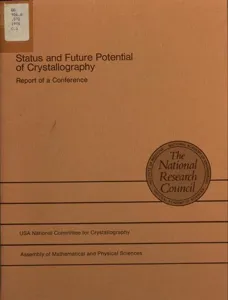
Crystallography Reports
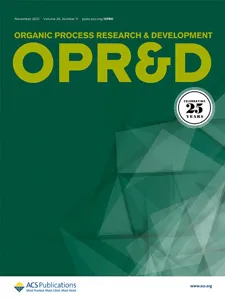
Organic Process Research & Development
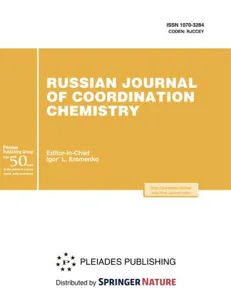
Russian Journal of Coordination Chemistry
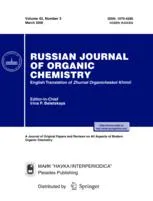
Russian Journal of Organic Chemistry
Journal of Saudi Chemical Society
New Journal of Chemistry
相关文献
Fine-tuning the transition temperature of a stimuli-responsive polymer by a simple blending procedure
Francisco Fernández-Trillo, Jan C. M. van Hest, Jens C. Thies, Thierry Michon, Ralf Weberskirch, Neil R. Cameron
2008-03-05
Communication
DOI: 10.1039/B800266E
Catalytic enantioselective Reformatsky reaction with ketones
M. Ángeles Fernández-Ibáñez, Beatriz Maciá, Adriaan J. Minnaard, Ben L. Feringa
2008-04-01
Communication
DOI: 10.1039/B801749B
Proton chemical shift anisotropy measurements of hydrogen-bonded functional groups by fast magic-angle spinningsolid-state NMR spectroscopy
Luminita Duma, Daniel Abergel, Piotr Tekely, Geoffrey Bodenhausen
2008-03-18
Communication
DOI: 10.1039/B801154K
Chiral tertiary 2-furyl alcohols: diversified key intermediates to bioactive compounds. Their enantioselective synthesis via (2-furyl)aluminium addition to ketones catalyzed by a titanium catalyst of (S)-BINOL
Kuo-Hui Wu, Da-Wei Chuang, Chien-An Chen, Han-Mou Gau
2008-04-17
Communication
DOI: 10.1039/B802441C
Direct synthesis of bicyclic guanidines through unprecedented palladium(ii) catalysed diamination with copper chloride as oxidant‡
Claas H. Hövelmann, Jan Streuff, Lydia Brelot, Kilian Muñiz
2008-03-14
Communication
DOI: 10.1039/B719479J
1,3-Dipolar cycloaddition of alkynes to azides. Construction of operationally functional metal responsive fluorophores
David Schweinfurth, Kenneth I. Hardcastle, Uwe H. F. Bunz
2008-03-28
Communication
DOI: 10.1039/B800284C
Graphitic carbon nanostructuresvia a facile microwave-induced solid-state process
Chunlei Wang, Ding Ma, Weixin Huang, Xinhe Bao
2008-04-08
Communication
DOI: 10.1039/B800807H
A designed metal–organic framework based on a metal–organic polyhedron
Yang Zou, Mira Park, Seunghee Hong, Myoung Soo Lah
2008-03-17
Communication
DOI: 10.1039/B801103F
New catalytic route to borasiloxanes
Bogdan Marciniec, Jędrzej Walkowiak
2008-05-09
Communication
DOI: 10.1039/B801013G
您可能还喜欢
化合物问答
什么是5-Fluoro-4-iodo-2-methylaniline(CAS号:307306-08-7)?
5-氟-4-碘-2-甲氨基苯属于芳香族化合物,其分子式为C8H7FN2I。该化合物具有一定的反应活性,在有机合成和药物化学领域有一定的应用。
307306-08-75-Fluoro-4-iodo-2-me...
化合物问答
4-氟-3-硝基三氟甲苯(CAS号:367-86-2)通常如何合成?
4-氟-3-硝基三氟甲苯通常通过将三氟甲基苯在酸性条件下催化氧化为三氟甲基硝基苯,然后进行氟化反应得到目标化合物。该过程需要使用催化剂,如三氟乙酸,反应产率较高...
367-86-21-Fluoro-2-nitro-4-(...
化合物问答
6-氯-9-(2,3,5-三苯甲酰氧基-2-C-甲基-beta-D-呋喃核糖基)-9H-嘌呤(CAS号:205171-05-7)的物理化学性质是什么?
该化合物为白色至类白色晶体,分子量约为1046.95。它在水中几乎不溶,在有机溶剂如乙腈和甲醇中具有一定的溶解性。该化合物具有良好的化学稳定性和生物活性。
205171-05-76-Chloro-9-(2-C-meth...
化合物问答
如何储存6-氟喹啉-4-羧酸(CAS号:220844-73-5)?
6-氟喹啉-4-羧酸应储存在阴凉、干燥、通风良好的地方,避免阳光直射。储存在密闭容器中,避免与空气中的水分接触。储存温度应控制在室温以下,避免高温。
220844-73-56-Fluoroquinoline-4-...
化合物问答
(2S,2'S,3S,3'S)-3,3'-di-tert-butyl-4,4'-bis(2,6-dimethoxyphenyl)-2,2',3,3'-tetrahydro-2,2'-bibenzo[d][1,3]oxaphosphole(CAS号:1435940-21-8)通常如何合成?
该化合物通常通过芳香族化合物的亲核取代反应合成,首先将2,6-二甲氧基苯基引入到双环结构中,然后通过特定条件下的还原或氧化反应引入二叔丁基。反应过程中使用了钯作...
1435940-21-8(2S,2'S,3S,3'S)-4,4'...
化合物问答
如何储存KY02111(CAS号:1118807-13-8)?
KY02111应储存于阴凉、干燥、通风良好的地方,避免阳光直射和高温环境。应使用合适的密闭容器储存,并确保容器密封良好,防止水分和潮气进入。在储存期间,应注意检...
1118807-13-8N-(6-chlorobenzo[d]t...
化合物问答
如何储存4-(4-氯苯氧基)丁酸乙酯(CAS号:59227-79-1)?
4-(4-氯苯氧基)丁酸乙酯应储存在阴凉、干燥、通风良好的地方,远离火源和热源。避免阳光直射,防止容器破裂导致泄漏。储存时应保持容器密封,避免与空气中的水蒸气接...
59227-79-1Ethyl 4-(4-chlorophe...
化合物问答
4-庚基苯乙酮(CAS号:37593-03-6)安全吗?
4-庚基苯乙酮相对安全,但在使用和储存时仍需注意。应避免吸入其蒸气,避免皮肤接触,使用时需佩戴防护眼镜和手套。储存时应远离火源和热源,保持容器密封,放置于阴凉、...
37593-03-61-(4-Heptylphenyl)et...
化合物问答
什么是乙基2-氨基-4-(3-溴苯基)噻吩-3-羧酸乙酯(CAS号:438218-48-5)?
乙基2-氨基-4-(3-溴苯基)噻吩-3-羧酸乙酯是一种有机化合物,分子式为C16H12BrN2O2S。它是一种含有噻吩环、氨基、溴苯基和羧酸酯结构的化合物。这...
438218-48-5ethyl 2-amino-4-(3-b...
化合物问答
什么是(9ci)-2-氨基-6-甲基-苯甲酰胺(CAS号:1885-31-0)?
(9ci)-2-氨基-6-甲基-苯甲酰胺是一种化学化合物,其英文名称为2-Amino-6-methylbenzamide,CAS号为1885-31-0。该化合物...
1885-31-02-Amino-6-methylbenz...
来源期刊
Physical Chemistry Chemical Physics

CiteScore:
5.5
自引率:
10.3%
年发文量:
3036
Physical Chemistry Chemical Physics (PCCP) is an international journal co-owned by 19 physical chemistry and physics societies from around the world. This journal publishes original, cutting-edge research in physical chemistry, chemical physics and biophysical chemistry. To be suitable for publication in PCCP, articles must include significant innovation and/or insight into physical chemistry; this is the most important criterion that reviewers and Editors will judge against when evaluating submissions. The journal has a broad scope and welcomes contributions spanning experiment, theory, computation and data science. Topical coverage includes spectroscopy, dynamics, kinetics, statistical mechanics, thermodynamics, electrochemistry, catalysis, surface science, quantum mechanics, quantum computing and machine learning. Interdisciplinary research areas such as polymers and soft matter, materials, nanoscience, energy, surfaces/interfaces, and biophysical chemistry are welcomed if they demonstrate significant innovation and/or insight into physical chemistry. Joined experimental/theoretical studies are particularly appreciated when complementary and based on up-to-date approaches.
推荐化合物
推荐供应商





免责声明
本页面提供的学术期刊信息仅供参考和研究使用。我们与任何期刊出版商均无关联,也不处理投稿事宜。如有投稿相关咨询,请直接联系相关期刊出版商。
如发现页面信息有误,请发送邮件至 support@chemtradehub.com 联系我们。我们将及时核实并处理您的问题。