








![(1S)-1,5-Anhydro-2-O-alpha-L-arabinopyranosyl-1-[5-hydroxy-7-({6-O-[3-(4-hydroxy-3-methoxyphenyl)propanoyl]-beta-D-glucopyranosyl}oxy)-2-(4-hydroxyphenyl)-4-oxo-4H-chromen-6-yl]-D-glucitol structure](https://cnstatic.chemtradehub.com/structs/225/2252345-81-4-bcff.webp "(1S)-1,5-Anhydro-2-O-alpha-L-arabinopyranosyl-1-[5-hydroxy-7-({6-O-[3-(4-hydroxy-3-methoxyphenyl)propanoyl]-beta-D-glucopyranosyl}oxy)-2-(4-hydroxyphenyl)-4-oxo-4H-chromen-6-yl]-D-glucitol structure")
Solvent-induced desorption of alkanethiol ligands from Au nanoparticles
文献信息
发布日期
2016-05-17
DOI
10.1039/C6CP00480F
影响因子
3.676
作者
Yuanyuan Huang, Wei Liu, Hao Cheng, Tao Yao, Lina Yang, Jie Bao, Ting Huang, Zhihu Sun, Yong Jiang, Shiqiang Wei
查看原文
摘要
Removing surfactants from a colloidal metal nanoparticle surface is necessary for their realistic applications, and how they could be stripped is a subject of active investigation. Here, we report a solvent-induced desorption of dodecanethiol ligands from the gold nanoparticle surface, and traced this desorption process using a combination of in situ X-ray absorption fine structure (XAFS) and Raman spectroscopic techniques. In situ analysis results reveal that the solvent exchange of ethanol with tetrahydrofuran (THF) can effectively remove dodecanethiol ligands while keeping the particle morphology unchanged. Upon increasing the THF/ethanol ratio from 0 : 1 to 5 : 1, the surface coverage of thiol on the Au surface is reduced from 0.47 to 0.07, suggesting the depletion of ligands first from the nanoparticle facet sites, then from the edge sites, while the ligands at the corner sites are intact. This work enriches our knowledge on surfactant removal and may pave the way towards preparing surface-clean nanoparticles for practical applications.
相关文献
Tuning of switching properties and excited-state dynamics of fulgides by structural modifications
Ron Siewertsen, Frank Strübe, Jochen Mattay, Falk Renth, Friedrich Temps
2011-01-05
Paper
DOI: 10.1039/C0CP01890B
Defining rules of aromaticity: a unified approach to the Hückel, Clar and Randić concepts‡
Tadeusz M. Krygowski, Michał K. Cyrański, Alexandru T. Balaban
2010-12-21
Paper
DOI: 10.1039/C0CP01446J
Limiting diffusion coefficients of ionic liquids in water and methanol: a combined experimental and molecular dynamics study
A. Heintz, R. Ludwig, E. Schmidt
2011-01-13
Paper
DOI: 10.1039/C0CP00442A
Enhanced hydrogen release by catalyzed hydrolysis of sodium borohydride–ammonia borane mixtures: a solution-state 11B NMR study
U. B. Demirci, C. Geantet, J. M. Herrmann, P. Miele
2011-01-04
Paper
DOI: 10.1039/C0CP02090G
Water-supported organized structures based on wedge-shaped amphiphilic derivatives of dipyrrolyldiketone boron complexes
Nazuki Eifuku, Yohei Haketa, Yoshihiro Ito
2011-01-05
Paper
DOI: 10.1039/C0CP02294B
Binding Gibbs energy of ionic liquids to calf thymus DNA: a fluorescence spectroscopy study
Huiyong Wang, Jianji Wang, Shibiao Zhang
2011-01-04
Paper
DOI: 10.1039/C0CP01815E
Periodic nanoscale structures on polyimide surfaces generated by temporally tailored femtosecond laser pulses
Wolfgang Kautek, Nicolas Faure, Eric Audouard, Razvan Stoian
2011-01-17
Paper
DOI: 10.1039/C0CP01798A
Amphiphilicity determines nanostructure in protic ionic liquids
Silvia Imberti, Gregory G. Warr
2010-12-06
Paper
DOI: 10.1039/C0CP01137A
Shear ordered diblock copolymers with tuneable optical properties‡
Andrew J. Parnell, Nadejda Tzokova, Andrew Pryke, Jonathan R. Howse, Oleksandr O. Mykhaylyk, Anthony J. Ryan, Pierre Panine, J. Patrick A. Fairclough
2010-12-15
Paper
DOI: 10.1039/C0CP01481H
Monoolein: a magic lipid?
Chandrashekhar V. Kulkarni, Wolfgang Wachter, Guillermo Iglesias-Salto, Sandra Engelskirchen
2010-12-23
Perspective
DOI: 10.1039/C0CP01539C
您可能还喜欢
化合物问答
什么是3-表南美楝属二醇(CAS号:19942-04-2)?
3-表南美楝属二醇是一种具有特定立体化学结构的化合物,其分子式为C31H52O2,属于甾醇类化合物。它具有光学活性,是一种复杂的有机分子,主要存在于一些植物中。
19942-04-2(3S,5R,8R,9R,10R,13R...
化合物问答
3-羧基-5-碘苯甲酸甲酯(CAS号:50765-22-5)应用于哪些行业?
3-羧基-5-碘苯甲酸甲酯主要应用于医药行业,作为合成某些药物中间体的重要原料。此外,它还可能用于聚合物的改性、传感器的制备以及半导体材料的制备等领域。
50765-22-5Methyl 3-hydroxy-5-i...
化合物问答
什么是3-Bromoindolin-2-one(CAS号:22942-87-6)?
3-Bromoindolin-2-one是一种含有溴代基团的吲哚酮衍生物,分子式为C9H7BrNO。它是一种无色固体,具有一定的挥发性,熔点为158-159°C...
22942-87-63-Bromoindolin-2-one
化合物问答
如何处理含有L-Lysyl-L-phenylalanyl-L-isoleucylglycyl-L-leucyl-L-methioninamide(CAS号:2990-43-4)的废料?
对于含有该化合物的废液,应先进行中和处理,然后根据其毒性和活性选择合适的处置方法。可以考虑焚烧处理或由专业的化学品废物处理公司进行无害化处理。处理过程中需注意环...
2990-43-4L-Lysyl-L-phenylalan...
化合物问答
ANGIOTENSIN 1/2 + A (2 - 8)(CAS号:51833-76-2)的物理化学性质是什么?
ANGIOTENSIN 1/2 + A (2 - 8)是一种蛋白质类化合物,具有典型的蛋白质性质。它的分子量约为5900 Da。该化合物在水中具有一定的溶解性,...
51833-76-2ANGIOTENSIN 1/2 + A ...
化合物问答
如何储存2-甲基硫代嘧啶-5-硼酸频那酯(CAS号:940284-18-4)?
应将该化合物存放在阴凉干燥、通风良好的地方,避免阳光直射。建议将化合物密封保存在避光的、干燥的容器中,远离火源和高温环境。
940284-18-42-(Methylthio)-5-(4,...
化合物问答
什么是苏丹红IV氘代物 标准品(CAS号:1014689-18-9)?
苏丹红IV氘代物 标准品是一种含有氘代标记的苏丹红IV化合物,是一种用于化合物分析、结构确证以及代谢研究的标准物质。
1014689-18-91-[(E)-{2-Methyl-4-[...
化合物问答
(+)-2-Amino-6-propionamido-d3-tetrahydrobenzothiazole(CAS号:1217680-69-7)适用哪些法规指南?
该化合物需要遵循《全球化学品统一分类和标签制度》(GHS)中的分类和标签要求,具体分类需依据其毒性和物理化学性质。此外,还需要符合《欧盟化学品注册、评估、授权和...
1217680-69-7(+)-2-Amino-6-propio...
化合物问答
如何储存2-氨基-2-(2-吡啶)乙酸乙酯(CAS号:55243-15-7)?
2-氨基-2-(2-吡啶)乙酸乙酯应储存于阴凉、干燥、通风良好的环境中,避免高温和光照。应使用密封容器储存,并远离易燃物、氧化剂和其他危险化学品。
55243-15-7Ethyl 2-amino-2-(pyr...
化合物问答
3-羟基-4-甲氧基吡啶-2-羧酸(CAS号:210300-09-7)的主要用途是什么?
3-羟基-4-甲氧基吡啶-2-羧酸主要用于合成其他有机化合物,如药物合成、农药合成和染料合成等。此外,它还可用作中间体和试剂,在化学研究领域也有一定的应用。
210300-09-73-Hydroxy-4-methoxy-...
来源期刊
Physical Chemistry Chemical Physics

CiteScore:
5.5
自引率:
10.3%
年发文量:
3036
Physical Chemistry Chemical Physics (PCCP) is an international journal co-owned by 19 physical chemistry and physics societies from around the world. This journal publishes original, cutting-edge research in physical chemistry, chemical physics and biophysical chemistry. To be suitable for publication in PCCP, articles must include significant innovation and/or insight into physical chemistry; this is the most important criterion that reviewers and Editors will judge against when evaluating submissions. The journal has a broad scope and welcomes contributions spanning experiment, theory, computation and data science. Topical coverage includes spectroscopy, dynamics, kinetics, statistical mechanics, thermodynamics, electrochemistry, catalysis, surface science, quantum mechanics, quantum computing and machine learning. Interdisciplinary research areas such as polymers and soft matter, materials, nanoscience, energy, surfaces/interfaces, and biophysical chemistry are welcomed if they demonstrate significant innovation and/or insight into physical chemistry. Joined experimental/theoretical studies are particularly appreciated when complementary and based on up-to-date approaches.
推荐化合物
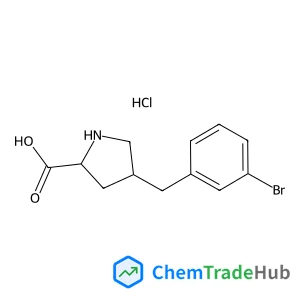
(2S,4R)-4-(3-Bromobenzyl)pyrrolidine-2-carboxylic acid hydrochloride
CAS号:
1049734-10-2
分子式:
C12H15BrClNO2
![Ethyl ({[(2-methyl-2-propanyl)oxy]carbonyl}amino)(2-pyridinyl)acetate structure](https://cnstatic.chemtradehub.com/structs/313/313490-90-3-dd15.webp "Ethyl ({[(2-methyl-2-propanyl)oxy]carbonyl}amino)(2-pyridinyl)acetate structure")
Ethyl ({[(2-methyl-2-propanyl)oxy]carbonyl}amino)(2-pyridinyl)acetate
CAS号:
313490-90-3
分子式:
C14H20N2O4
![Ethyl thieno[3,2-f]quinoline-2-carboxylate structure](https://cnstatic.chemtradehub.com/structs/299/29948-26-3-f62b.webp "Ethyl thieno[3,2-f]quinoline-2-carboxylate structure")
推荐供应商





免责声明
本页面提供的学术期刊信息仅供参考和研究使用。我们与任何期刊出版商均无关联,也不处理投稿事宜。如有投稿相关咨询,请直接联系相关期刊出版商。
如发现页面信息有误,请发送邮件至 support@chemtradehub.com 联系我们。我们将及时核实并处理您的问题。