


How molecular is the chemisorptive bond?
文献信息
发布日期
2016-06-13
DOI
10.1039/C6CP01394E
影响因子
3.676
作者
I. Tranca
查看原文
摘要
Trends in adsorption energies as a function of transition metal differ for adsorbates that are attached atop a surface atom or are adsorbed onto a high coordination site. When adsorption onto early and late transition metals is compared variation in relative bond energies of adsorbates attached to different sites is large. A theoretical understanding is provided based on the analysis of the electronic structure of the respective chemical bonds. The electronic structure analysis is based on partial density of states (PDOS) and bond order overlap population densities from crystal orbital Hamiltonian population (COHP) calculations available from DFT electronic structure computations. This is complemented by calculations of Bader charge densities and electron density topology properties. Variation of the respective bond energies depends on the symmetry of the molecular orbitals that form the chemical bond. The key electronic structure parameters are the position of the Fermi level in the bonding or antibonding molecular orbital partial density of states region of the chemical bond and chemical bond polarity. These are very different for adsorbates adsorbed onto the same transition metal surface, but which have different coordination with surface metal atoms. The adsorption energies and the respective electronic structures of adatoms H, C and O and molecular fragments CHx (x = 1–3) are compared with those of the analogous molecules that contain a single transition metal atom. When adsorbed atop, trends in bond energies are remarkably similar to those of the corresponding molecules. The difference in bond energies of adsorbates and transition metal molecules, i.e. the embedding energy, is shown to consist of three contributions: quenching of the sometimes high molecular spin states, weakening of the adsorbate–surface interaction energy and weakening of the metal–metal atom bond energies next to the adsorbate. Conventional scaling rules of the interaction energies of adsorbed CHx (0 < x ≤ 3) fragments are satisfied only for adsorbates in high coordination sites. For the early transition metals a breaking of this rule is found for C and CH or N and NH when adsorbed atop a transition metal surface or when they are part of a transition metal molecule. The M–C bond energy is found to be only stronger than that of the M–CH bond as long as the Fermi level or the HOMO is located in the antibonding molecular orbital partial density of states of the chemical bond.
期刊推荐

Journal of Peptide Science

Current Opinion in Solid State & Materials Science
Current Opinion in Colloid & Interface Science
Crystallography Reports
Russian Journal of Applied Chemistry
Nature Medicine
Russian Journal of Coordination Chemistry
Russian Journal of Organic Chemistry

Journal of Natural Medicines

Chemistry Education Research and Practice
相关文献
Boron complexes of porphyrins and related polypyrrole ligands: unexpected chemistry for both boron and the porphyrin
2008-02-05
Feature Article
DOI: 10.1039/B714894A
Formation of bicyclic pyrroles from the catalytic coupling reaction of 2,5-disubstituted pyrroles with terminal alkynes, involving the activation of multiple C–H bonds
Chae S. Yi, Jie Zhang
2008-04-21
Communication
DOI: 10.1039/B804263B
Borononucleotides: synthesis, and formation of a new reversible boronate internucleosidic linkage
Delphine Luvino, Carine Baraguey, Michael Smietana, Jean-Jacques Vasseur
2008-03-14
Communication
DOI: 10.1039/B802098A
Synthesis, electronic properties and electropolymerisation of EDOT-capped σ3-phospholes
Vincent Lemau de Talancé, Muriel Hissler, Ling-Zhi Zhang, Tamás Kárpáti, László Nyulászi, Dolores Caras-Quintero, Peter Bäuerle, Régis Réau
2008-04-04
Communication
DOI: 10.1039/B801335G
An atom-efficient conjugation approach to well-defined block copolymers using RAFT chemistry and hetero Diels–Alder cycloaddition
Sebastian Sinnwell, Andrew J. Inglis, Thomas P. Davis, Martina H. Stenzel, Christopher Barner-Kowollik
2008-02-20
Communication
DOI: 10.1039/B718180A
Solid state structures and photophysical properties of (trimethylsilyl)methyl-substituted anthracenes and pyrenes
Masaki Shimizu, Hironori Tatsumi, Kenji Mochida, Tamejiro Hiyama
2008-02-27
Communication
DOI: 10.1039/B716770A
A 280 μW cm−2 biofuel cell operating at low glucose concentration
2008-03-11
Communication
DOI: 10.1039/B801786G
Nonlinear optical and ferroelectric properties of a 3-D Cd(ii) triazolate complex with a novel (63)2(610·85) topology
Jiu-Tong Chen, Gang Xu, Ming-Sheng Wang, Jian-Ping Zou, Xi-Fa Long, Guo-Jian Wang, Guo-Cong Guo, Jin-Shun Huang
2008-04-10
Communication
DOI: 10.1039/B801529E
Liquid phase separation of 1-butene from 2-butenes on all-silica zeolite RUB-41
Bart Tijsebaert, Csaba Varszegi, Hermann Gies, Feng-Shou Xiao, Xinhe Bao, Takashi Tatsumi, Ulrich Müller, Dirk De Vos
2008-03-28
Communication
DOI: 10.1039/B719463C
Identification of an intermediate in the deboronation of ortho-carborane: an adduct of ortho-carborane with two nucleophiles on one boron atom‡
Yoshiyuki Taoda, Takehiko Sawabe, Yasuyuki Endo, Kentaro Yamaguchi, Shinya Fujii, Hiroyuki Kagechika
2008-02-20
Communication
DOI: 10.1039/B716079H
您可能还喜欢
化合物问答
什么是5-Fluoro-4-iodo-2-methylaniline(CAS号:307306-08-7)?
5-氟-4-碘-2-甲氨基苯属于芳香族化合物,其分子式为C8H7FN2I。该化合物具有一定的反应活性,在有机合成和药物化学领域有一定的应用。
307306-08-75-Fluoro-4-iodo-2-me...
化合物问答
4-氟-3-硝基三氟甲苯(CAS号:367-86-2)通常如何合成?
4-氟-3-硝基三氟甲苯通常通过将三氟甲基苯在酸性条件下催化氧化为三氟甲基硝基苯,然后进行氟化反应得到目标化合物。该过程需要使用催化剂,如三氟乙酸,反应产率较高...
367-86-21-Fluoro-2-nitro-4-(...
化合物问答
6-氯-9-(2,3,5-三苯甲酰氧基-2-C-甲基-beta-D-呋喃核糖基)-9H-嘌呤(CAS号:205171-05-7)的物理化学性质是什么?
该化合物为白色至类白色晶体,分子量约为1046.95。它在水中几乎不溶,在有机溶剂如乙腈和甲醇中具有一定的溶解性。该化合物具有良好的化学稳定性和生物活性。
205171-05-76-Chloro-9-(2-C-meth...
化合物问答
如何储存6-氟喹啉-4-羧酸(CAS号:220844-73-5)?
6-氟喹啉-4-羧酸应储存在阴凉、干燥、通风良好的地方,避免阳光直射。储存在密闭容器中,避免与空气中的水分接触。储存温度应控制在室温以下,避免高温。
220844-73-56-Fluoroquinoline-4-...
化合物问答
(2S,2'S,3S,3'S)-3,3'-di-tert-butyl-4,4'-bis(2,6-dimethoxyphenyl)-2,2',3,3'-tetrahydro-2,2'-bibenzo[d][1,3]oxaphosphole(CAS号:1435940-21-8)通常如何合成?
该化合物通常通过芳香族化合物的亲核取代反应合成,首先将2,6-二甲氧基苯基引入到双环结构中,然后通过特定条件下的还原或氧化反应引入二叔丁基。反应过程中使用了钯作...
1435940-21-8(2S,2'S,3S,3'S)-4,4'...
化合物问答
如何储存KY02111(CAS号:1118807-13-8)?
KY02111应储存于阴凉、干燥、通风良好的地方,避免阳光直射和高温环境。应使用合适的密闭容器储存,并确保容器密封良好,防止水分和潮气进入。在储存期间,应注意检...
1118807-13-8N-(6-chlorobenzo[d]t...
化合物问答
如何储存4-(4-氯苯氧基)丁酸乙酯(CAS号:59227-79-1)?
4-(4-氯苯氧基)丁酸乙酯应储存在阴凉、干燥、通风良好的地方,远离火源和热源。避免阳光直射,防止容器破裂导致泄漏。储存时应保持容器密封,避免与空气中的水蒸气接...
59227-79-1Ethyl 4-(4-chlorophe...
化合物问答
4-庚基苯乙酮(CAS号:37593-03-6)安全吗?
4-庚基苯乙酮相对安全,但在使用和储存时仍需注意。应避免吸入其蒸气,避免皮肤接触,使用时需佩戴防护眼镜和手套。储存时应远离火源和热源,保持容器密封,放置于阴凉、...
37593-03-61-(4-Heptylphenyl)et...
化合物问答
什么是乙基2-氨基-4-(3-溴苯基)噻吩-3-羧酸乙酯(CAS号:438218-48-5)?
乙基2-氨基-4-(3-溴苯基)噻吩-3-羧酸乙酯是一种有机化合物,分子式为C16H12BrN2O2S。它是一种含有噻吩环、氨基、溴苯基和羧酸酯结构的化合物。这...
438218-48-5ethyl 2-amino-4-(3-b...
化合物问答
什么是(9ci)-2-氨基-6-甲基-苯甲酰胺(CAS号:1885-31-0)?
(9ci)-2-氨基-6-甲基-苯甲酰胺是一种化学化合物,其英文名称为2-Amino-6-methylbenzamide,CAS号为1885-31-0。该化合物...
1885-31-02-Amino-6-methylbenz...
来源期刊
Physical Chemistry Chemical Physics

CiteScore:
5.5
自引率:
10.3%
年发文量:
3036
Physical Chemistry Chemical Physics (PCCP) is an international journal co-owned by 19 physical chemistry and physics societies from around the world. This journal publishes original, cutting-edge research in physical chemistry, chemical physics and biophysical chemistry. To be suitable for publication in PCCP, articles must include significant innovation and/or insight into physical chemistry; this is the most important criterion that reviewers and Editors will judge against when evaluating submissions. The journal has a broad scope and welcomes contributions spanning experiment, theory, computation and data science. Topical coverage includes spectroscopy, dynamics, kinetics, statistical mechanics, thermodynamics, electrochemistry, catalysis, surface science, quantum mechanics, quantum computing and machine learning. Interdisciplinary research areas such as polymers and soft matter, materials, nanoscience, energy, surfaces/interfaces, and biophysical chemistry are welcomed if they demonstrate significant innovation and/or insight into physical chemistry. Joined experimental/theoretical studies are particularly appreciated when complementary and based on up-to-date approaches.
推荐化合物
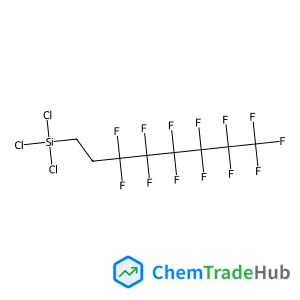
推荐供应商





免责声明
本页面提供的学术期刊信息仅供参考和研究使用。我们与任何期刊出版商均无关联,也不处理投稿事宜。如有投稿相关咨询,请直接联系相关期刊出版商。
如发现页面信息有误,请发送邮件至 support@chemtradehub.com 联系我们。我们将及时核实并处理您的问题。