


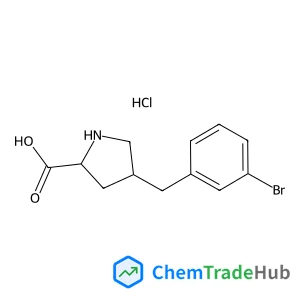
(2S,4R)-4-(3-Bromobenzyl)pyrrolidine-2-carboxylic acid hydrochloride
CAS号:
1049734-10-2
分子式:
C12H15BrClNO2
Weidong He, Wenjin Yang, Chenggang Wang, Xiaolong Deng, Baodan Liu, Xijin Xu
Manganese dioxide (MnO2) nanoarchitectures including microspheres assembled by nanosheets and hollow urchins assembled by nanorods have been successfully synthesized using a facile and efficient hydrothermal method at 150 °C. The effects of concentrations of the reactants and reaction time on the structures and morphologies of MnO2 were systematically investigated. The experimental results showed that the morphologies of MnO2 transformed into nanosheet-assembled microspheres (10 min) from nanorod-assembled hollow urchins (5 min) by tuning the suitable reaction time. The nanorod-assembled hollow urchins experienced the morphology transformation cycle from urchin to a disordered structure to urchin with the extension of the reaction time. Furthermore, the nanorods with different diameters and lengths were formed with different concentrations of reactants at the same reaction time (8 h). The MnO2 nanorods fabricated with 0.59 g KMnO4 showed a maximum specific capacitance (198 F g−1) with a good rate capability and excellent cycling stability (maintained 94% after 2000 cycles). Furthermore, the nanosheet-assembled microspheres exhibited the higher specific capacitance of 131 F g−1 at 1 A g−1 with a long-term cycling stability for the samples at different reaction times. These results indicated their promising applications as high-performance supercapacitor electrodes and provided a generic guideline in developing different nanostructured electrode materials for electrochemical energy storage.
Hua Li, Rossen Sedev, John Ralston
DOI: 10.1039/C0CP02035D
Mustapha Fikri, Metehan Bozkurt, Holger Somnitz
DOI: 10.1039/C0CP01373K
Teresa Lana-Villarreal, José M. Campiña, Néstor Guijarro, Roberto Gómez
DOI: 10.1039/C0CP01818J
U. B. Demirci, C. Geantet, J. M. Herrmann, P. Miele
DOI: 10.1039/C0CP02090G
Shingo Kaneko, Hidekazu Nakayama, Yutaro Yoshino, Daisuke Fushimi, Kazuo Yamaguchi, Yasuhiro Horiike, Jun Nakanishi
DOI: 10.1039/C0CP02013C
Laurent A. Baumes, Frederic Kruger, Santiago Jimenez, Pierre Collet, Avelino Corma
DOI: 10.1039/C0CP02833A
Vincenzo Barone, Ivo Cacelli, Alessandro Ferretti, Susanna Monti, Giacomo Prampolini
DOI: 10.1039/C0CP01878C
Itay Gdor, Jingyi Zhu, Boris Loevsky, Elena Smolensky, Noga Friedman, Mordechai Sheves, Sanford Ruhman
DOI: 10.1039/C0CP01734E
Zvicka Deutsch, Assaf Avidan, Iddo Pinkas, Dan Oron
DOI: 10.1039/C0CP02253E
Chiranjib Ghatak, Vishal Govind Rao, Rajib Pramanik, Souravi Sarkar, Nilmoni Sarkar
DOI: 10.1039/C0CP01925A
3-表南美楝属二醇是一种具有特定立体化学结构的化合物,其分子式为C31H52O2,属于甾醇类化合物。它具有光学活性,是一种复杂的有机分子,主要存在于一些植物中。
3-羧基-5-碘苯甲酸甲酯主要应用于医药行业,作为合成某些药物中间体的重要原料。此外,它还可能用于聚合物的改性、传感器的制备以及半导体材料的制备等领域。
3-Bromoindolin-2-one是一种含有溴代基团的吲哚酮衍生物,分子式为C9H7BrNO。它是一种无色固体,具有一定的挥发性,熔点为158-159°C...
对于含有该化合物的废液,应先进行中和处理,然后根据其毒性和活性选择合适的处置方法。可以考虑焚烧处理或由专业的化学品废物处理公司进行无害化处理。处理过程中需注意环...
ANGIOTENSIN 1/2 + A (2 - 8)是一种蛋白质类化合物,具有典型的蛋白质性质。它的分子量约为5900 Da。该化合物在水中具有一定的溶解性,...
应将该化合物存放在阴凉干燥、通风良好的地方,避免阳光直射。建议将化合物密封保存在避光的、干燥的容器中,远离火源和高温环境。
苏丹红IV氘代物 标准品是一种含有氘代标记的苏丹红IV化合物,是一种用于化合物分析、结构确证以及代谢研究的标准物质。
该化合物需要遵循《全球化学品统一分类和标签制度》(GHS)中的分类和标签要求,具体分类需依据其毒性和物理化学性质。此外,还需要符合《欧盟化学品注册、评估、授权和...
2-氨基-2-(2-吡啶)乙酸乙酯应储存于阴凉、干燥、通风良好的环境中,避免高温和光照。应使用密封容器储存,并远离易燃物、氧化剂和其他危险化学品。
3-羟基-4-甲氧基吡啶-2-羧酸主要用于合成其他有机化合物,如药物合成、农药合成和染料合成等。此外,它还可用作中间体和试剂,在化学研究领域也有一定的应用。

Physical Chemistry Chemical Physics (PCCP) is an international journal co-owned by 19 physical chemistry and physics societies from around the world. This journal publishes original, cutting-edge research in physical chemistry, chemical physics and biophysical chemistry. To be suitable for publication in PCCP, articles must include significant innovation and/or insight into physical chemistry; this is the most important criterion that reviewers and Editors will judge against when evaluating submissions. The journal has a broad scope and welcomes contributions spanning experiment, theory, computation and data science. Topical coverage includes spectroscopy, dynamics, kinetics, statistical mechanics, thermodynamics, electrochemistry, catalysis, surface science, quantum mechanics, quantum computing and machine learning. Interdisciplinary research areas such as polymers and soft matter, materials, nanoscience, energy, surfaces/interfaces, and biophysical chemistry are welcomed if they demonstrate significant innovation and/or insight into physical chemistry. Joined experimental/theoretical studies are particularly appreciated when complementary and based on up-to-date approaches.