



An organosilane self-assembled monolayer incorporated into polymer solar cells enabling interfacial coherence to improve charge transport
文献信息
发布日期
2016-05-17
DOI
10.1039/C6CP02722A
影响因子
3.676
作者
Zhiqi Li, Xinyuan Zhang, Zhihui Zhang, Shujun Li, Chunyu Liu, Wenbin Guo, Shengping Ruan
查看原文
摘要
The reproducible silylation of titanium oxide (TiO2) with small molecular (dichloromethyl) dimethylchlorosilane (DCS) as the cathode buffer layer was developed to improve electron extraction. Through incorporating the DCS capping layer into polymer solar cells (PSCs), the interfacial coherence of devices could be enhanced, leading to a shift in nanocrystallite size and a smaller internal charge transport resistance. Furthermore, a TiO2/DCS combined interfacial layer could serve as both an exciton dissociation center and a charge transfer channel, which results in a reduction in the energy barrier and electron loss, improving hole-blocking and surface-state passivation in the TiO2 interfacial layer. The Kelvin probe measurements demonstrate that the employment of the DCS nanolayer decreases conduction band energy of TiO2via forming a dipole layer at the interface of TiO2 and the DCS nanolayer, which tunes the work-function of the device and ulteriorly enhances charge carrier transfer between the electrode and the active layer. As a result, the photocurrent and the fill factor of the PSCs are both increased, resulting in an increased power conversion efficiency (PCE) of 6.959%.
相关文献
On the nature of OH-stretching vibrations in hydrogen-bonded chains: Pump frequency dependent vibrational lifetime
Stephan Knop, Thomas La Cour Jansen, Jörg Lindner, Peter Vöhringer
2011-01-24
Paper
DOI: 10.1039/C0CP02143A
Are ab initio quantum chemistry methods able to predict vibrational states up to the dissociation limit for multi-electron molecules close to spectroscopic accuracy?
Péter G. Szalay, Julien Fremont, Michael Rey, Kirk A. Peterson, Vladimir G. Tyuterev
2010-12-21
Paper
DOI: 10.1039/C0CP01334J
A photo-induced electron transfer study of an organic dye anchored on the surfaces of TiO2nanotubes and nanoparticles
Marcin Ziółek, Ignacio Tacchini, M. Teresa Martínez, Xichuan Yang, Licheng Sun, Abderrazzak Douhal
2011-01-13
Paper
DOI: 10.1039/C0CP01898H
A periodic mixed gaussians–plane waves DFT study on simple thiols on Au(111): adsorbate species, surface reconstruction, and thiols functionalization
Gopalan Rajaraman, Andrea Caneschi, Dante Gatteschi, Federico Totti
2011-01-05
Paper
DOI: 10.1039/C0CP02042G
Impact of concentration self-quenching on the charge generation yield of fullerene based donor–bridge–acceptor compounds in the solid state
Safa Shoaee, Agustín Molina-Ontoria, Andreas Gouloumis, James R. Durrant
2010-12-20
Paper
DOI: 10.1039/C0CP02107E
Periodic nanoscale structures on polyimide surfaces generated by temporally tailored femtosecond laser pulses
Wolfgang Kautek, Nicolas Faure, Eric Audouard, Razvan Stoian
2011-01-17
Paper
DOI: 10.1039/C0CP01798A
The effect of membrane fluidity on FRET parameters: an energy transfer study inside small unilamellar vesicle
Chiranjib Ghatak, Vishal Govind Rao, Rajib Pramanik, Souravi Sarkar, Nilmoni Sarkar
2010-12-20
Paper
DOI: 10.1039/C0CP01925A
A variable series resistance mechanism to explain the negative capacitance observed in impedance spectroscopy measurements of nanostructured solar cells
Juan Bisquert
2011-01-24
Paper
DOI: 10.1039/C0CP02555K
Deuterium kinetic isotope effects on the gas-phase reactions of C2H with H2(D2) and CH4(CD4)
Akira Matsugi, Kohsuke Suma, Akira Miyoshi
2011-01-14
Paper
DOI: 10.1039/C0CP02056G
Highly efficient CdS/CdSe-sensitized solar cells controlled by the structural properties of compact porous TiO2 photoelectrodes
Quanxin Zhang, Xiaozhi Guo, Xiaoming Huang, Shuqing Huang, Dongmei Li, Yanhong Luo, Taro Toyoda, Qingbo Meng
2011-01-31
Paper
DOI: 10.1039/C0CP02099K
您可能还喜欢
化合物问答
什么是3-表南美楝属二醇(CAS号:19942-04-2)?
3-表南美楝属二醇是一种具有特定立体化学结构的化合物,其分子式为C31H52O2,属于甾醇类化合物。它具有光学活性,是一种复杂的有机分子,主要存在于一些植物中。
19942-04-2(3S,5R,8R,9R,10R,13R...
化合物问答
3-羧基-5-碘苯甲酸甲酯(CAS号:50765-22-5)应用于哪些行业?
3-羧基-5-碘苯甲酸甲酯主要应用于医药行业,作为合成某些药物中间体的重要原料。此外,它还可能用于聚合物的改性、传感器的制备以及半导体材料的制备等领域。
50765-22-5Methyl 3-hydroxy-5-i...
化合物问答
什么是3-Bromoindolin-2-one(CAS号:22942-87-6)?
3-Bromoindolin-2-one是一种含有溴代基团的吲哚酮衍生物,分子式为C9H7BrNO。它是一种无色固体,具有一定的挥发性,熔点为158-159°C...
22942-87-63-Bromoindolin-2-one
化合物问答
如何处理含有L-Lysyl-L-phenylalanyl-L-isoleucylglycyl-L-leucyl-L-methioninamide(CAS号:2990-43-4)的废料?
对于含有该化合物的废液,应先进行中和处理,然后根据其毒性和活性选择合适的处置方法。可以考虑焚烧处理或由专业的化学品废物处理公司进行无害化处理。处理过程中需注意环...
2990-43-4L-Lysyl-L-phenylalan...
化合物问答
ANGIOTENSIN 1/2 + A (2 - 8)(CAS号:51833-76-2)的物理化学性质是什么?
ANGIOTENSIN 1/2 + A (2 - 8)是一种蛋白质类化合物,具有典型的蛋白质性质。它的分子量约为5900 Da。该化合物在水中具有一定的溶解性,...
51833-76-2ANGIOTENSIN 1/2 + A ...
化合物问答
如何储存2-甲基硫代嘧啶-5-硼酸频那酯(CAS号:940284-18-4)?
应将该化合物存放在阴凉干燥、通风良好的地方,避免阳光直射。建议将化合物密封保存在避光的、干燥的容器中,远离火源和高温环境。
940284-18-42-(Methylthio)-5-(4,...
化合物问答
什么是苏丹红IV氘代物 标准品(CAS号:1014689-18-9)?
苏丹红IV氘代物 标准品是一种含有氘代标记的苏丹红IV化合物,是一种用于化合物分析、结构确证以及代谢研究的标准物质。
1014689-18-91-[(E)-{2-Methyl-4-[...
化合物问答
(+)-2-Amino-6-propionamido-d3-tetrahydrobenzothiazole(CAS号:1217680-69-7)适用哪些法规指南?
该化合物需要遵循《全球化学品统一分类和标签制度》(GHS)中的分类和标签要求,具体分类需依据其毒性和物理化学性质。此外,还需要符合《欧盟化学品注册、评估、授权和...
1217680-69-7(+)-2-Amino-6-propio...
化合物问答
如何储存2-氨基-2-(2-吡啶)乙酸乙酯(CAS号:55243-15-7)?
2-氨基-2-(2-吡啶)乙酸乙酯应储存于阴凉、干燥、通风良好的环境中,避免高温和光照。应使用密封容器储存,并远离易燃物、氧化剂和其他危险化学品。
55243-15-7Ethyl 2-amino-2-(pyr...
化合物问答
3-羟基-4-甲氧基吡啶-2-羧酸(CAS号:210300-09-7)的主要用途是什么?
3-羟基-4-甲氧基吡啶-2-羧酸主要用于合成其他有机化合物,如药物合成、农药合成和染料合成等。此外,它还可用作中间体和试剂,在化学研究领域也有一定的应用。
210300-09-73-Hydroxy-4-methoxy-...
来源期刊
Physical Chemistry Chemical Physics

CiteScore:
5.5
自引率:
10.3%
年发文量:
3036
Physical Chemistry Chemical Physics (PCCP) is an international journal co-owned by 19 physical chemistry and physics societies from around the world. This journal publishes original, cutting-edge research in physical chemistry, chemical physics and biophysical chemistry. To be suitable for publication in PCCP, articles must include significant innovation and/or insight into physical chemistry; this is the most important criterion that reviewers and Editors will judge against when evaluating submissions. The journal has a broad scope and welcomes contributions spanning experiment, theory, computation and data science. Topical coverage includes spectroscopy, dynamics, kinetics, statistical mechanics, thermodynamics, electrochemistry, catalysis, surface science, quantum mechanics, quantum computing and machine learning. Interdisciplinary research areas such as polymers and soft matter, materials, nanoscience, energy, surfaces/interfaces, and biophysical chemistry are welcomed if they demonstrate significant innovation and/or insight into physical chemistry. Joined experimental/theoretical studies are particularly appreciated when complementary and based on up-to-date approaches.
推荐化合物
![(3S,4aS,8aS)-2-[(2R,3S)-3-Amino-2-hydroxy-4-phenylbutyl]-N-(2-methyl-2-propanyl)decahydro-3-isoquinolinecarboxamide structure](https://cnstatic.chemtradehub.com/structs/136/136522-17-3-4d77.webp "(3S,4aS,8aS)-2-[(2R,3S)-3-Amino-2-hydroxy-4-phenylbutyl]-N-(2-methyl-2-propanyl)decahydro-3-isoquinolinecarboxamide structure")
![{3-[Bis(4-hydroxyphenyl)methyl]-1-[2-(dimethylamino)ethyl]-1H-indol-2-yl}[4-(2-chlorophenyl)-1-piperazinyl]methanone structure](https://cnstatic.chemtradehub.com/structs/170/170365-25-0-e4d7.webp "{3-[Bis(4-hydroxyphenyl)methyl]-1-[2-(dimethylamino)ethyl]-1H-indol-2-yl}[4-(2-chlorophenyl)-1-piperazinyl]methanone structure")
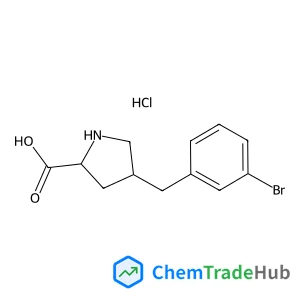
(2S,4R)-4-(3-Bromobenzyl)pyrrolidine-2-carboxylic acid hydrochloride
CAS号:
1049734-10-2
分子式:
C12H15BrClNO2
推荐供应商






免责声明
本页面提供的学术期刊信息仅供参考和研究使用。我们与任何期刊出版商均无关联,也不处理投稿事宜。如有投稿相关咨询,请直接联系相关期刊出版商。
如发现页面信息有误,请发送邮件至 support@chemtradehub.com 联系我们。我们将及时核实并处理您的问题。