


![3-[4-(difluoromethoxy)phenyl]-2-({[(9H-fluoren-9-yl)methoxy]carbonyl}amino)propanoic acid structure](https://cnstatic.chemtradehub.com/structs/149/1496564-27-2-952e.webp "3-[4-(difluoromethoxy)phenyl]-2-({[(9H-fluoren-9-yl)methoxy]carbonyl}amino)propanoic acid structure")
New insights into the photoswitching mechanisms of normal dithienylethenes
文献信息
发布日期
2016-09-13
DOI
10.1039/C6CP03471C
影响因子
3.676
作者
G. Buntinx, O. Devos, N. Jaïdane, S. Delbaere, A. K. Tiwari, J. Dubois, M. Takeshita, Y. Wada, S. Aloïse
查看原文
摘要
The photoswitching and competitive processes of the referent photochromic diarylethene derivative 1,2-bis(2,4-dimethyl-5-phenyl-3-thienyl)perfluorocyclopentene (DTE) and a novel bridged analog DTE-m5 have been investigated by state-of-the-art TD-DFT calculations and ultrafast spectroscopy supported by advanced chemometric data treatments. Focusing on DTE, the overall deactivation pathway of both antiparallel (AP) and parallel (P) conformers of the open form (OF) (1 : 1 in solution) has been resolved and rationalized starting from the Franck–Condon (FC) region to the ground state recovery. For the photo-excited P conformer, after ultrafast relaxation (∼200 fs) towards the S1 relaxed state, an expected ISC occurred (55 ps) to produce a triplet state, 3P, the latter relaxing within 2.5 μs. Concerning the AP conformer, the photocyclization reaction is reported to proceed immediately (100 fs) starting from the FC region while the relaxed singlet state is populated in parallel. For the first time, we discovered that the latter state evolves through an unexpected ISC process (1 ps) giving rise to a second triplet state,3AP. For DTE-m5, by slightly constraining the molecule with the bridge, this triplet becomes reactive and participates in the formation of 10% of closed form (CF) probably through an adiabatic mechanism. Concerning the photoreversion, in accordance with the literature, we report on a two-step process, a 190 fs vibrational relaxation followed by a 6 ps ring-opening reaction. For the overall species at the singlet or triplet manifold, the use of advanced MCR-ALS allows us to obtain specific spectral signatures. This study is therefore a new step within the comprehension of DTE photochemistry.
期刊推荐

Russian Journal of Organic Chemistry

Journal of Natural Medicines

Journal of Peptide Science

Saudi Pharmaceutical Journal

Acta Materialia
Russian Journal of Bioorganic Chemistry
Russian Journal of Applied Chemistry

Organic Process Research & Development

Journal of Saudi Chemical Society

Chemistry Education Research and Practice
相关文献
Solvent evaporation versus proton transfer in nucleobase–Pt(CN)4,62− dianion clusters: a collisional excitation and electronic laser photodissociation spectroscopy study‡
Ananya Sen, Thomas F. M. Luxford, Naruo Yoshikawa, Caroline E. H. Dessent
2014-06-16
Paper
DOI: 10.1039/C4CP00989D
Enhanced electrochromic properties of a polypyrrole–indigo carmine–gold nanoparticles nanocomposite
L. F. Loguercio, C. C. Alves, A. Thesing, J. Ferreira
2014-11-17
Paper
DOI: 10.1039/C4CP04262J
Dynamics of photodissociation of XeF2 in organic solvents
Greg T. Dunning, Thomas J. Preston, Andrew J. Orr-Ewing, Stuart J. Greaves, Gregory M. Greetham, Ian P. Clark, Michael Towrie
2014-06-23
Paper
DOI: 10.1039/C4CP01854K
Left or right cholesterics? A matter of helix handedness and curliness
Elisa Frezza, Alberta Ferrarini, Hima Bindu Kolli, Achille Giacometti, Giorgio Cinacchi
2014-06-16
Paper
DOI: 10.1039/C4CP01816H
Structural band-gap tuning in g-C3N4
Sebastian Zuluaga, Li-Hong Liu, Natis Shafiq, Sara M. Rupich, Jean-François Veyan, Yves J. Chabal, Timo Thonhauser
2014-11-13
Paper
DOI: 10.1039/C4CP05164E
Terbium-doped gadolinium oxide nanoparticles prepared by laser ablation in liquid for use as a fluorescence and magnetic resonance imaging dual-modal contrast agent
Fei Chen, Min Chen, Chuan Yang, Jun Liu, Ningqi Luo, Guowei Yang, Dihu Chen, Li Li
2014-11-12
Paper
DOI: 10.1039/C4CP04380D
Enhanced performance of polymer solar cells by employing a ternary cascade energy structure
Qiaoshi An, Fujun Zhang, Lingliang Li, Zuliang Zhuo, Jian Zhang, Weihua Tang, Feng Teng
2014-05-15
Paper
DOI: 10.1039/C4CP01411A
Mono- and co-doped NaTaO3 for visible light photocatalysis
Pushkar Kanhere, Prathamesh Shenai, Sudip Chakraborty, Jianwei Zheng
2014-06-09
Paper
DOI: 10.1039/C4CP01000K
A facile synthesis of highly stable and luminescent Ag clusters: a steady-state and time-resolved spectroscopy study
Nabin Kumar Pal, Carola Kryschi
2014-11-24
Paper
DOI: 10.1039/C4CP03683B
High response and selectivity of a Cu–ZnO nanowire nanogenerator as a self-powered/active H2S sensor
Yongming Fu, Yayu Zhao, Penglei Wang, Lili Xing, Xinyu Xue
2014-11-28
Paper
DOI: 10.1039/C4CP04983G
您可能还喜欢
化合物问答
什么是3-表南美楝属二醇(CAS号:19942-04-2)?
3-表南美楝属二醇是一种具有特定立体化学结构的化合物,其分子式为C31H52O2,属于甾醇类化合物。它具有光学活性,是一种复杂的有机分子,主要存在于一些植物中。
19942-04-2(3S,5R,8R,9R,10R,13R...
化合物问答
3-羧基-5-碘苯甲酸甲酯(CAS号:50765-22-5)应用于哪些行业?
3-羧基-5-碘苯甲酸甲酯主要应用于医药行业,作为合成某些药物中间体的重要原料。此外,它还可能用于聚合物的改性、传感器的制备以及半导体材料的制备等领域。
50765-22-5Methyl 3-hydroxy-5-i...
化合物问答
什么是3-Bromoindolin-2-one(CAS号:22942-87-6)?
3-Bromoindolin-2-one是一种含有溴代基团的吲哚酮衍生物,分子式为C9H7BrNO。它是一种无色固体,具有一定的挥发性,熔点为158-159°C...
22942-87-63-Bromoindolin-2-one
化合物问答
如何处理含有L-Lysyl-L-phenylalanyl-L-isoleucylglycyl-L-leucyl-L-methioninamide(CAS号:2990-43-4)的废料?
对于含有该化合物的废液,应先进行中和处理,然后根据其毒性和活性选择合适的处置方法。可以考虑焚烧处理或由专业的化学品废物处理公司进行无害化处理。处理过程中需注意环...
2990-43-4L-Lysyl-L-phenylalan...
化合物问答
ANGIOTENSIN 1/2 + A (2 - 8)(CAS号:51833-76-2)的物理化学性质是什么?
ANGIOTENSIN 1/2 + A (2 - 8)是一种蛋白质类化合物,具有典型的蛋白质性质。它的分子量约为5900 Da。该化合物在水中具有一定的溶解性,...
51833-76-2ANGIOTENSIN 1/2 + A ...
化合物问答
如何储存2-甲基硫代嘧啶-5-硼酸频那酯(CAS号:940284-18-4)?
应将该化合物存放在阴凉干燥、通风良好的地方,避免阳光直射。建议将化合物密封保存在避光的、干燥的容器中,远离火源和高温环境。
940284-18-42-(Methylthio)-5-(4,...
化合物问答
什么是苏丹红IV氘代物 标准品(CAS号:1014689-18-9)?
苏丹红IV氘代物 标准品是一种含有氘代标记的苏丹红IV化合物,是一种用于化合物分析、结构确证以及代谢研究的标准物质。
1014689-18-91-[(E)-{2-Methyl-4-[...
化合物问答
(+)-2-Amino-6-propionamido-d3-tetrahydrobenzothiazole(CAS号:1217680-69-7)适用哪些法规指南?
该化合物需要遵循《全球化学品统一分类和标签制度》(GHS)中的分类和标签要求,具体分类需依据其毒性和物理化学性质。此外,还需要符合《欧盟化学品注册、评估、授权和...
1217680-69-7(+)-2-Amino-6-propio...
化合物问答
如何储存2-氨基-2-(2-吡啶)乙酸乙酯(CAS号:55243-15-7)?
2-氨基-2-(2-吡啶)乙酸乙酯应储存于阴凉、干燥、通风良好的环境中,避免高温和光照。应使用密封容器储存,并远离易燃物、氧化剂和其他危险化学品。
55243-15-7Ethyl 2-amino-2-(pyr...
化合物问答
3-羟基-4-甲氧基吡啶-2-羧酸(CAS号:210300-09-7)的主要用途是什么?
3-羟基-4-甲氧基吡啶-2-羧酸主要用于合成其他有机化合物,如药物合成、农药合成和染料合成等。此外,它还可用作中间体和试剂,在化学研究领域也有一定的应用。
210300-09-73-Hydroxy-4-methoxy-...
来源期刊
Physical Chemistry Chemical Physics

CiteScore:
5.5
自引率:
10.3%
年发文量:
3036
Physical Chemistry Chemical Physics (PCCP) is an international journal co-owned by 19 physical chemistry and physics societies from around the world. This journal publishes original, cutting-edge research in physical chemistry, chemical physics and biophysical chemistry. To be suitable for publication in PCCP, articles must include significant innovation and/or insight into physical chemistry; this is the most important criterion that reviewers and Editors will judge against when evaluating submissions. The journal has a broad scope and welcomes contributions spanning experiment, theory, computation and data science. Topical coverage includes spectroscopy, dynamics, kinetics, statistical mechanics, thermodynamics, electrochemistry, catalysis, surface science, quantum mechanics, quantum computing and machine learning. Interdisciplinary research areas such as polymers and soft matter, materials, nanoscience, energy, surfaces/interfaces, and biophysical chemistry are welcomed if they demonstrate significant innovation and/or insight into physical chemistry. Joined experimental/theoretical studies are particularly appreciated when complementary and based on up-to-date approaches.
推荐化合物
![{3-[Bis(4-hydroxyphenyl)methyl]-1-[2-(dimethylamino)ethyl]-1H-indol-2-yl}[4-(2-chlorophenyl)-1-piperazinyl]methanone structure](https://cnstatic.chemtradehub.com/structs/170/170365-25-0-e4d7.webp "{3-[Bis(4-hydroxyphenyl)methyl]-1-[2-(dimethylamino)ethyl]-1H-indol-2-yl}[4-(2-chlorophenyl)-1-piperazinyl]methanone structure")
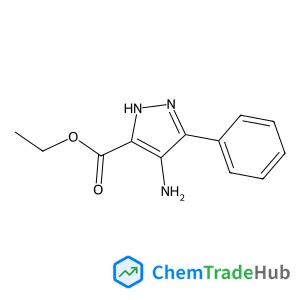
![Ethyl thieno[3,2-f]quinoline-2-carboxylate structure](https://cnstatic.chemtradehub.com/structs/299/29948-26-3-f62b.webp "Ethyl thieno[3,2-f]quinoline-2-carboxylate structure")

推荐供应商








免责声明
本页面提供的学术期刊信息仅供参考和研究使用。我们与任何期刊出版商均无关联,也不处理投稿事宜。如有投稿相关咨询,请直接联系相关期刊出版商。
如发现页面信息有误,请发送邮件至 support@chemtradehub.com 联系我们。我们将及时核实并处理您的问题。