


Resonant excitation energy transfer from carbon dots to different sized silver nanoparticles
文献信息
发布日期
2016-09-23
DOI
10.1039/C6CP05451J
影响因子
3.676
作者
Roopali Prajapati, Arpan Bhattacharya, Tushar Kanti Mukherjee
查看原文
摘要
The influence of size on the efficiency of the nanometal surface energy transfer (NSET) process between excited donors and different sized metal nanoparticles (NPs) is poorly explored in the literature. Here we present a systematic study by correlating the size of silver nanoparticles (Ag NPs) with the efficiency of excitation energy transfer (EET) from carbon dots (CDs) to Ag NPs. Three different sized citrate-capped Ag NPs with a mean hydrodynamic diameter of 39.91 ± 1.03, 53.12 ± 0.31 and 61.84 ± 0.77 nm have been synthesized for the present study. The estimated zeta potential of the synthesized CD is −25.45 ± 1.23 mV while that for the smallest, medium and largest sized Ag NPs are −76.24 ± 3.92, −67.60 ± 4.40, and −58.01 ± 3.10 mV, respectively. The steady-state and time-resolved PL measurements reveal a significant PL quenching of CDs as a function of Ag NP size. A control experiment with Ag NPs having a LSPR at 398 nm shows a negligible amount of PL quenching of CDs as a consequence of inadequate spectral overlap. The origin behind this PL quenching of CDs has been rationalized on the basis of the increased nonradiative decay rate due to NSET from the CDs to the Ag NP surface. Various energy transfer related parameters have been estimated from the NSET theory and it has been observed that the NSET efficiency increases with the increase in the size of Ag NPs. This phenomenon has been explained by considering a larger spectral overlap and a shorter separation distance between the CDs and larger sized Ag NPs due to reduced electrostatic repulsion. Our present results reveal that the size of NPs plays an important role in the NSET process and this phenomenon can be easily utilized to tune the efficiency of energy transfer for various applications.
期刊推荐

Journal of Saudi Chemical Society

Acta Materialia
Journal of Peptide Science

New Journal of Chemistry
Russian Journal of Coordination Chemistry
Crystallography Reports

Chemistry Education Research and Practice
Current Opinion in Colloid & Interface Science
Russian Journal of Organic Chemistry
Organic Process Research & Development
相关文献
Is the contribution of cis and trans protonated 5-methylcytosine-SO3− isomers equal in the conversion to thymine-SO3− under bisulfite conditions? A theoretical perspective
Lu Wang, Caiying Zhang, Wenliang Wang, Suotian Min, Daodao Hu
2014-05-08
Paper
DOI: 10.1039/C4CP00387J
The relationship between interfacial bonding and radiation damage in adsorbed DNA
R. A. Rosenberg, J. M. Symonds, K. Vijayalakshmi, Debabrata Mishra, T. M. Orlando, R. Naaman
2014-06-18
Paper
DOI: 10.1039/C4CP01649A
Alkali metal cation binding affinities of cytosine in the gas phase: revisited
Bo Yang, M. T. Rodgers
2014-06-13
Paper
DOI: 10.1039/C4CP01128G
Unequal effect of ethanol–water on the stability of ct-DNA, poly[(dA–dT)]2 and poly(rA)·poly(rU). Thermophysical properties
Rebeca Ruiz, Francisco J. Hoyuelos, Ana M. Navarro, José M. Leal, Begoña García
2014-11-21
Paper
DOI: 10.1039/C4CP03459G
Acetone and the precursor ligand acetylacetone: distinctly different electron beam induced decomposition?
Jonas Warneke, Willem F. Van Dorp, Petra Rudolf, Michal Stano, Peter Papp, Štefan Matejčík, Tobias Borrmann, Petra Swiderek
2014-11-14
Paper
DOI: 10.1039/C4CP04239E
Imidazolium-based ionic liquids with different fatty acid anions: phase behavior, electronic structure and ionic conductivity investigation
Mrinmoy Biswas, Madhab Dule, Pabitra N. Samanta, Sharmistha Ghosh, Tarun K. Mandal
2014-06-20
Paper
DOI: 10.1039/C4CP01324G
Near-band-edge exciton polarization change in ZnO nanowires
Zaiping Zeng, Alexia Petoni, Christos S. Garoufalis, Sotirios Baskoutas, Gabriel Bester
2014-11-12
Paper
DOI: 10.1039/C4CP04551C
Morphology engineering of high performance binary oxide electrodes
Kunfeng Chen, Congting Sun, Dongfeng Xue
2014-11-10
Perspective
DOI: 10.1039/C4CP03888F
Photoelectrocatalytic degradation of rhodamine B on TiO2 photonic crystals
Xiuzhen Zheng, Danzhen Li, Xiaofang Li, Linhui Yu, Peng Wang, Xiaoyun Zhang, Jialin Fang, Yu Shao, Yi Zheng
2014-06-09
Paper
DOI: 10.1039/C4CP01888E
Pool-BCGA: a parallelised generation-free genetic algorithm for the ab initio global optimisation of nanoalloy clusters
A. Shayeghi, D. Götz, J. B. A. Davis, R. Schäfer, R. L. Johnston
2014-12-01
Paper
DOI: 10.1039/C4CP04323E
您可能还喜欢
化合物问答
什么是3-表南美楝属二醇(CAS号:19942-04-2)?
3-表南美楝属二醇是一种具有特定立体化学结构的化合物,其分子式为C31H52O2,属于甾醇类化合物。它具有光学活性,是一种复杂的有机分子,主要存在于一些植物中。
19942-04-2(3S,5R,8R,9R,10R,13R...
化合物问答
3-羧基-5-碘苯甲酸甲酯(CAS号:50765-22-5)应用于哪些行业?
3-羧基-5-碘苯甲酸甲酯主要应用于医药行业,作为合成某些药物中间体的重要原料。此外,它还可能用于聚合物的改性、传感器的制备以及半导体材料的制备等领域。
50765-22-5Methyl 3-hydroxy-5-i...
化合物问答
什么是3-Bromoindolin-2-one(CAS号:22942-87-6)?
3-Bromoindolin-2-one是一种含有溴代基团的吲哚酮衍生物,分子式为C9H7BrNO。它是一种无色固体,具有一定的挥发性,熔点为158-159°C...
22942-87-63-Bromoindolin-2-one
化合物问答
如何处理含有L-Lysyl-L-phenylalanyl-L-isoleucylglycyl-L-leucyl-L-methioninamide(CAS号:2990-43-4)的废料?
对于含有该化合物的废液,应先进行中和处理,然后根据其毒性和活性选择合适的处置方法。可以考虑焚烧处理或由专业的化学品废物处理公司进行无害化处理。处理过程中需注意环...
2990-43-4L-Lysyl-L-phenylalan...
化合物问答
ANGIOTENSIN 1/2 + A (2 - 8)(CAS号:51833-76-2)的物理化学性质是什么?
ANGIOTENSIN 1/2 + A (2 - 8)是一种蛋白质类化合物,具有典型的蛋白质性质。它的分子量约为5900 Da。该化合物在水中具有一定的溶解性,...
51833-76-2ANGIOTENSIN 1/2 + A ...
化合物问答
如何储存2-甲基硫代嘧啶-5-硼酸频那酯(CAS号:940284-18-4)?
应将该化合物存放在阴凉干燥、通风良好的地方,避免阳光直射。建议将化合物密封保存在避光的、干燥的容器中,远离火源和高温环境。
940284-18-42-(Methylthio)-5-(4,...
化合物问答
什么是苏丹红IV氘代物 标准品(CAS号:1014689-18-9)?
苏丹红IV氘代物 标准品是一种含有氘代标记的苏丹红IV化合物,是一种用于化合物分析、结构确证以及代谢研究的标准物质。
1014689-18-91-[(E)-{2-Methyl-4-[...
化合物问答
(+)-2-Amino-6-propionamido-d3-tetrahydrobenzothiazole(CAS号:1217680-69-7)适用哪些法规指南?
该化合物需要遵循《全球化学品统一分类和标签制度》(GHS)中的分类和标签要求,具体分类需依据其毒性和物理化学性质。此外,还需要符合《欧盟化学品注册、评估、授权和...
1217680-69-7(+)-2-Amino-6-propio...
化合物问答
如何储存2-氨基-2-(2-吡啶)乙酸乙酯(CAS号:55243-15-7)?
2-氨基-2-(2-吡啶)乙酸乙酯应储存于阴凉、干燥、通风良好的环境中,避免高温和光照。应使用密封容器储存,并远离易燃物、氧化剂和其他危险化学品。
55243-15-7Ethyl 2-amino-2-(pyr...
化合物问答
3-羟基-4-甲氧基吡啶-2-羧酸(CAS号:210300-09-7)的主要用途是什么?
3-羟基-4-甲氧基吡啶-2-羧酸主要用于合成其他有机化合物,如药物合成、农药合成和染料合成等。此外,它还可用作中间体和试剂,在化学研究领域也有一定的应用。
210300-09-73-Hydroxy-4-methoxy-...
来源期刊
Physical Chemistry Chemical Physics

CiteScore:
5.5
自引率:
10.3%
年发文量:
3036
Physical Chemistry Chemical Physics (PCCP) is an international journal co-owned by 19 physical chemistry and physics societies from around the world. This journal publishes original, cutting-edge research in physical chemistry, chemical physics and biophysical chemistry. To be suitable for publication in PCCP, articles must include significant innovation and/or insight into physical chemistry; this is the most important criterion that reviewers and Editors will judge against when evaluating submissions. The journal has a broad scope and welcomes contributions spanning experiment, theory, computation and data science. Topical coverage includes spectroscopy, dynamics, kinetics, statistical mechanics, thermodynamics, electrochemistry, catalysis, surface science, quantum mechanics, quantum computing and machine learning. Interdisciplinary research areas such as polymers and soft matter, materials, nanoscience, energy, surfaces/interfaces, and biophysical chemistry are welcomed if they demonstrate significant innovation and/or insight into physical chemistry. Joined experimental/theoretical studies are particularly appreciated when complementary and based on up-to-date approaches.
推荐化合物
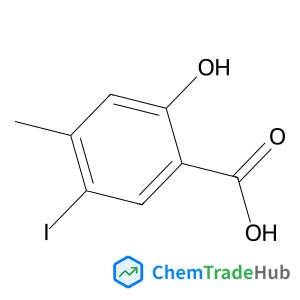
![(3S,4aS,8aS)-2-[(2R,3S)-3-Amino-2-hydroxy-4-phenylbutyl]-N-(2-methyl-2-propanyl)decahydro-3-isoquinolinecarboxamide structure](https://cnstatic.chemtradehub.com/structs/136/136522-17-3-4d77.webp "(3S,4aS,8aS)-2-[(2R,3S)-3-Amino-2-hydroxy-4-phenylbutyl]-N-(2-methyl-2-propanyl)decahydro-3-isoquinolinecarboxamide structure")

推荐供应商





免责声明
本页面提供的学术期刊信息仅供参考和研究使用。我们与任何期刊出版商均无关联,也不处理投稿事宜。如有投稿相关咨询,请直接联系相关期刊出版商。
如发现页面信息有误,请发送邮件至 support@chemtradehub.com 联系我们。我们将及时核实并处理您的问题。