


![Ethyl thieno[3,2-f]quinoline-2-carboxylate structure](https://cnstatic.chemtradehub.com/structs/299/29948-26-3-f62b.webp "Ethyl thieno[3,2-f]quinoline-2-carboxylate structure")
Interfacial charge separation and photovoltaic efficiency in Fe(ii)–carbene sensitized solar cells
文献信息
发布日期
2016-09-16
DOI
10.1039/C6CP05535D
影响因子
3.676
作者
Mariachiara Pastore, Thibaut Duchanois, Li Liu, Antonio Monari, Xavier Assfeld, Stefan Haacke, Philippe C. Gros
查看原文
摘要
The first combined theoretical and photovoltaic characterization of both homoleptic and heteroleptic Fe(II)–carbene sensitized photoanodes in working dye sensitized solar cells (DSSCs) has been performed. Three new heteroleptic Fe(II)–NHC dye sensitizers have been synthesized, characterized and tested. Despite an improved interfacial charge separation in comparison to the homoleptic compounds, the heteroleptic complexes did not show boosted photovoltaic performances. The ab initio quantitative analysis of the interfacial electron and hole transfers and the measured photovoltaic data clearly evidenced fast recombination reactions for heteroleptics, even associated with un unfavorable directional electron flow, and hence slower injection rates, in the case of homoleptics. Notably, quantum mechanics calculations revealed that deprotonation of the not anchored carboxylic function in the homoleptic complex can effectively accelerate the electron injection rate and completely suppress the electron recombination to the oxidized dye. This result suggests that introduction of strong electron-donating substituents on the not-anchored carbene ligand in heteroleptic complexes, in such a way of mimicking the electronic effects of the carboxylate functionality, should yield markedly improved interfacial charge generation properties. The present results, providing for the first time a detailed understanding of the interfacial electron transfers and photovoltaic characterization in Fe(II)–carbene sensitized solar cells, open the way to a rational molecular engineering of efficient iron-based dyes for photoelectrochemical applications.
期刊推荐
Crystallography Reports

Russian Journal of Organic Chemistry
Chemical Communications
Organic Process Research & Development

Journal of Peptide Science
Russian Journal of Coordination Chemistry

Current Opinion in Solid State & Materials Science
Russian Journal of Bioorganic Chemistry

Journal of Natural Medicines
Current Opinion in Colloid & Interface Science
相关文献
Highly monodisperse multiple twinned AuCu–Pt trimetallic nanoparticles with high index surfaces
Subarna Khanal, Nabraj Bhattarai, David McMaster, Daniel Bahena, J. Jesus Velazquez-Salazar, Miguel Jose-Yacaman
2014-06-24
Paper
DOI: 10.1039/C4CP02208D
Confined platinum nanoparticle in carbon nanotube: structure and oxidation
Guang-Feng Wei, Cheng Shang, Zhi-Pan Liu
2014-11-19
Paper
DOI: 10.1039/C4CP04145C
Imidazolium-based ionic liquids with different fatty acid anions: phase behavior, electronic structure and ionic conductivity investigation
Mrinmoy Biswas, Madhab Dule, Pabitra N. Samanta, Sharmistha Ghosh, Tarun K. Mandal
2014-06-20
Paper
DOI: 10.1039/C4CP01324G
Halogen-abstraction reactions from chloromethane and bromomethane molecules by alkaline-earth monocations
Pilar Redondo, Antonio Largo, Víctor Manuel Rayón, Germán Molpeceres, José Ángel Sordo, Carmen Barrientos
2014-06-17
Paper
DOI: 10.1039/C4CP02094D
Operable persistent photoconductivity of Bi2S3 nested nano-networks
Chuan Fei Guo, Jianming Zhang
2014-11-13
Paper
DOI: 10.1039/C4CP04520C
Elasticity of grossular–andradite solid solution: an ab initio investigation
Alessandro Erba, Roberto Dovesi
2014-06-09
Paper
DOI: 10.1039/C4CP01597E
Microsolvation of 2-azetidinone: a model for the peptide group–water interactions
Juan C. López, Raquel Sánchez, Susana Blanco, José L. Alonso
2014-12-05
Paper
DOI: 10.1039/C4CP04577G
Enhanced performance of polymer solar cells by employing a ternary cascade energy structure
Qiaoshi An, Fujun Zhang, Lingliang Li, Zuliang Zhuo, Jian Zhang, Weihua Tang, Feng Teng
2014-05-15
Paper
DOI: 10.1039/C4CP01411A
Steric self-assembly of laterally confined organic semiconductor molecule analogues
Björn Arnold, Matt Bumstead, Ayse Turak
2014-08-07
Paper
DOI: 10.1039/C4CP02331E
Deactivation mechanism of a novel AIE-active naphthalimide derivative in more polar solutions
Yunqing Chen, Yi Wang, Yuan Yuan, Yan Jiao, Xuemei Pu, Zhiyun Lu
2014-11-03
Paper
DOI: 10.1039/C4CP04213A
您可能还喜欢
化合物问答
什么是3-表南美楝属二醇(CAS号:19942-04-2)?
3-表南美楝属二醇是一种具有特定立体化学结构的化合物,其分子式为C31H52O2,属于甾醇类化合物。它具有光学活性,是一种复杂的有机分子,主要存在于一些植物中。
19942-04-2(3S,5R,8R,9R,10R,13R...
化合物问答
3-羧基-5-碘苯甲酸甲酯(CAS号:50765-22-5)应用于哪些行业?
3-羧基-5-碘苯甲酸甲酯主要应用于医药行业,作为合成某些药物中间体的重要原料。此外,它还可能用于聚合物的改性、传感器的制备以及半导体材料的制备等领域。
50765-22-5Methyl 3-hydroxy-5-i...
化合物问答
什么是3-Bromoindolin-2-one(CAS号:22942-87-6)?
3-Bromoindolin-2-one是一种含有溴代基团的吲哚酮衍生物,分子式为C9H7BrNO。它是一种无色固体,具有一定的挥发性,熔点为158-159°C...
22942-87-63-Bromoindolin-2-one
化合物问答
如何处理含有L-Lysyl-L-phenylalanyl-L-isoleucylglycyl-L-leucyl-L-methioninamide(CAS号:2990-43-4)的废料?
对于含有该化合物的废液,应先进行中和处理,然后根据其毒性和活性选择合适的处置方法。可以考虑焚烧处理或由专业的化学品废物处理公司进行无害化处理。处理过程中需注意环...
2990-43-4L-Lysyl-L-phenylalan...
化合物问答
ANGIOTENSIN 1/2 + A (2 - 8)(CAS号:51833-76-2)的物理化学性质是什么?
ANGIOTENSIN 1/2 + A (2 - 8)是一种蛋白质类化合物,具有典型的蛋白质性质。它的分子量约为5900 Da。该化合物在水中具有一定的溶解性,...
51833-76-2ANGIOTENSIN 1/2 + A ...
化合物问答
如何储存2-甲基硫代嘧啶-5-硼酸频那酯(CAS号:940284-18-4)?
应将该化合物存放在阴凉干燥、通风良好的地方,避免阳光直射。建议将化合物密封保存在避光的、干燥的容器中,远离火源和高温环境。
940284-18-42-(Methylthio)-5-(4,...
化合物问答
什么是苏丹红IV氘代物 标准品(CAS号:1014689-18-9)?
苏丹红IV氘代物 标准品是一种含有氘代标记的苏丹红IV化合物,是一种用于化合物分析、结构确证以及代谢研究的标准物质。
1014689-18-91-[(E)-{2-Methyl-4-[...
化合物问答
(+)-2-Amino-6-propionamido-d3-tetrahydrobenzothiazole(CAS号:1217680-69-7)适用哪些法规指南?
该化合物需要遵循《全球化学品统一分类和标签制度》(GHS)中的分类和标签要求,具体分类需依据其毒性和物理化学性质。此外,还需要符合《欧盟化学品注册、评估、授权和...
1217680-69-7(+)-2-Amino-6-propio...
化合物问答
如何储存2-氨基-2-(2-吡啶)乙酸乙酯(CAS号:55243-15-7)?
2-氨基-2-(2-吡啶)乙酸乙酯应储存于阴凉、干燥、通风良好的环境中,避免高温和光照。应使用密封容器储存,并远离易燃物、氧化剂和其他危险化学品。
55243-15-7Ethyl 2-amino-2-(pyr...
化合物问答
3-羟基-4-甲氧基吡啶-2-羧酸(CAS号:210300-09-7)的主要用途是什么?
3-羟基-4-甲氧基吡啶-2-羧酸主要用于合成其他有机化合物,如药物合成、农药合成和染料合成等。此外,它还可用作中间体和试剂,在化学研究领域也有一定的应用。
210300-09-73-Hydroxy-4-methoxy-...
来源期刊
Physical Chemistry Chemical Physics

CiteScore:
5.5
自引率:
10.3%
年发文量:
3036
Physical Chemistry Chemical Physics (PCCP) is an international journal co-owned by 19 physical chemistry and physics societies from around the world. This journal publishes original, cutting-edge research in physical chemistry, chemical physics and biophysical chemistry. To be suitable for publication in PCCP, articles must include significant innovation and/or insight into physical chemistry; this is the most important criterion that reviewers and Editors will judge against when evaluating submissions. The journal has a broad scope and welcomes contributions spanning experiment, theory, computation and data science. Topical coverage includes spectroscopy, dynamics, kinetics, statistical mechanics, thermodynamics, electrochemistry, catalysis, surface science, quantum mechanics, quantum computing and machine learning. Interdisciplinary research areas such as polymers and soft matter, materials, nanoscience, energy, surfaces/interfaces, and biophysical chemistry are welcomed if they demonstrate significant innovation and/or insight into physical chemistry. Joined experimental/theoretical studies are particularly appreciated when complementary and based on up-to-date approaches.
推荐化合物
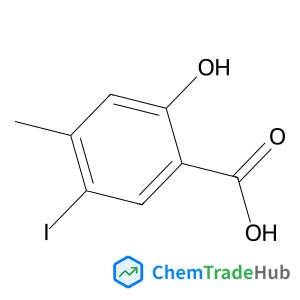
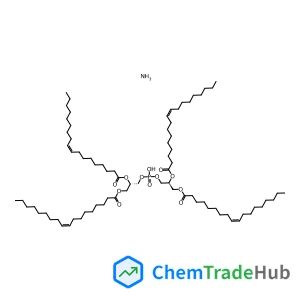
![2-[(E)-(2-Methoxyphenyl)diazenyl]-3-oxo-N-(2-oxo-2,3-dihydro-1H-benzimidazol-5-yl)butanamide structure](https://cnstatic.chemtradehub.com/structs/821/82199-12-0-f1d0.webp "2-[(E)-(2-Methoxyphenyl)diazenyl]-3-oxo-N-(2-oxo-2,3-dihydro-1H-benzimidazol-5-yl)butanamide structure")
推荐供应商



免责声明
本页面提供的学术期刊信息仅供参考和研究使用。我们与任何期刊出版商均无关联,也不处理投稿事宜。如有投稿相关咨询,请直接联系相关期刊出版商。
如发现页面信息有误,请发送邮件至 support@chemtradehub.com 联系我们。我们将及时核实并处理您的问题。