


Ultrafast excited states dynamics of [Ru(bpy)3]2+ dissolved in ionic liquids
文献信息
发布日期
2016-09-23
DOI
10.1039/C6CP05655E
影响因子
3.676
作者
Mario Borgwardt, Martin Wilke, Igor Yu. Kiyan
查看原文
摘要
Room-temperature ionic liquids (ILs) represent a well-known class of materials exhibiting extremely low vapor pressures and high electrochemical stability. These properties make ILs attractive for various applications requiring UHV conditions. Here, we apply 1-ethyl-3-methylimidazolium trifluoromethanesulfonate [EMIM][TfO] as a solvent to investigate the excited state dynamics of the transition metal complex [Ru(bpy)3]2+ with the use of ultrafast XUV photoelectron spectroscopy. This study is aimed to reveal the effect of the IL environment when the frontier molecular orbitals and the states dynamics of the solute need to be addressed. By initiating the electron dynamics with a pump laser pulse of 480 nm wavelength, we can unambiguously characterize the kinetics of the excited states of [Ru(bpy)3]2+ and determine their absolute binding energies. From a global fit analysis of the transient signal, the binding energies of the initially populated metal-to-ligand charge-transfer state 1MLCT and the thermally relaxed 3MLCT are inferred to be −0.2 eV and 0.3 eV, respectively. A three-state model, including the intersystem crossing (ISC) from the 1MLCT to the 3MLCT state and the intramolecular vibrational relaxation (IVR) within the triplet configuration, is used to describe the involved decay processes. The kinetic constants of (37 ± 10) fs for the ISC and (120 ± 20) fs for the IVR are found to be in agreement with the values previously reported for aqueous solution. The obtained results open up exciting new possibilities in the field of liquid phase spectroscopy.
期刊推荐
Journal of Saudi Chemical Society
Current Opinion in Colloid & Interface Science

Chemical Communications
Current Opinion in Solid State & Materials Science
Russian Journal of Coordination Chemistry
Drug Discovery Today

Acta Materialia
Crystallography Reports
Russian Journal of Organic Chemistry
Russian Journal of Bioorganic Chemistry
相关文献
Silicon-pyrene/perylene hybrids as molecular rectifiers
Kavita Garg, Chiranjib Majumder, Sandip K. Nayak, Dinesh K. Aswal, Shiv K. Gupta, Subrata Chattopadhyay
2014-11-26
Paper
DOI: 10.1039/C4CP04044A
Tilt boundary induced heteroepitaxy in chemically grown dendritic silver nanostructures on germanium and their optical properties
Tanmay Ghosh, Pabitra Das, Tapas Kumar Chini, Tapas Ghosh, Biswarup Satpati
2014-06-02
Paper
DOI: 10.1039/C4CP01711K
Calculation of the chemical potential and the activity coefficient of two layers of CO2 adsorbed on a graphite surface
T.T. Trinh, D. Bedeaux, J.-M. Simon
2014-11-24
Paper
DOI: 10.1039/C4CP03782K
Non-conformal decoration of semiconductor nanowire surfaces with boron nitride (BN) molecules for stability enhancement: degradation-resistant Zn3P2, ZnO and Mg2Si nanowires
Venkata Vasiraju, Yongmin Kang
2014-06-17
Paper
DOI: 10.1039/C4CP01988A
Demixing and crystallization of DODAB in DPPC–DODAB binary mixtures
Rui-Guang Wu, Hai-Yuan Sun, Yan-Zhen Zheng, Zhi-Wu Yu
2014-06-09
Paper
DOI: 10.1039/C4CP01707B
Experimental evidence of dual emission in a negatively solvatochromic push–pull pyridinium derivative
B. Carlotti, A. Cesaretti, C. G. Fortuna, A. Spalletti, F. Elisei
2014-11-27
Paper
DOI: 10.1039/C4CP04963B
Structural transformation and tuning behavior induced by the propylamine concentration in hydrogen clathrate hydrates
Seongmin Park, Hyery Kang, Kyuchul Shin, Yutaek Seo, Huen Lee
2014-11-20
Paper
DOI: 10.1039/C4CP03972F
Towards bulk thermodynamics via non-equilibrium methods: gaseous methane as a case study
Mirco Zerbetto, Diego Frezzato
2014-12-05
Paper
DOI: 10.1039/C4CP03815K
Fluorescent carbon nanomaterials: “quantum dots” or nanoclusters?
Mariia O. Dekaliuk, Oleg Viagin, Yuriy V. Malyukin, Alexander P. Demchenko
2014-06-26
Paper
DOI: 10.1039/C4CP00138A
您可能还喜欢
化合物问答
什么是3-表南美楝属二醇(CAS号:19942-04-2)?
3-表南美楝属二醇是一种具有特定立体化学结构的化合物,其分子式为C31H52O2,属于甾醇类化合物。它具有光学活性,是一种复杂的有机分子,主要存在于一些植物中。
19942-04-2(3S,5R,8R,9R,10R,13R...
化合物问答
3-羧基-5-碘苯甲酸甲酯(CAS号:50765-22-5)应用于哪些行业?
3-羧基-5-碘苯甲酸甲酯主要应用于医药行业,作为合成某些药物中间体的重要原料。此外,它还可能用于聚合物的改性、传感器的制备以及半导体材料的制备等领域。
50765-22-5Methyl 3-hydroxy-5-i...
化合物问答
什么是3-Bromoindolin-2-one(CAS号:22942-87-6)?
3-Bromoindolin-2-one是一种含有溴代基团的吲哚酮衍生物,分子式为C9H7BrNO。它是一种无色固体,具有一定的挥发性,熔点为158-159°C...
22942-87-63-Bromoindolin-2-one
化合物问答
如何处理含有L-Lysyl-L-phenylalanyl-L-isoleucylglycyl-L-leucyl-L-methioninamide(CAS号:2990-43-4)的废料?
对于含有该化合物的废液,应先进行中和处理,然后根据其毒性和活性选择合适的处置方法。可以考虑焚烧处理或由专业的化学品废物处理公司进行无害化处理。处理过程中需注意环...
2990-43-4L-Lysyl-L-phenylalan...
化合物问答
ANGIOTENSIN 1/2 + A (2 - 8)(CAS号:51833-76-2)的物理化学性质是什么?
ANGIOTENSIN 1/2 + A (2 - 8)是一种蛋白质类化合物,具有典型的蛋白质性质。它的分子量约为5900 Da。该化合物在水中具有一定的溶解性,...
51833-76-2ANGIOTENSIN 1/2 + A ...
化合物问答
如何储存2-甲基硫代嘧啶-5-硼酸频那酯(CAS号:940284-18-4)?
应将该化合物存放在阴凉干燥、通风良好的地方,避免阳光直射。建议将化合物密封保存在避光的、干燥的容器中,远离火源和高温环境。
940284-18-42-(Methylthio)-5-(4,...
化合物问答
什么是苏丹红IV氘代物 标准品(CAS号:1014689-18-9)?
苏丹红IV氘代物 标准品是一种含有氘代标记的苏丹红IV化合物,是一种用于化合物分析、结构确证以及代谢研究的标准物质。
1014689-18-91-[(E)-{2-Methyl-4-[...
化合物问答
(+)-2-Amino-6-propionamido-d3-tetrahydrobenzothiazole(CAS号:1217680-69-7)适用哪些法规指南?
该化合物需要遵循《全球化学品统一分类和标签制度》(GHS)中的分类和标签要求,具体分类需依据其毒性和物理化学性质。此外,还需要符合《欧盟化学品注册、评估、授权和...
1217680-69-7(+)-2-Amino-6-propio...
化合物问答
如何储存2-氨基-2-(2-吡啶)乙酸乙酯(CAS号:55243-15-7)?
2-氨基-2-(2-吡啶)乙酸乙酯应储存于阴凉、干燥、通风良好的环境中,避免高温和光照。应使用密封容器储存,并远离易燃物、氧化剂和其他危险化学品。
55243-15-7Ethyl 2-amino-2-(pyr...
化合物问答
3-羟基-4-甲氧基吡啶-2-羧酸(CAS号:210300-09-7)的主要用途是什么?
3-羟基-4-甲氧基吡啶-2-羧酸主要用于合成其他有机化合物,如药物合成、农药合成和染料合成等。此外,它还可用作中间体和试剂,在化学研究领域也有一定的应用。
210300-09-73-Hydroxy-4-methoxy-...
来源期刊
Physical Chemistry Chemical Physics

CiteScore:
5.5
自引率:
10.3%
年发文量:
3036
Physical Chemistry Chemical Physics (PCCP) is an international journal co-owned by 19 physical chemistry and physics societies from around the world. This journal publishes original, cutting-edge research in physical chemistry, chemical physics and biophysical chemistry. To be suitable for publication in PCCP, articles must include significant innovation and/or insight into physical chemistry; this is the most important criterion that reviewers and Editors will judge against when evaluating submissions. The journal has a broad scope and welcomes contributions spanning experiment, theory, computation and data science. Topical coverage includes spectroscopy, dynamics, kinetics, statistical mechanics, thermodynamics, electrochemistry, catalysis, surface science, quantum mechanics, quantum computing and machine learning. Interdisciplinary research areas such as polymers and soft matter, materials, nanoscience, energy, surfaces/interfaces, and biophysical chemistry are welcomed if they demonstrate significant innovation and/or insight into physical chemistry. Joined experimental/theoretical studies are particularly appreciated when complementary and based on up-to-date approaches.
推荐化合物
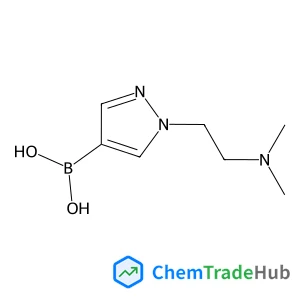
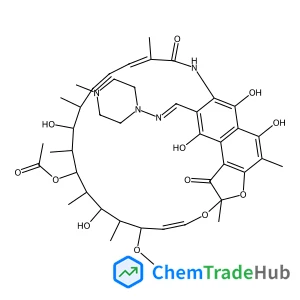
![(1S)-1,5-Anhydro-2-O-alpha-L-arabinopyranosyl-1-[5-hydroxy-7-({6-O-[3-(4-hydroxy-3-methoxyphenyl)propanoyl]-beta-D-glucopyranosyl}oxy)-2-(4-hydroxyphenyl)-4-oxo-4H-chromen-6-yl]-D-glucitol structure](https://cnstatic.chemtradehub.com/structs/225/2252345-81-4-bcff.webp "(1S)-1,5-Anhydro-2-O-alpha-L-arabinopyranosyl-1-[5-hydroxy-7-({6-O-[3-(4-hydroxy-3-methoxyphenyl)propanoyl]-beta-D-glucopyranosyl}oxy)-2-(4-hydroxyphenyl)-4-oxo-4H-chromen-6-yl]-D-glucitol structure")
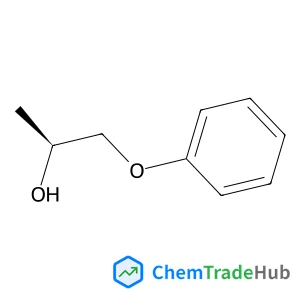
推荐供应商





免责声明
本页面提供的学术期刊信息仅供参考和研究使用。我们与任何期刊出版商均无关联,也不处理投稿事宜。如有投稿相关咨询,请直接联系相关期刊出版商。
如发现页面信息有误,请发送邮件至 support@chemtradehub.com 联系我们。我们将及时核实并处理您的问题。