


Development of a transition metal-free polymerization route to functional conjugated polydiynes from a haloalkyne-based organic reaction
文献信息
发布日期
2016-03-02
DOI
10.1039/C6PY00050A
影响因子
5.582
作者
查看原文
摘要
The development of an efficient transition metal-free polymerization route has been an active research topic in polymer science owing to its low synthetic cost and decreased metal residue and hence elevated material performance in the products. In this work, we report a new such method for constructing conjugated polydiynes based on the organic reaction of 1-haloalkyne. In the presence of potassium iodide, the polymerizations of 1,2-bis[4-(iodoethynyl)phenyl]-1,2-diphenylethene (1), 1,4-bis(2-iodoethynyl)benzene (2) and 4,4′-bis(2-iodoethynyl)-1,1′-biphenyl (3) proceed smoothly in N,N-dimethylformamide at 120 °C under nitrogen, producing P1–3 consisting of alternate aromatic and 1,3-diyne moieties in moderate to satisfactory yields. While P1 possesses good solubility in common organic solvents, P2 and P3 are insoluble due to their rigid structures. All the polymers are thermally stable, losing 5% of their weight at a high temperature of up to 352 °C. A homogeneous film of P1 can be readily obtained by spin-coating its solution, which shows high and UV-tunable refractive index (n = 2.1125–1.7747) in a wide wavelength range (400–900 nm). A well-defined fluorescent photopattern can be generated by UV irradiation of the polymer film through a copper mask. This work thus opens a new avenue for constructing conjugated polymers with advanced functionalities.
期刊推荐
Mini-Reviews in Medicinal Chemistry
CrystEngComm

Contact Lens & Anterior Eye
Angewandte Chemie International Edition
Environmental Toxicology and Pharmacology
Nature Reviews Drug Discovery
European Journal of Organic Chemistry
Foundations of Chemistry
Journal of Medical Biochemistry
Advanced Engineering Materials
相关文献
Identification of intrinsic catalytic activity for electrochemical reduction of water molecules to generate hydrogen
Tatsuya Shinagawa, Kazuhiro Takanabe
2015-05-15
Communication
DOI: 10.1039/C5CP02330K
Aggregation-induced preparation of ultrastable zinc sulfide colloidal nanospheres and their photocatalytic degradation of multiple organic dyes
Wanting Yang, Xiaoli Liu, Dong Li, Louzhen Fan, Yunchao Li
2015-04-27
Paper
DOI: 10.1039/C5CP01831E
Reinforced photocatalytic reduction of CO2 to CO by a ternary metal oxide NiCo2O4
Zhaoyu Wang, Min Jiang, Jiani Qin, Han Zhou, Zhengxin Ding
2015-05-08
Paper
DOI: 10.1039/C5CP01997D
Enhanced dye-sensitized solar cell photocurrent and efficiency using a Y-shaped, pyrazine-containing heteroaromatic sensitizer linkage
Brian L. Watson, Benjamin D. Sherman, Ana L. Moore, Thomas A. Moore, Devens Gust
2015-05-18
Paper
DOI: 10.1039/C5CP00860C
Subsystem-DFT potential-energy curves for weakly interacting systems
Danny Schlüns, Kevin Klahr, Christian Mück-Lichtenfeld, Lucas Visscher, Johannes Neugebauer
2014-12-23
Paper
DOI: 10.1039/C4CP04936E
Eu2+ luminescence in strontium aluminates
T. Jüstel, C. Ronda, A. Meijerink
2015-05-12
Paper
DOI: 10.1039/C5CP01095K
“On-the-fly” coupled cluster path-integral molecular dynamics: impact of nuclear quantum effects on the protonated water dimer
Thomas Spura, Hossam Elgabarty
2015-01-30
Paper
DOI: 10.1039/C4CP05192K
Phonon-assisted energy back transfer-induced multicolor upconversion emission of Gd2O3:Yb3+/Er3+ nanoparticles under near-infrared excitation
Jun Liu, Huawei Deng, Zhanyun Huang, Yueli Zhang, Dihu Chen, Yuanzhi Shao
2015-05-05
Paper
DOI: 10.1039/C5CP01632K
Low-temperature VUV photoluminescence and thermoluminescence of UV excited afterglow phosphor Sr3AlxSi1−xO5:Ce3+,Ln3+ (Ln = Er, Nd, Sm, Dy and Tm)
Hongde Luo, Adrie J. J. Bos, Anna Dobrowolska, Pieter Dorenbos
2015-05-13
Paper
DOI: 10.1039/C5CP01710F
您可能还喜欢
化合物问答
P11(CAS号:848644-86-0)安全吗?
P11作为一种化学化合物,需要谨慎处理。一般来说,该化合物无毒,但在操作过程中仍需遵循实验室安全规定,避免皮肤接触和吸入。建议在通风良好的环境中操作,并佩戴适当...
848644-86-0L-Histidyl-L-seryl-L...
化合物问答
氨甲环酸杂质C(CAS号:330838-52-3)通常如何合成?
氨甲环酸杂质C通常通过氨甲环酸的衍生物与环己烯进行缩合反应合成。常见的合成方法包括一步合成法和多步合成法,其中多步合成法可以提高产物的选择性和产率。反应通常在无...
330838-52-34-(Aminomethyl)-1-cy...
化合物问答
(±)-茉莉酸(CAS号:221682-41-3)通常如何合成?
(±)-茉莉酸的合成通常采用生物合成或者化学合成的方法。化学合成方法中,可以通过2-戊烯-1-醇与环戊酮的缩合反应,再经过氧化反应得到目标产物。该反应需要温和的...
221682-41-3{3-Oxo-2-[(2E)-2-pen...
化合物问答
(4S,4'S)-2,2'-(1,1-环己烷二基)双(4-异丙基-4,5-二氢-1,3-噁唑)(CAS号:1373357-00-6)安全吗?
(4S,4'S)-2,2'-(1,1-环己烷二基)双(4-异丙基-4,5-二氢-1,3-噁唑)属于有机化合物,应遵循实验室安全规范。在操作时应佩戴适当的个人防护...
1373357-00-6(4S,4'S)-2,2'-(1,1-C...
化合物问答
什么是6-苄氧基-5-甲氧基-2-羧基吲哚(CAS号:2495-92-3)?
6-苄氧基-5-甲氧基-2-羧基吲哚是一种有机化合物,分子式为C16H15NO3。它是一种含有苄氧基、甲氧基和羧基官能团的吲哚衍生物。
2495-92-36-(Benzyloxy)-5-meth...
化合物问答
丙二酸丁酯乙酯(CAS号:17373-84-1)安全吗?
丙二酸丁酯乙酯属于易燃物质,具有一定的毒性。在操作时应佩戴防护眼镜和手套,避免接触皮肤和眼睛。储存时应远离热源和火源,避免阳光直射,以减少火灾和爆炸的风险。
17373-84-1Butyl ethyl malonate
化合物问答
2-碘-3-甲基吡嗪(CAS号:58139-08-5)的市场或研究趋势如何?
2-碘-3-甲基吡嗪作为一种特殊结构的化合物,目前在工业和学术研究中的应用相对有限。然而,随着对特定化学结构及其潜在应用的深入研究,预计未来可能在农药、医药等领...
58139-08-52-Iodo-3-methylpyraz...
化合物问答
千层纸素A-7-0-β-D-葡萄糖醛酸苷甲酯(CAS号:82475-01-2)的物理化学性质是什么?
千层纸素A-7-0-β-D-葡萄糖醛酸苷甲酯是一种白色结晶固体,分子量为616.27 g/mol。该化合物在水中溶解度较低,在有机溶剂中溶解度较高。其反应活性主...
82475-01-25-Hydroxy-8-methoxy-...
化合物问答
什么是7-苄基-4,7-二氮杂螺[2.5]辛烷(CAS号:1222106-45-7)?
7-苄基-4,7-二氮杂螺[2.5]辛烷是一种有机化合物,其结构由一个环状的7-苄基-4,7-二氮杂螺环和一个苯基组成。该化合物的分子式为C14H16N2。它具...
1222106-45-77-Benzyl-4,7-diazasp...
化合物问答
在合成中是否有丁酰胺酸甲酯(CAS号:53171-39-4)的替代品?
丁酰胺酸甲酯的合成中可能的替代品包括其他氨基酸衍生物,如乙酰胺酸甲酯或丙酰胺酸甲酯。这些替代品在某些合成路线中可能更为便利或成本更低。
53171-39-4Methyl 4-amino-4-oxo...
来源期刊
Polymer Chemistry

CiteScore:
8.6
自引率:
7.3%
年发文量:
457
Polymer Chemistry welcomes submissions in all areas of polymer science that have a strong focus on macromolecular chemistry. Manuscripts may cover a broad range of fields, yet no direct application focus is required.
推荐化合物
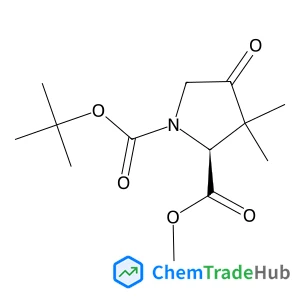
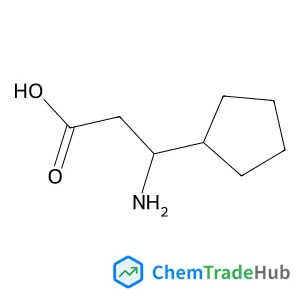
![2-(5-Bromo-1H-pyrrolo[2,3-B]pyridin-3-YL)acetic acid structure](https://cnstatic.chemtradehub.com/structs/106/1060795-03-0-0589.webp "2-(5-Bromo-1H-pyrrolo[2,3-B]pyridin-3-YL)acetic acid structure")
推荐供应商




免责声明
本页面提供的学术期刊信息仅供参考和研究使用。我们与任何期刊出版商均无关联,也不处理投稿事宜。如有投稿相关咨询,请直接联系相关期刊出版商。
如发现页面信息有误,请发送邮件至 support@chemtradehub.com 联系我们。我们将及时核实并处理您的问题。