


Bespoke cationic nano-objects via RAFT aqueous dispersion polymerisation
文献信息
发布日期
2016-05-12
DOI
10.1039/C6PY00696E
影响因子
5.582
作者
M. Williams, N. J. W. Penfold, J. R. Lovett, N. J. Warren, C. W. I. Douglas, N. Doroshenko, P. Verstraete, J. Smets, S. P. Armes
查看原文
摘要
A range of cationic diblock copolymer nanoparticles are synthesised via polymerisation-induced self-assembly (PISA) using a RAFT aqueous dispersion polymerisation formulation. The cationic character of these nanoparticles can be systematically varied by utilising a binary mixture of two macro-CTAs, namely non-ionic poly(glycerol monomethacrylate) (PGMA) and cationic poly[2-(methacryloyloxy)ethyl]trimethylammonium chloride (PQDMA), with poly(2-hydroxypropyl methacrylate) (PHPMA) being selected as the hydrophobic core-forming block. Thus a series of cationic diblock copolymer nano-objects with the general formula ([1 − n] PGMAx + [n] PQDMAy) − PHPMAz were prepared at 20% w/w solids, where n is the mol fraction of the cationic block and x, y and z are the mean degrees of polymerisation of the non-ionic, cationic and hydrophobic blocks, respectively. These cationic diblock copolymer nanoparticles were analysed in terms of their chemical composition, particle size, morphology and cationic character using 1H NMR spectroscopy, dynamic light scattering (DLS), transmission electron microscopy (TEM), and aqueous electrophoresis, respectively. Systematic variation of the above PISA formulation enabled the formation of spheres, worms or vesicles that remain cationic over a wide pH range. However, increasing the cationic character favors the formation of kinetically-trapped spheres, since it leads to more effective steric stabilisation which prevents sphere–sphere fusion. Furthermore, cationic worms form a soft free-standing gel at 25 °C that undergoes reversible degelation on cooling, as indicated by variable temperature oscillatory rheology studies. Finally, the antimicrobial activity of this thermo-responsive cationic worm gel towards the well-known pathogen Staphylococcus aureus is examined via direct contact assays.
期刊推荐

Russian Journal of Organic Chemistry
Journal of Peptide Science

Russian Journal of Applied Chemistry
Journal of Natural Medicines

Nature Medicine

Current Opinion in Colloid & Interface Science
Journal of Saudi Chemical Society
Crystallography Reports

New Journal of Chemistry
Russian Journal of Bioorganic Chemistry
相关文献
Compact large area and high-quality Au film with a hierarchical structure and its application in SERS
Youyi Xia, Tenjiao Li, Jun Chen
2013-05-15
Paper
DOI: 10.1039/C3CP51080H
Isoindigo-based small molecules for high-performance solution-processed organic photovoltaic devices: the electron donating effect of the donor group on photo-physical properties and device performance
Chang-Lyoul Lee, Shinuk Cho, Seung-Hwan Oh, Seung-Hyeon Moon, Ahmed Elbarbary
2013-07-17
Paper
DOI: 10.1039/C3CP52151F
Thermal unfolding and refolding of lysozyme in deep eutectic solvents and their aqueous dilutions
Rocio Esquembre, Jesus M. Sanz, J. Gerard Wall, Francisco del Monte, C. Reyes Mateo, M. Luisa Ferrer
2013-05-08
Paper
DOI: 10.1039/C3CP44299C
Core–shell catalysts consisting of nanoporous cores for oxygen reduction reaction‡
Minhua Shao, Brandon H. Smith, Sandra Guerrero, Lesia Protsailo, Dong Su, Keiichi Kaneko, Jonathan H. Odell, Michael P. Humbert, Kotaro Sasaki, Jesse Marzullo, Robert M. Darling
2013-07-11
Paper
DOI: 10.1039/C3CP52252K
Plant protein interactions studied using AFM force spectroscopy: nanomechanical and adhesion properties
Ahmad Fahs, Guy Louarn
2013-06-04
Paper
DOI: 10.1039/C3CP51007G
Interactions of platinum clusters with a graphite substrate
G. Ramos-Sanchez, P. B. Balbuena
2013-05-31
Paper
DOI: 10.1039/C3CP51791H
Molecular rheometry: direct determination of viscosity in Lo and Ldlipid phases via fluorescence lifetime imaging
Yilei Wu, Agnieszka Olzyńska, Martin Hof, Gokhan Yahioglu, Duncan R. Casey, Oscar Ces, Jana Humpolíčková, Marina K. Kuimova
2013-07-09
Paper
DOI: 10.1039/C3CP51953H
Atomic-level 2-dimensional chemical mapping and imaging of individual dopants in a phosphor crystal
Guo-zhen Zhu, Andrew P. Knights, Gianluigi A. Botton
2013-05-09
Paper
DOI: 10.1039/C3CP51135A
Strain driven enhancement of ferroelectricity and magnetoelectric effect in multiferroic tunnel junction
Dan Cao, Hai-bo Shu, Zhi-wei Jiao, Yun Zhou, Miao-gen Chen, Meng-qiu Cai, Wang-yu Hu
2013-08-02
Paper
DOI: 10.1039/C3CP51350E
您可能还喜欢
化合物问答
4,5-二甲基-2-硝基苯甲酸(CAS号:4315-14-4)的市场或研究趋势如何?
4,5-二甲基-2-硝基苯甲酸主要应用于制药、染料和农药等行业。由于其潜在的毒性,其市场趋势可能受到法规限制和环保考量的影响,推动了替代产品的研发。在研究领域,...
4315-14-44,5-Dimethyl-2-nitro...
化合物问答
处理直接黑22(CAS号:6473-13-8)时应注意哪些实验室安全事项?
处理直接黑22时应穿戴适当的个人防护装备(PPE),包括实验服、手套、护目镜和口罩。操作应在通风橱内进行,以避免吸入有害气体。如果发生泄漏,应立即清理,并使用大...
6473-13-82-Naphthalenesulfoni...
化合物问答
处理2,1,3-苯并噻二唑-4-基异氰酸酯(CAS号:342411-14-7)时应注意哪些实验室安全事项?
处理2,1,3-苯并噻二唑-4-基异氰酸酯时应注意以下安全事项:穿戴个人防护装备,如实验室外套、防护眼镜和手套;在通风橱中操作,确保良好的通风;保持实验室环境干...
342411-14-74-Isocyanato-2,1,3-b...
化合物问答
如何处理含有Δ-8,9-脱氢雌酮(CAS号:204077-66-7)的废料?
含有Δ-8,9-脱氢雌酮的废料需要进行适当的处理以确保环境和人体安全。首先,收集废液并存放于密封容器中,避免泄漏。其次,可以考虑将其转化为无害物质或通过专业处理...
204077-66-7Thioquinapiperifil d...
化合物问答
如何储存5-溴戊酸(CAS号:2067-33-6)?
5-溴戊酸应储存在阴凉、干燥、通风良好的环境中,避免阳光直射。建议在室温(约15-25°C)下保存,保持相对湿度低于60%。应使用密封的玻璃或塑料容器,并远离热...
2067-33-65-Bromopentanoic aci...
化合物问答
4-(甲基亚磺酰基)苯胺(CAS号:22865-62-9)应用于哪些行业?
4-(甲基亚磺酰基)苯胺在医药、聚合物和传感器等领域有一定的应用。在医药方面,它可以用作合成药物的中间体;在聚合物领域,可以作为合成特殊性能高分子材料的单体;在...
22865-62-94-Methylsulfinylanil...
化合物问答
什么是1-(2-FLUOROPHENYL)-5-METHYL-1H-PYRAZOLE-4-CARBOHYDRAZIDE(CAS号:618092-58-3)?
1-(2-氟苯基)-5-甲基-1H-吡唑-4-亚甲基肼是一种有机化合物,其分子式为C9H9FN3O。该化合物具有特定的物理化学性质,如熔点、沸点等,但具体值需查...
618092-58-31-(2-Fluorophenyl)-5...
化合物问答
Dauricumine(CAS号:345641-00-1)通常如何合成?
Dauricumine通常通过复杂的合成路线制备,涉及多个步骤,包括环化、氧化、卤化等反应。合成过程中使用了多种催化剂和试剂,例如金属催化剂、氧化剂等。产率通常...
345641-00-1(1R,1'S,5R,6'S,8'S)-...
化合物问答
5-氰基苯酞(CAS号:82104-74-3)安全吗?
5-氰基苯酞在正常使用条件下相对安全,但其具有一定的毒性,需谨慎操作。在实验或工业应用中,应采取适当的防护措施,如佩戴防护手套、护目镜和实验服,确保通风良好。误...
82104-74-31-Oxo-1,3-dihydro-2-...
化合物问答
2-Methyl-1-(phenylsulfonyl)-1H-pyrrolo[2,3-b]pyridin-5-amine(CAS号:1186502-59-9)安全吗?
该化合物在使用时需要谨慎操作。虽然其毒性和健康风险尚未完全明确,但建议在通风良好的环境中操作,并穿戴适当的个人防护装备,如手套和防护眼镜。
1186502-59-92-Methyl-1-(phenylsu...
来源期刊
Polymer Chemistry

CiteScore:
8.6
自引率:
7.3%
年发文量:
457
Polymer Chemistry welcomes submissions in all areas of polymer science that have a strong focus on macromolecular chemistry. Manuscripts may cover a broad range of fields, yet no direct application focus is required.
推荐化合物
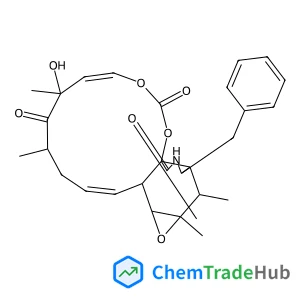
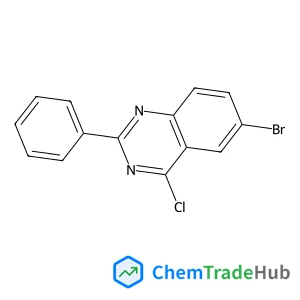
推荐供应商


免责声明
本页面提供的学术期刊信息仅供参考和研究使用。我们与任何期刊出版商均无关联,也不处理投稿事宜。如有投稿相关咨询,请直接联系相关期刊出版商。
如发现页面信息有误,请发送邮件至 support@chemtradehub.com 联系我们。我们将及时核实并处理您的问题。