


Reduction- and thermo-sensitive core-cross-linked polypeptide hybrid micelles for triggered and intracellular drug release
文献信息
发布日期
2017-01-06
DOI
10.1039/C6PY01929C
影响因子
5.582
作者
Yuanfeng Gao
查看原文
摘要
The dynamic instability, premature burst drug release, and lack of intracellular stimuli-sensitivity of current polymeric nanocarriers still hinder them from potential clinical applications. To address these challenges, a novel type of reduction- and thermo-sensitive core-cross-linked polypeptide hybrid micelle (CCM) was developed. The trimethoxysilane-terminated and disulfide-bond-centered polyglutamate with pendant diethylene glycol was synthesized from ring-opening polymerization followed by an amino-epoxy ring-opening reaction. FT-IR, 1H NMR, and thermo-gravimetric analyses verified the formation of Si–O–Si cross-linking networks in the CCMs, which have an approximately 6.6-fold lower critical aggregation concentration than the non-cross-linked counterparts. Their size, morphology and dual stimuli-sensitivity were fully characterized by DLS, TEM, and AFM. The CCMs presented a similar thermo-reversibility to non-cross-linked ones; but their size and morphology remained unchanged in 10 mM DTT at 37 °C while non-cross-linked micelles reassembled into smaller ones. The cross-linking effect in the CCMs greatly attenuated the premature burst-release behavior compared to the non-cross-linked counterparts although a reduction-triggered accelerating drug release profile was similarly observed. Furthermore, flow cytometry and CLSM confirm that the anticancer drug doxorubicin-loaded CCMs can efficiently enter the HeLa cells. Hence, this work establishes a facile platform for the fabrication of stimuli-sensitive silica-cross-linked polypeptide hybrid micelles, which hold promise to overcome the above-mentioned challenges for advanced drug delivery systems.
期刊推荐
Current Opinion in Colloid & Interface Science
Saudi Pharmaceutical Journal
Russian Journal of Bioorganic Chemistry
Drug Discovery Today
Russian Journal of Coordination Chemistry
Russian Journal of General Chemistry
Russian Journal of Applied Chemistry

New Journal of Chemistry
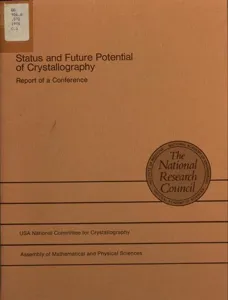
Crystallography Reports
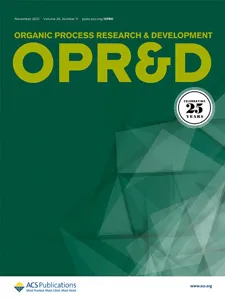
Organic Process Research & Development
相关文献
β12-Borophene becomes a semiconductor and semimetal via a perpendicular electric field and dilute charged impurity
T. C. Phong
2019-09-20
Paper
DOI: 10.1039/C9CP04719K
Four resonance structures elucidate double-bond isomerisation of a biological chromophore
Evgeniy V. Gromov, Tatiana Domratcheva
2020-04-09
Paper
DOI: 10.1039/D0CP00814A
Holistic approach to chemical degradation of Nafion membranes in fuel cells: modelling and predictions
Philipp Frühwirt, Jens T. Törring, Tomaž Katrašnik, Georg Gescheidt
2020-02-26
Paper
DOI: 10.1039/C9CP04986J
Multiferroic hydrogenated graphene bilayer
Jo Hsueh Lee, Cheng-Hung Cheng, Bo-Rong Liao, Shi-Hsin Lin
2020-03-24
Paper
DOI: 10.1039/C9CP06469A
Dissociative chemisorption of O2 on Agn and Agn−1Ir (n = 3–26) clusters: a first-principle study
Chuangchuang Wang, Yongpeng Yang, Xiaojing Liu, Yuanjie Li, Dandan Song, Yun Tian, Zhaojun Zhang
2020-04-06
Paper
DOI: 10.1039/D0CP01005G
Effects of different surface functionalization on the electronic properties and contact types of graphene/functionalized-GeC van der Waals heterostructures
Tan Phat Dao, M. Idrees, Huynh V. Phuc, Nguyen N. Hieu, Nguyen T. T. Binh, Hoi B. Dinh, B. Amin, Chuong V. Nguyen
2020-03-13
Paper
DOI: 10.1039/C9CP07009E
Anti-parallel dimer and tetramer formation of cyclic and open structure tertiary amides, N-methyl-2-pyrrolidone and N,N-dimethylacetamide, in solution of a non-polar solvent, benzene
Ayana Tagawa, Toshiyuki Shikata
2019-09-16
Paper
DOI: 10.1039/C9CP02500F
Enhanced carrier mobility and tunable electronic properties in α-tellurene monolayer via an α-tellurene and h-BN heterostructure
Xingtao Jia, Yujin Liu, Weiyang Yu, Baoji Wang, Xuefeng Yang, Qin Wang
2020-02-26
Paper
DOI: 10.1039/D0CP00269K
您可能还喜欢
化合物问答
如何储存1,2-环己二酮环乙缩醛(CAS号:4746-96-7)?
1,2-环己二酮环乙缩醛应储存在阴凉、干燥、通风良好的地方,避免阳光直射。建议使用密封容器保存,并保持环境温度在室温范围内,远离火源和热源。
4746-96-71,4-Dioxaspiro[4.5]d...
化合物问答
Ecopladib(CAS号:381683-92-7)的市场或研究趋势如何?
Ecopladib作为一种新型的药物,主要应用于治疗高胆固醇等疾病。目前,市场和研究趋势显示,Ecopladib因其独特的药理作用而受到关注。随着对心血管疾病治...
381683-92-7Ecopladib
化合物问答
2,3-Dimethyl-3H-imidazo[4,5-c]pyridine(CAS号:52538-09-7)通常如何合成?
2,3-二甲基-3H-咪唑[4,5-c]吡啶通常通过咪唑和2,3-二甲基吡啶的缩合反应合成。具体来说,将咪唑和2,3-二甲基吡啶在适当的溶剂中进行加热或加压反应...
52538-09-72,3-Dimethyl-3H-imid...
化合物问答
2,3,4,5-tetrahydro-1H-3-苯并氮杂环;盐酸盐(CAS号:17379-01-0)的市场或研究趋势如何?
该化合物在药物化学和有机合成中有一定的应用。近年来,随着对新型药物化合物的需求增加,该化合物的研究趋势主要集中在探索其生物活性,尤其是其在神经系统疾病治疗中的潜...
17379-01-02,3,4,5-Tetrahydro-1...
68-90-6(2-Ethyl-1-benzofura...
化合物问答
如何储存盐酸甘氨酸丁酯(CAS号:13048-99-2)?
盐酸甘氨酸丁酯应储存在阴凉、干燥、通风良好的地方,避免阳光直射和高温环境,温度应控制在25℃以下。储存容器应密封,避免与空气中的水分和酸性物质接触,以防发生水解...
13048-99-2Butyl glycinate hydr...
化合物问答
什么是2-Iodo-N,N-dimethylbenzamide(CAS号:54616-46-5)?
2-碘-N,N-二甲基苯胺是一种有机化合物,化学名为2-Iodo-N,N-dimethylbenzamide。其分子式为C<sub>9</sub>H<sub>1...
54616-46-52-Iodo-N,N-dimethylb...
16817-90-6N-Cyclohexylglycinam...
化合物问答
5-溴-2-(4H-1,2,4-三唑-4-基)吡啶(CAS号:959240-99-4)的市场或研究趋势如何?
随着医药、农药和新材料领域的发展,该化合物作为关键中间体的应用日益增多。特别是在药物合成中,由于其独特的化学性质,可以用于合成多种药物分子。未来的研究趋势可能集...
959240-99-45-Bromo-2-(4H-1,2,4-...
化合物问答
2,4-二溴-6-三氟甲基嘧啶(CAS号:785778-00-9)通常如何合成?
2,4-二溴-6-三氟甲基嘧啶通常通过溴化反应合成。首先,将6-三氟甲基嘧啶与溴化剂(如液溴)在适当的溶剂(如二氯甲烷、四氢呋喃)中反应,加入适当的催化剂(如四...
785778-00-92,4-Dibromo-6-(trifl...
来源期刊
Polymer Chemistry

CiteScore:
8.6
自引率:
7.3%
年发文量:
457
Polymer Chemistry welcomes submissions in all areas of polymer science that have a strong focus on macromolecular chemistry. Manuscripts may cover a broad range of fields, yet no direct application focus is required.
推荐化合物
推荐供应商



免责声明
本页面提供的学术期刊信息仅供参考和研究使用。我们与任何期刊出版商均无关联,也不处理投稿事宜。如有投稿相关咨询,请直接联系相关期刊出版商。
如发现页面信息有误,请发送邮件至 support@chemtradehub.com 联系我们。我们将及时核实并处理您的问题。