


Novel derivatives of 1,6,7,12-tetrachloroperylene-3,4,9,10-tetracarboxylic acid: synthesis, electrochemical and optical properties
文献信息
发布日期
2016-09-06
DOI
10.1039/C6QO00374E
影响因子
5.281
作者
Nick Westerveld, Ernst J. R. Sudhölter, Ferdinand C. Grozema, Wolter F. Jager
查看原文
摘要
A family of novel unsymmetrical “peri”-substituted perylene-3,4,9,10-tetracarboxylic acid derivatives (5–10), with 1,6,7,12-tetrachloro-substituents at the bay-positions, has been synthesized. Subsequently, their redox and optical properties have been explored with the intent of unveiling opto-electronic characteristics of these newly synthesized compounds. To synthesize these new compounds, pure 1,6,7,12-tetrachloroperylene-3,4,9,10-tetracarboxylic tetra-n-butylester (4) has been employed as the precursor and the structural modifications have been carried out exclusively at the “peri” positions in an efficient manner. The two synthons prepared in this work, 1,6,7,12-tetrachloroperylene-3,4,9,10-tetracarboxylic di-n-butylester monoanhydride (5) and 1,6,7,12-tetrachloroperylene-3,4,9,10-tetracarboxylic monoimide monoanhydride (8), are extremely valuable and versatile starting materials as they possess free anhydride functionality at the “peri” position in addition to the 1,6,7,12-tetrachloro-bay-substituents. Finally, the conventional methodology for the synthesis of 1,6,7,12-tetraphenoxy-bay-functionalized perylene bisimides and perylene bisbenzimidazoles has been modified to make it faster and more convenient.
期刊推荐

Construction and Building Materials
Advanced Composite Materials
Cement and Concrete Composites
Journal of Physical Organic Chemistry
Main Group Metal Chemistry
Chemistry of Materials
Composite Interfaces
Advanced Powder Technology
Journal of Computer-Aided Molecular Design
Bio-Medical Materials and Engineering
相关文献
X-ray diffraction and high-resolution TEM observations of biopolymer nanoskin-covered metallic copper fine particles: preparative conditions and surface oxidation states
Tetsu Yonezawa, Yoshiki Uchida, Hiroki Tsukamoto
2015-11-11
Paper
DOI: 10.1039/C5CP06107E
Real-space numerical grid methods in quantum chemistry
Luca Frediani, Dage Sundholm
2015-11-03
Editorial
DOI: 10.1039/C5CP90198G
Nuclear quantum tunnelling in enzymatic reactions – an enzymologist's perspective
Linus O. Johannissen, Sam Hay, Nigel S. Scrutton
2015-03-27
Perspective
DOI: 10.1039/C5CP00614G
The influence of active site conformations on the hydride transfer step of the thymidylate synthase reaction mechanism
Amnon Kohen, Vicent Moliner
2015-04-02
Paper
DOI: 10.1039/C5CP01239B
Multipole-preserving quadratures for the discretization of functions in real-space electronic structure calculations
2015-09-03
Paper
DOI: 10.1039/C5CP01236H
A slowing down of proton motion from HPTS to water adsorbed on the MCM-41 surface
Noemí Alarcos, Boiko Cohen, Abderrazzak Douhal
2015-12-16
Paper
DOI: 10.1039/C5CP04548G
Wavelet formulation of the polarizable continuum model. II. Use of piecewise bilinear boundary elements
Monica Bugeanu, Roberto Di Remigio, Krzysztof Mozgawa, Simen Sommerfelt Reine, Helmut Harbrecht, Luca Frediani
2015-07-27
Paper
DOI: 10.1039/C5CP03410H
How can carbon favor planar multi-coordination in boron-based clusters? Global structures of CBxEy2− (E = Al, Ga, x + y = 4)
Zhong-hua Cui, Jing-jing Sui, Yi-hong Ding
2015-10-30
Paper
DOI: 10.1039/C5CP04776E
Flexibility at a glycosidic linkage revealed by molecular dynamics, stochastic modeling, and 13C NMR spin relaxation: conformational preferences of α-l-Rhap-α-(1 → 2)-α-l-Rhap-OMe in water and dimethyl sulfoxide solutions
Robert Pendrill, Olof Engström, Andrea Volpato, Mirco Zerbetto, Antonino Polimeno, Göran Widmalm
2015-12-18
Paper
DOI: 10.1039/C5CP06288H
Anti-icing properties of a superhydrophobic surface in a salt environment: an unexpected increase in freezing delay times for weak brine droplets
Ludmila B. Boinovich, Alexandre M. Emelyanenko, Kirill A. Emelyanenko, Konstantin I. Maslakov
2015-12-14
Paper
DOI: 10.1039/C5CP06988B
您可能还喜欢
化合物问答
甲基双烯双酮(CAS号:5173-46-6)通常如何合成?
甲基双烯双酮可以通过多种途径合成。一种常见的合成方法是通过甲基化和环化反应,先由4-甲基-9-烯-1,3-二酮合成,然后进行环化反应得到目标产物。具体的合成路线...
5173-46-6Estra-4,9-diene-3,17...
化合物问答
如何处理含有tert-butyl 3,5-difluorobenzoate(CAS号:467442-11-1)的废料?
处理含有tert-butyl 3,5-difluorobenzoate(CAS号:467442-11-1)的废液时,应首先收集并密封,避免泄漏。随后,建议通过焚...
467442-11-12-Methyl-2-propanyl ...
化合物问答
4-二甲氧基甲基-2-(三氟甲基)嘧啶(CAS号:878760-47-5)通常如何合成?
4-二甲氧基甲基-2-(三氟甲基)嘧啶通常通过三氟甲基化反应合成。首先,将2-氯嘧啶与三氟甲基锂在惰性溶剂中反应,然后将得到的三氟甲基化中间体与二甲氧基甲基化试...
878760-47-54-(Dimethoxymethyl)-...
化合物问答
WRW4(CAS号:878557-55-2)的主要用途是什么?
WRW4主要应用于科学研究领域,尤其是在合成化学和有机合成方面。由于其特殊的化学性质,它可能被用于特定的化学反应或合成过程。
878557-55-2WRW4
化合物问答
什么是6-O-(三异丙基硅基)-D-葡萄烯糖(CAS号:137915-37-8)?
6-O-(三异丙基硅基)-D-葡萄烯糖是一种有机化合物,化学名为1,5-Anhydro-2-deoxy-6-O-(triisopropylsilyl)-D-ar...
137915-37-81,5-Anhydro-2-deoxy-...
化合物问答
N-Benzyl-N,N-dimethyl-2-phenoxyethanaminium(CAS号:7181-73-9)的主要用途是什么?
N-Benzyl-N,N-dimethyl-2-phenoxyethanaminium在有机合成中被用作保护基团,可以用于保护氨基,提高反应的选择性和产率。此外...
7181-73-9N-Benzyl-N,N-dimethy...
化合物问答
什么是3-(Cyclohex-1-en-1-yl)acrylic acid(CAS号:56453-88-4)?
3-(Cyclohex-1-en-1-yl)acrylic acid,简称3-环己烯-1-烯丙酸,是一种含有环己烯基团的丙烯酸衍生物,用于合成其他化合物或作为有...
56453-88-43-(Cyclohex-1-en-1-y...
化合物问答
如何储存(1R)-7-fluoro-1,2,3,4-tetrahydronaphthalen-1-amine(CAS号:1055949-62-6)?
应将(1R)-7-氟-1,2,3,4-四氢萘胺储存于阴凉、干燥、通风良好的地方,远离火源和热源。避免与氧化剂、酸类接触。使用合适的容器,密封保存。
1055949-62-6(1R)-7-Fluoro-1,2,3,...
化合物问答
3-甲基苯并呋喃-2-羧酸(CAS号:24673-56-1)的主要用途是什么?
3-甲基苯并呋喃-2-羧酸主要用作合成其他化合物的中间体,如药物合成、有机合成等领域。此外,该化合物在某些领域作为化学试剂或分析试剂使用。
24673-56-13-Methyl-1-benzofura...
化合物问答
孕烷醇酮(CAS号:128-20-1)适用哪些法规指南?
孕烷醇酮(CAS号:128-20-1)需遵守GHS(全球化学品统一分类和标签制度)的相关分类和标签要求,主要涉及健康危害、环境危害和物理化学危害。此外,还需要遵...
128-20-1(3alpha,5beta)-3-Hyd...
来源期刊
Organic Chemistry Frontiers

CiteScore:
7.8
自引率:
8.7%
年发文量:
724
Organic Chemistry Frontiers publishes high-quality research from across organic chemistry. Emphases are placed on studies that make significant contributions to the field of organic chemistry by reporting either new or significantly improved protocols or methodologies. Topics include, but are not limited to the following: Organic synthesis Development of synthetic methodologies Catalysis Natural products Functional organic materials Supramolecular and macromolecular chemistry Physical and computational organic chemistry
推荐化合物
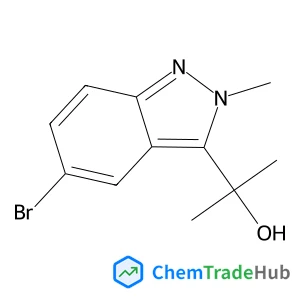
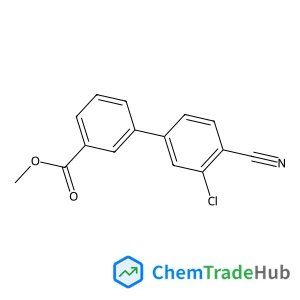
![1-{[5-(4,4,5,5-Tetramethyl-1,3,2-dioxaborolan-2-yl)-2-thienyl]methyl}piperidine structure](https://cnstatic.chemtradehub.com/structs/121/1218790-44-3-baef.webp "1-{[5-(4,4,5,5-Tetramethyl-1,3,2-dioxaborolan-2-yl)-2-thienyl]methyl}piperidine structure")
推荐供应商




免责声明
本页面提供的学术期刊信息仅供参考和研究使用。我们与任何期刊出版商均无关联,也不处理投稿事宜。如有投稿相关咨询,请直接联系相关期刊出版商。
如发现页面信息有误,请发送邮件至 support@chemtradehub.com 联系我们。我们将及时核实并处理您的问题。