










Microchip electrophoresis utilizing an in situ photopolymerized Phos-tag binding polyacrylamide gel for specific entrapment and analysis of phosphorylated compounds
文献信息
发布日期
2017-08-15
DOI
10.1039/C7AN00836H
影响因子
4.616
作者
Sachio Yamamoto, Miyuki Himeno, Masaya Kobayashi, Miki Akamatsu, Ryosuke Satoh
查看原文
摘要
A method was developed for the specific entrapment and separation of phosphorylated compounds using a Phos-tag polyacrylamide gel fabricated at the channel crossing point of a microfluidic electrophoresis chip. The channel intersection of the poly(methyl methacrylate)-made microchip was filled with a solution comprising acrylamide, N,N-methylene-bis-acrylamide, Phos-tag acrylamide, and 2,2′-azobis[2-methyl-N-(2-hydroxyethyl)propionamide], which functioned as a photocatalytic initiator. In situ polymerization at the channel crossing point was performed by irradiation with a UV LED laser beam. The fabricated Phos-tag gel (100 × 100 × 30 μm) contains ca. 20 fmol of the Phos-tag group and therefore could entrap phosphorylated compounds at the femtomolar level. The electrophoretically trapped phosphorylated compounds were released from the gel by switching the voltage to deliver high concentrations of phosphate and EDTA in a background electrolyte. The broad sample band eluted from the gel was effectively reconcentrated at the boundary of a pH junction generated by sodium ions delivered from the outlet reservoir. The reconcentrated sample components were then separated and fluorometrically detected at the end of the separation channel. Under the optimized conditions, the phosphorylated compounds were concentrated by a factor of 100-fold, and the peak resolution was comparable to that obtained by pinched injection. This method was successfully utilized to preconcentrate and analyze phosphorylated peptides in a complex peptide mixture.
相关文献
Modelling absorption and emission of a meso-aniline–BODIPY based dye with molecular mechanics
Flip de Jong, Milica Feldt, Jonas Feldt, Jeremy N. Harvey
2018-05-12
Paper
DOI: 10.1039/C8CP01877D
Water structure and dynamics in the hydration layer of a type III anti-freeze protein
Z. Faidon Brotzakis, Ilja K. Voets, Huib J. Bakker, Peter G. Bolhuis
2018-02-01
Paper
DOI: 10.1039/C8CP00170G
Understanding the ionic conductivity maximum in doped ceria: trapping and blocking
Julius Koettgen, Philipp Hein, Benjamin O. H. Grope
2018-02-02
Perspective
DOI: 10.1039/C7CP08535D
Enhancing the thermoelectric performance of gamma-graphyne nanoribbons by introducing edge disorder
Xiao Cui, Tao Ouyang, Jin Li, Chaoyu He, Chao Tang, Jianxin Zhong
2018-02-06
Paper
DOI: 10.1039/C7CP08154E
Rapid localized crystallization of lysozyme by laser trapping
Ken-ichi Yuyama, Kai-Di Chang, Jing-Ru Tu, Hiroshi Masuhara
2018-01-03
Communication
DOI: 10.1039/C7CP06990A
Chemical and substitutional doping, and anti-site and vacancy formation in monolayer AlN and GaN
Ethem Aktürk, Salim Ciraci
2018-05-14
Paper
DOI: 10.1039/C8CP02188K
Maximum bonding fragment orbitals for deciphering complex chemical interactions
2018-05-01
Paper
DOI: 10.1039/C8CP01808A
Influence of particle viscosity on mass transfer and heterogeneous ozonolysis kinetics in aqueous–sucrose–maleic acid aerosol‡
Frances H. Marshall, Thomas Berkemeier, Manabu Shiraiwa, Lucy Nandy, Peter B. Ohm, Cari S. Dutcher, Jonathan P. Reid
2018-05-29
Paper
DOI: 10.1039/C8CP01666F
Effective interaction potentials for model amphiphilic surfactants adsorbed at fluid–fluid interfaces
Ahmad Moghimikheirabadi, Patrick Ilg
2018-05-29
Paper
DOI: 10.1039/C8CP01632A
您可能还喜欢
化合物问答
什么是2-Bromo-1-(pyrimidin-2-yl)ethanone hydrobromide(CAS号:1588441-02-4)?
2-Bromo-1-(pyrimidin-2-yl)ethanone hydrobromide是一种有机化合物,分子式为C6H5Br2N2O2。它是一种溴代化合...
1588441-02-42-Bromo-1-(2-pyrimid...
化合物问答
在合成中是否有1-正-丁基-3-甲基咪唑鎓三氟甲烷磺酸盐(CAS号:174899-66-2)的替代品?
在合成中,可以考虑使用1-正-丁基-3-甲基咪唑鎓溴酸盐或1-正-丁基-3-甲基咪唑鎓氯酸盐作为替代品。这些化合物在性能上与1-正-丁基-3-甲基咪唑鎓三氟甲烷...
174899-66-21-Butyl-3-methyl-1H-...
化合物问答
2-methyl-5-thiophen-2-ylfuran-3-carboxylic acid(CAS号:651005-90-2)的市场或研究趋势如何?
目前,2-methyl-5-thiophen-2-ylfuran-3-carboxylic acid的研究主要集中在药物化学和新型材料领域。随着生物医药和有机合...
651005-90-22-Methyl-5-(thien-2-...
化合物问答
格列吡嗪杂质H(CAS号:13554-93-3)的主要用途是什么?
格列吡嗪杂质H主要作为药物中间体或副产物存在,并无特定的工业应用。在药物生产中,它可能需要被处理掉以保证最终药物的质量。
13554-93-3Ethyl (2-(4-((cycloh...
化合物问答
如何储存(9ci)-4-甲氧基-1H-苯并咪唑-2-乙腈(CAS号:317817-41-7)?
(9ci)-4-甲氧基-1H-苯并咪唑-2-乙腈应储存在阴凉、干燥、通风良好的地方,避免阳光直射。使用密封的玻璃或塑料容器储存,并确保容器的密封性良好,以防止挥...
317817-41-7(4-Methoxy-1H-benzim...
化合物问答
4,5,9,10-四氢苯芘(CAS号:781-17-9)应用于哪些行业?
4,5,9,10-四氢苯芘在医药行业用于作为某些药物的中间体,在聚合物行业用作添加剂提升材料的热稳定性,在传感器领域作为传感器的敏感材料,在半导体行业中用作掺杂...
781-17-94,5,9,10-Tetrahydrop...
化合物问答
处理叶酸-D4(CAS号:171777-72-3)时应注意哪些实验室安全事项?
处理叶酸-D4时应佩戴个人防护装备(PPE),如手套和实验服。操作应在通风橱内进行,以避免吸入蒸汽或粉尘。如果不慎泄露,应立即用大量清水冲洗,并通知安全人员。参...
171777-72-3Folic Acid-d4
化合物问答
如何处理含有6-溴-2-(三氟乙酰基)-1,2,3,4-四氢异喹啉(CAS号:252331-63-8)的废料?
含有该化合物的废料应收集到专用的容器中,并进行密封以防止挥发和泄漏。在处理前,需进行危险性评估,以确定是否需要进行化学处理。最终处置需遵循当地的危险废物管理规定...
252331-63-81-(6-bromo-3,4-dihyd...
化合物问答
4,5-二氟-2-甲氧基苯甲醛(CAS号:145742-34-3)的主要用途是什么?
4,5-二氟-2-甲氧基苯甲醛主要用作有机合成中的中间体,特别是在制药和农药领域。它可以作为合成其他有机化合物的原料。
145742-34-34,5-difluoro-2-metho...
化合物问答
5-溴-6-三氟甲基吲哚(CAS号:1198475-24-9)安全吗?
5-溴-6-三氟甲基吲哚作为一种化学试剂,具有一定的毒性,需要在通风橱中操作,并采取适当的安全措施以避免吸入、皮肤接触和眼睛刺激。应避免与皮肤和眼睛直接接触,并...
1198475-24-95-bromo-6-(trifluoro...
来源期刊
Analyst

CiteScore:
7.8
自引率:
5.6%
年发文量:
653
Analyst publishes analytical and bioanalytical research that reports premier fundamental discoveries and inventions, and the applications of those discoveries, unconfined by traditional discipline barriers.
推荐化合物
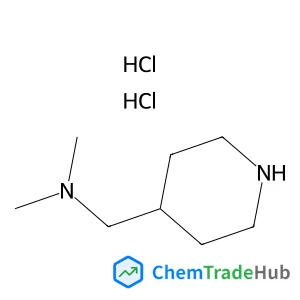
![Sodium 6-amino-3-[(E)-{4-[(E)-(4-aminophenyl)diazenyl]-2-methoxy-5-methylphenyl}diazenyl]-4-hydroxy-2-naphthalenesulfonate structure](https://cnstatic.chemtradehub.com/structs/294/2945-96-2-092f.webp "Sodium 6-amino-3-[(E)-{4-[(E)-(4-aminophenyl)diazenyl]-2-methoxy-5-methylphenyl}diazenyl]-4-hydroxy-2-naphthalenesulfonate structure")
推荐供应商


免责声明
本页面提供的学术期刊信息仅供参考和研究使用。我们与任何期刊出版商均无关联,也不处理投稿事宜。如有投稿相关咨询,请直接联系相关期刊出版商。
如发现页面信息有误,请发送邮件至 support@chemtradehub.com 联系我们。我们将及时核实并处理您的问题。