


![1-Benzyl-1,7-diazaspiro[4.4]nonane dihydrochloride structure](https://cnstatic.chemtradehub.com/structs/115/1159822-71-5-0320.webp "1-Benzyl-1,7-diazaspiro[4.4]nonane dihydrochloride structure")
Self-assembled core–polyethylene glycol–lipid shell nanoparticles demonstrate high stability in shear flow
文献信息
发布日期
2017-04-21
DOI
10.1039/C7CP01530E
影响因子
3.676
作者
Zhiqiang Shen, Huilin Ye, Martin Kröger, Ying Li
查看原文
摘要
A core–polyethylene glycol–lipid shell (CPLS) nanoparticle consists of an inorganic core coated with polyethylene glycol (PEG) polymers, surrounded by a lipid bilayer shell. It can be self-assembled from a PEGylated core with surface-tethered PEG chains, where all the distal ends are covalently bonded to lipid molecules. Upon adding free lipids, a complete lipid bilayer shell can be formed on the surface driven by the hydrophobic nature of lipid tails, leading to the formation of a CPLS nanoparticle. The stability of CPLS nanoparticles in shear flow has been systematically studied through large scale dissipative particle dynamics simulations. CPLS nanoparticles demonstrate higher stability and less deformation in shear flow, compared with lipid vesicles. Burst leakage of drug molecules inside lipid vesicles and CPLS NPs can be induced by the large pores at their tips. These pores are initiated by the maximum stress in the waist region. It further grows along with the tank-treading motion of vesicles or CPLS NPs in shear flow. However, due to the constraints applied by PEG polymers, CPLS NPs are less deformed than vesicles with comparable size under the same flow conditions. Thus, the less deformed CPLS NPs express a smaller maximum stress at waists, demonstrating higher stability. Pore formation at waists, evolving into large pores on vesicles, leads to the burst leakage of drug molecules and complete rupture of vesicles. In contrast, although similar drug leakage in CPLS nanoparticles can occur at high shear rates, pores initiated at moderate shear rates tend to be short-lived and close due to the constraints mediated by PEG polymers. This kind of ‘self-healing’ capability can be observed over a wide range of shear rates for CPLS nanoparticles. Our results suggest self-assembled CPLS nanoparticles to exhibit high stability during blood circulation without rapid drug leakage. These features make CPLS nanoparticles candidates for a promising drug delivery platform.
期刊推荐

Organic Process Research & Development
Journal of Saudi Chemical Society
Chemical Communications
Russian Journal of Coordination Chemistry
New Journal of Chemistry

Current Opinion in Solid State & Materials Science
Nature Medicine
Saudi Pharmaceutical Journal

Chemistry Education Research and Practice

Acta Materialia
相关文献
Intramolecular aryl transfer to thionium ions in an approach to α-arylacetamides
Caroline Ovens, Johannes C. Vogel, Nathaniel G. Martin, David J. Procter
2009-04-17
Communication
DOI: 10.1039/B904577E
Efficient synthesis of 2,4,5-trisubstituted 2,5-chiral tetrahydropyridines using a one-pot asymmetric azaelectrocyclization protocol
Toyoharu Kobayashi, Kenichi Takeuchi, Junichi Miwa, Hiroshi Tsuchikawa, Shigeo Katsumura
2009-05-13
Communication
DOI: 10.1039/B900897G
Controlled catch and release of small molecules with cucurbit[6]urilvia a kinetic trap
Li Liu, Nicolas Nouvel, Oren A. Scherman
2009-04-24
Communication
DOI: 10.1039/B903033F
The design, synthesis and evaluation of hypoxia-activated pro-oligonucleotides
Chunyan Tan, Puqin Cai, Peizhuo Zhang, Yufen Zhao
2009-04-23
Communication
DOI: 10.1039/B903331A
The trinity of polyoxometalates: connecting {M12} Keggin and {M18} Dawson clusters to triangles
Scott G. Mitchell, Sumit Khanra, Haralampos N. Miras, Thomas Boyd, De-Liang Long, Leroy Cronin
2009-04-16
Communication
DOI: 10.1039/B903206A
High performance, acene-based organic thin film transistors
Gonzalo Rincon Llorente, Marie-Beatrice Dufourg-Madec, David J. Crouch, Robin G. Pritchard, Simon Ogier, Stephen G. Yeates
2009-04-09
Communication
DOI: 10.1039/B901448A
Efficient copper-catalyzed coupling of aryl chlorides, bromides and iodides with aqueous ammonia‡
Hanhui Xu, Christian Wolf
2009-04-27
Communication
DOI: 10.1039/B904188E
Metal complexes with two different hydrogen-bond donor ligands as anion hosts
Sonia Nieto, Julio Pérez, Lucía Riera, Víctor Riera, Daniel Miguel
2009-04-24
Communication
DOI: 10.1039/B823460D
A self-supporting monolith of highly aligned carbon nanotubes as device structure for sensor applications‡
Alexander Popp, Oktay Yilmazoglu, Oktay Kaldirim, Jörg J. Schneider, Dimitris Pavlidis
2009-04-27
Communication
DOI: 10.1039/B900854C
The first enantioselective synthesis of palinurin
Manuel Pérez, Daniel I. Pérez, Ana Martínez, Ana Castro, Generosa Gómez, Yagamare Fall
2009-05-05
Communication
DOI: 10.1039/B822679B
您可能还喜欢
化合物问答
N-2,2-丙烯基-2-丙烯酰胺(CAS号:2555-13-7)通常如何合成?
N-2,2-丙烯基-2-丙烯酰胺通常通过丙烯酰胺与丙烯基卤化物的缩合反应合成。该反应通常在温和的条件下进行,使用适量的碱如吡啶作为催化剂。反应的选择性良好,产率...
2555-13-7N-Allylacrylamide
化合物问答
什么是1,2-二碘四氟代乙烷(CAS号:354-65-4)?
1,2-二碘四氟代乙烷是一种有机化合物,化学式为C2F4I2,CAS号为354-65-4。它是一种无色透明液体,具有特殊的化学性质和物理性质,包括高沸点、低挥发...
354-65-41,1,2,2-Tetrafluoro-...
化合物问答
3-溴-1H-吡咯[3,2-c]吡啶-4-碳腈(CAS号:1000341-71-8)适用哪些法规指南?
根据GHS(全球化学品统一分类和标签制度),3-溴-1H-吡咯[3,2-c]吡啶-4-碳腈被归类为第2类易燃液体。在欧盟,该化合物需要符合REACH法规的要求,...
1000341-71-83-Bromo-1H-pyrrolo[3...
化合物问答
1-氯甲基萘磺酸(CAS号:87491-79-0)安全吗?
1-氯甲基萘磺酸在使用时需要谨慎,因为它具有一定的刺激性和腐蚀性。操作时应佩戴适当的防护装备,如防化服、手套、护目镜等,避免直接接触皮肤和吸入其蒸汽。
87491-79-01-((Chloromethyl)sul...
化合物问答
二氯(二环戊二烯)铂(CAS号:12083-92-0)的主要用途是什么?
该化合物主要用于催化剂领域,特别是在有机合成中的催化氧化反应以及作为某些药物合成的中间体。此外,它还被研究用于纳米材料的制备。
12083-92-0(1S,7R)-Tricyclo[5.2...
化合物问答
3-溴-7-氯噻吩并[3,2-b]吡啶-6-甲腈(CAS号:798574-82-0)安全吗?
3-溴-7-氯噻吩并[3,2-b]吡啶-6-甲腈在处理时需要谨慎,因其含有溴和氯等强卤素,可能具有一定的刺激性和腐蚀性。使用时应佩戴适当的个人防护装备,避免皮肤...
798574-82-03-Bromo-7-chlorothie...
化合物问答
(R)-1-((R)-2-(2’-二环己基膦苯基)三戊铁基]乙基(双-3,5-三氟甲基苯基)膦(CAS号:494227-32-6)的主要用途是什么?
该化合物主要用于有机合成领域,特别是作为催化剂或配体,在有机合成反应中发挥重要作用。此外,它还可能应用于催化加氢反应、偶联反应等。
494227-32-6Walphos SL-W008-1
化合物问答
3-[6-(Diphenylphosphoryl)-2-naphthyl]-1,10-phenanthroline(CAS号:1480371-38-7)安全吗?
3-[6-(Diphenylphosphoryl)-2-naphthyl]-1,10-phenanthroline在正常使用条件下相对安全,但在操作时应穿戴适当...
1480371-38-73-[6-(Diphenylphosph...
化合物问答
在合成中是否有ETHYL 2-(4-(4,4,5,5-TETRAMETHYL-1,3,2-DIOXABOROLAN-2-YL)CYCLOHEX-3-ENYL)ACETATE(CAS号:1166829-70-4)的替代品?
可以考虑使用类似结构的化合物作为替代品,如2-(4-环戊基环己烯基)乙酸酯,这种化合物在结构上相似,可能在某些合成路径中作为替代品。
1166829-70-4Ethyl [4-(4,4,5,5-te...
化合物问答
如何处理含有3-(3-氨基丙基)丙酮缩甘油(CAS号:131606-42-3)的废料?
处理含有3-(3-氨基丙基)丙酮缩甘油的废料时,首先应确保遵守当地的环保法规。对于危险废物,应进行分类收集,然后送至专业的废物处理设施进行焚烧或安全填埋。在处理...
131606-42-33-[(2,2-Dimethyl-1,3...
来源期刊
Physical Chemistry Chemical Physics

CiteScore:
5.5
自引率:
10.3%
年发文量:
3036
Physical Chemistry Chemical Physics (PCCP) is an international journal co-owned by 19 physical chemistry and physics societies from around the world. This journal publishes original, cutting-edge research in physical chemistry, chemical physics and biophysical chemistry. To be suitable for publication in PCCP, articles must include significant innovation and/or insight into physical chemistry; this is the most important criterion that reviewers and Editors will judge against when evaluating submissions. The journal has a broad scope and welcomes contributions spanning experiment, theory, computation and data science. Topical coverage includes spectroscopy, dynamics, kinetics, statistical mechanics, thermodynamics, electrochemistry, catalysis, surface science, quantum mechanics, quantum computing and machine learning. Interdisciplinary research areas such as polymers and soft matter, materials, nanoscience, energy, surfaces/interfaces, and biophysical chemistry are welcomed if they demonstrate significant innovation and/or insight into physical chemistry. Joined experimental/theoretical studies are particularly appreciated when complementary and based on up-to-date approaches.
推荐化合物
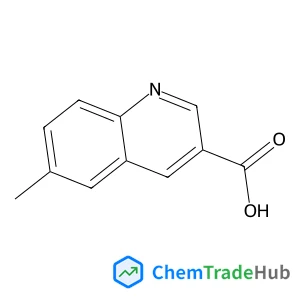
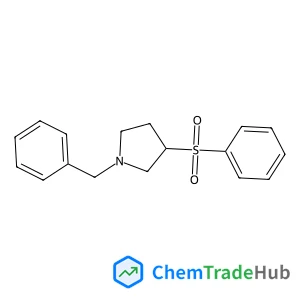
![[1-(5-Methyl-2-pyridinyl)-1H-pyrazol-4-yl]methanol structure](https://cnstatic.chemtradehub.com/structs/143/1439822-99-7-6cc9.webp "[1-(5-Methyl-2-pyridinyl)-1H-pyrazol-4-yl]methanol structure")
推荐供应商






免责声明
本页面提供的学术期刊信息仅供参考和研究使用。我们与任何期刊出版商均无关联,也不处理投稿事宜。如有投稿相关咨询,请直接联系相关期刊出版商。
如发现页面信息有误,请发送邮件至 support@chemtradehub.com 联系我们。我们将及时核实并处理您的问题。