


Methanol–methanol and methanol–water systems: the intermolecular interactions controlling the transition from small clusters to the liquid phase
文献信息
发布日期
2017-06-05
DOI
10.1039/C7CP02919E
影响因子
3.676
作者
Margarita Albertí, Anna Amat, Antonio Aguilar, Fernando Pirani
查看原文
摘要
The present paper focuses on the characterization of the properties of methanol and water molecules in gas and liquid environments. A force field for methanol–methanol and methanol–water interactions, useful to be applied in Molecular Dynamics (MD) simulations, is proposed. The electrostatic interaction contributions, arising from permanent charge and/or from anisotropic charge distributions originating from permanent electric multipoles (Vel), different in gas and in liquid phases, are combined with the non electrostatic ones (Vnel), defined by means of Improved Lennard-Jones (ILJ) functions [F. Pirani et al., Phys. Chem. Chem. Phys., 2008, 10, 5489–5503]. Interestingly, the relevant parameters of the ILJ functions are not fitted to reproduce the selected properties of the systems but calculated from the molecular polarizability, which is considered the key property to define size (or Pauli) repulsion and dispersion and induction attractions. The constructed force field predicts binding energies and geometries of the methanol–methanol and methanol–water dimers, in good agreement with available data. On the other hand, several bulk and structural properties of liquid methanol, such as densities, vaporization enthalpies, diffusion coefficients, coefficients of cubic thermal expansion, heat capacities at constant pressure and some relevant radial distribution functions, calculated considering 2744 molecules and different conditions of pressure and temperature, have also been found to be in good agreement with experimental data. The study has been completed by calculating the density values at 298 K and 1 bar of some methanol–water mixtures, which have also been found to be in good agreement with experimental data.
期刊推荐
Journal of the Indian Institute of Science
Acta Metallurgica Sinica-English Letters
Main Group Chemistry
Herald of the Russian Academy of Sciences
Journal of Asian Natural Products Research
Medicinal Chemistry Research
Cellulose
Atomization and Sprays
Critical Reviews in Solid State and Materials Sciences
Polycyclic Aromatic Compounds
相关文献
Surface plasmon resonance imaging of limited glycoprotein samples
Yi Chen, Mingdi Yan
2008-07-30
Paper
DOI: 10.1039/B804235G
Sequence-specific electrochemical detection of Alicyclobacillus acidoterrestrisDNA using electroconductive polymer-modified fluorine tin oxide electrodes
Katlin Ivon Barrios Eguiluz, Giancarlo Richard Salazar-Banda, Maribel Elizabeth Funes-Huacca, Juliana Vieira Alberice, Emanuel Carrilho, Sergio Antonio Spinola Machado, Luis Alberto Avaca
2008-10-29
Paper
DOI: 10.1039/B809080G
Targeting and detecting cancer cells using spontaneously formed multifunctional dendrimer-stabilized gold nanoparticles
Xiangyang Shi, Su He Wang, Mary E. Van Antwerp, Xisui Chen, James R. Baker, Jr
2009-04-17
Paper
DOI: 10.1039/B902199J
Self-encapsulation of oxidases as a basic approach to tune the upper detection limit of amperometric biosensors
Arunas Ramanavicius, Almira Ramanaviciene
2008-06-12
Paper
DOI: 10.1039/B801501E
Imprinted polymers for chiral resolution of (±)-ephedrine. Part 2: probing pre-polymerisation equilibria in different solvents by NMR‡
Richard J. Ansell, Dongyao Wang, Janice K. L. Kuah
2008-09-03
Paper
DOI: 10.1039/B806376A
Sol–gel derived nano-structured zinc oxide film for sexually transmitted disease sensor
Anees A. Ansari, Renu Singh, G. Sumana, B. D. Malhotra
2009-03-06
Paper
DOI: 10.1039/B817562D
Dithizone nanofiber-coated membrane for filtration-enrichment and colorimetric detection of trace Hg(ii) ion
Toshishige M. Suzuki
2009-04-23
Paper
DOI: 10.1039/B816461D
Optimization and evaluation of networked single-wall carbon nanotubes as a NO2 gas sensing material
Isao Sasaki, Nobutsugu Minami, Annamalai Karthigeyan, Konstantin Iakoubovskii
2008-11-03
Paper
DOI: 10.1039/B813073F
Preparation and characterization of silica confined ionic liquids as chromatographic stationary phases through surface radical chain-transfer reaction
Hongdeng Qiu, Licheng Wang, Xia Liu, Shengxiang Jiang
2008-11-27
Paper
DOI: 10.1039/B809125K
The analytical utility of thermally desorbed polydimethylsilicone membranes for in-vivo sampling of volatile organic compounds in and on human skin
S. Riazanskaia, G. Blackburn, M. Harker, D. Taylor, C. L. P. Thomas
2008-05-20
Paper
DOI: 10.1039/B802515K
您可能还喜欢
化合物问答
4,5-二甲基-2-硝基苯甲酸(CAS号:4315-14-4)的市场或研究趋势如何?
4,5-二甲基-2-硝基苯甲酸主要应用于制药、染料和农药等行业。由于其潜在的毒性,其市场趋势可能受到法规限制和环保考量的影响,推动了替代产品的研发。在研究领域,...
4315-14-44,5-Dimethyl-2-nitro...
化合物问答
处理直接黑22(CAS号:6473-13-8)时应注意哪些实验室安全事项?
处理直接黑22时应穿戴适当的个人防护装备(PPE),包括实验服、手套、护目镜和口罩。操作应在通风橱内进行,以避免吸入有害气体。如果发生泄漏,应立即清理,并使用大...
6473-13-82-Naphthalenesulfoni...
化合物问答
处理2,1,3-苯并噻二唑-4-基异氰酸酯(CAS号:342411-14-7)时应注意哪些实验室安全事项?
处理2,1,3-苯并噻二唑-4-基异氰酸酯时应注意以下安全事项:穿戴个人防护装备,如实验室外套、防护眼镜和手套;在通风橱中操作,确保良好的通风;保持实验室环境干...
342411-14-74-Isocyanato-2,1,3-b...
化合物问答
如何处理含有Δ-8,9-脱氢雌酮(CAS号:204077-66-7)的废料?
含有Δ-8,9-脱氢雌酮的废料需要进行适当的处理以确保环境和人体安全。首先,收集废液并存放于密封容器中,避免泄漏。其次,可以考虑将其转化为无害物质或通过专业处理...
204077-66-7Thioquinapiperifil d...
化合物问答
如何储存5-溴戊酸(CAS号:2067-33-6)?
5-溴戊酸应储存在阴凉、干燥、通风良好的环境中,避免阳光直射。建议在室温(约15-25°C)下保存,保持相对湿度低于60%。应使用密封的玻璃或塑料容器,并远离热...
2067-33-65-Bromopentanoic aci...
化合物问答
4-(甲基亚磺酰基)苯胺(CAS号:22865-62-9)应用于哪些行业?
4-(甲基亚磺酰基)苯胺在医药、聚合物和传感器等领域有一定的应用。在医药方面,它可以用作合成药物的中间体;在聚合物领域,可以作为合成特殊性能高分子材料的单体;在...
22865-62-94-Methylsulfinylanil...
化合物问答
什么是1-(2-FLUOROPHENYL)-5-METHYL-1H-PYRAZOLE-4-CARBOHYDRAZIDE(CAS号:618092-58-3)?
1-(2-氟苯基)-5-甲基-1H-吡唑-4-亚甲基肼是一种有机化合物,其分子式为C9H9FN3O。该化合物具有特定的物理化学性质,如熔点、沸点等,但具体值需查...
618092-58-31-(2-Fluorophenyl)-5...
化合物问答
Dauricumine(CAS号:345641-00-1)通常如何合成?
Dauricumine通常通过复杂的合成路线制备,涉及多个步骤,包括环化、氧化、卤化等反应。合成过程中使用了多种催化剂和试剂,例如金属催化剂、氧化剂等。产率通常...
345641-00-1(1R,1'S,5R,6'S,8'S)-...
化合物问答
5-氰基苯酞(CAS号:82104-74-3)安全吗?
5-氰基苯酞在正常使用条件下相对安全,但其具有一定的毒性,需谨慎操作。在实验或工业应用中,应采取适当的防护措施,如佩戴防护手套、护目镜和实验服,确保通风良好。误...
82104-74-31-Oxo-1,3-dihydro-2-...
化合物问答
2-Methyl-1-(phenylsulfonyl)-1H-pyrrolo[2,3-b]pyridin-5-amine(CAS号:1186502-59-9)安全吗?
该化合物在使用时需要谨慎操作。虽然其毒性和健康风险尚未完全明确,但建议在通风良好的环境中操作,并穿戴适当的个人防护装备,如手套和防护眼镜。
1186502-59-92-Methyl-1-(phenylsu...
来源期刊
Physical Chemistry Chemical Physics

CiteScore:
5.5
自引率:
10.3%
年发文量:
3036
Physical Chemistry Chemical Physics (PCCP) is an international journal co-owned by 19 physical chemistry and physics societies from around the world. This journal publishes original, cutting-edge research in physical chemistry, chemical physics and biophysical chemistry. To be suitable for publication in PCCP, articles must include significant innovation and/or insight into physical chemistry; this is the most important criterion that reviewers and Editors will judge against when evaluating submissions. The journal has a broad scope and welcomes contributions spanning experiment, theory, computation and data science. Topical coverage includes spectroscopy, dynamics, kinetics, statistical mechanics, thermodynamics, electrochemistry, catalysis, surface science, quantum mechanics, quantum computing and machine learning. Interdisciplinary research areas such as polymers and soft matter, materials, nanoscience, energy, surfaces/interfaces, and biophysical chemistry are welcomed if they demonstrate significant innovation and/or insight into physical chemistry. Joined experimental/theoretical studies are particularly appreciated when complementary and based on up-to-date approaches.
推荐化合物
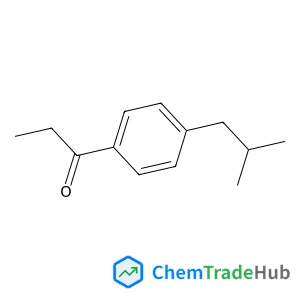
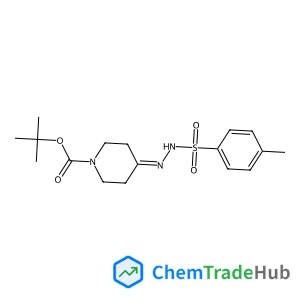
tert-Butyl 4-(2-(p-Tolylsulfonyl)hydrazono)piperidine-1-carboxylate
CAS号:
1046478-89-0
分子式:
C17H25N3O4S
推荐供应商





免责声明
本页面提供的学术期刊信息仅供参考和研究使用。我们与任何期刊出版商均无关联,也不处理投稿事宜。如有投稿相关咨询,请直接联系相关期刊出版商。
如发现页面信息有误,请发送邮件至 support@chemtradehub.com 联系我们。我们将及时核实并处理您的问题。