










Two-step volume phase transition mechanism of poly(N-vinylcaprolactam) hydrogel online-tracked by two-dimensional correlation spectroscopy
文献信息
发布日期
2017-09-21
DOI
10.1039/C7CP04571A
影响因子
3.676
作者
Gehong Su, Tao Zhou, Xifei Liu, Yulin Zhang
查看原文
摘要
In this study, temperature-dependent FTIR spectroscopy in combination with the perturbation–correlation moving-window (PCMW2D) technique and generalized two-dimensional (2D) correlation analysis was applied to investigate the phase transition mechanism of poly(N-vinylcaprolactam) (PVCL) hydrogel upon heating. In the conventional 1D FTIR spectra, the gradual dehydration of C–H groups, as well as the gradual dissociation of hydrogen bonds between CO groups and water molecules, was observed during phase transition. Moreover, we found that the rate at which water molecules were expelled out of the gel network during phase transition was changed to a sigmoid mode, rather than increasing linearly with increasing temperature. PCMW2D FTIR spectra revealed that the phase transition of PVCL hydrogel can be divided into two steps (named as I and II) upon heating, and we further determined the temperature regions of steps I and II to be 29.0–35.7 °C and 35.7–47.5 °C, respectively. Step I is the formation of hydrophobic domains in the gel, and step II is the chain collapse of the gel. Finally, with the help of generalized 2D correlation analysis, it was confirmed that the transformation of hydrogen bonds was the driving force of the hydrophobic domain formation process, while the hydrophobic interaction of C–H groups was the driving force for the chain collapse process. Combined with the obtained sequential orders of step I and step II, an integrated two-step phase transition mechanism of PVCL hydrogel upon heating was proposed.
相关文献
Comparative study of different particle sizes of added olive leaves for the content of target polyphenols in virgin olive oil
2023-09-25
Paper
DOI: 10.1039/D3FB00108C
Dye adsorption-assisted colloidal dispersion of single-walled carbon nanotubes in polar solvents
Akiho Horibe, Tomoko Murayama, Tsuyoshi Kawai, Yoshiyuki Nonoguchi
2023-09-18
Paper
DOI: 10.1039/D3LF00119A
Adsorption efficiency of crystal violet from the aqueous phase onto a carbonaceous material prepared from waste cotton and polyester
Fumihiko Ogata, Kazuki Sugimura, Noriaki Nagai, Keiji Nishiwaki
2023-12-04
Paper
DOI: 10.1039/D3SU00342F
Developing 3D computational models to capture the spatial, temporal and thermal behavior as laser beams propagate through photo-thermally responsive gels
Victor V. Yashin, Fariha Mahmood, Kalaichelvi Saravanamuttu, Anna C. Balazs
2023-11-16
Paper
DOI: 10.1039/D3LF00156C
The effects of lignin source and extraction on the composition and properties of biorefined depolymerization products
Natalia Obrzut, Rob Hickmott, Lily Shure, Kimberly A. Gray
2023-10-27
Paper
DOI: 10.1039/D3SU00262D
Al(iii)-based MOF for the selective adsorption of phosphate and arsenate from aqueous solutions
Herlys Viltres, Valeria B. López-Cervantes, Camilo Serrano-Fuentes, Amin Reza Rajabzadeh, Seshasai Srinivasan, Ricardo A. Peralta, Carolina Leyva
2023-09-25
Paper
DOI: 10.1039/D3LF00061C
Sustainability-driven photocatalysis: oxygen-doped g-C3N4 for organic contaminant degradation
Soumya Ranjan Mishra, Vishal Gadore, Md. Ahmaruzzaman
2023-12-04
Tutorial Review
DOI: 10.1039/D3SU00384A
Extraction of cellulose from restaurant food waste
Matthew T. Garnett, Harrish Kumar Senthil Kumar, Bryan S. Beckingham, Symone L. M. Alexander
2023-11-25
Paper
DOI: 10.1039/D3SU00192J
Recent advances in semiconductor heterojunctions: a detailed review of the fundamentals of photocatalysis, charge transfer mechanism and materials
Aniket Balapure, Jayati Ray Dutta, Ramakrishnan Ganesan
2023-09-27
Review Article
DOI: 10.1039/D3LF00126A
您可能还喜欢
化合物问答
如何处理含有8-氯咪唑并[1,2-A]吡嗪(CAS号:69214-33-1)的废料?
处理含有8-氯咪唑并[1,2-A]吡嗪的废料时,应首先将其收集并进行化学回收或降解。如果无法回收,需采用安全的化学处理方法,如中和、氧化还原或沉淀。处理过程中需...
69214-33-18-chloroimidazo[1,2-...
化合物问答
Calhex 231 hydrochloride(CAS号:2387505-78-2)适用哪些法规指南?
Calhex 231 hydrochloride 需要遵循《全球化学品统一分类和标签制度》(GHS)的分类和标签要求,以及欧盟的《化学品注册、评估、授权和限制条...
2387505-78-24-Chloro-N-[(1S,2S)-...
化合物问答
11-Beta,17-alpha,21-三羟基-5-beta-孕烯-3,20-二酮(CAS号:1482-50-4)的物理化学性质是什么?
11-Beta,17-alpha,21-三羟基-5-beta-孕烯-3,20-二酮是一种无色结晶性粉末,分子量为372.45 g/mol。该化合物在水中的溶解度...
1482-50-45β-Dihydrocortisol
化合物问答
处理5-异丙基-1,3,4-恶二唑-2-羧酸(CAS号:944907-13-5)时应注意哪些实验室安全事项?
处理5-异丙基-1,3,4-恶二唑-2-羧酸时应注意以下安全事项:穿戴适当的个人防护装备,包括实验室外套、手套和护目镜;操作应在通风橱中进行,以减少吸入或接触有...
944907-13-55-Isopropyl-1,3,4-ox...
化合物问答
benzyl 3-bromopropanoate(CAS号:90841-55-7)安全吗?
Benzyl 3-bromopropanoate属于有毒物质,吸入、摄入或皮肤接触均可能对人体造成伤害。操作时应佩戴防护眼镜、口罩和手套,避免吸入蒸汽和直接接触...
90841-55-7Benzyl 3-bromopropan...
化合物问答
什么是(R)-N-苄氧羰基-3,4-二氢-1H-异喹啉羧酸(CAS号:151004-88-5)?
(R)-N-苄氧羰基-3,4-二氢-1H-异喹啉羧酸是一种含有苄氧羰基和异喹啉环结构的化合物,分子式为C17H15NO3。它是一种有机化合物,具有一定的生物活性...
151004-88-5(1R)-2-[(Benzyloxy)c...
化合物问答
在合成中是否有1-苄基吡啶嗡-3-羧酸盐(CAS号:15990-43-9)的替代品?
可以考虑使用1-苄基吡啶-3-羧酸盐作为1-苄基吡啶嗡-3-羧酸盐的替代品。此外,还可以探索其他类似物,如1-苄基吡啶-3-氨基甲酸酯等。具体的替代品选择需根据...
15990-43-91-Benzyl-3-pyridiniu...
化合物问答
(2,6-二甲基吡啶-3-基)甲醇(CAS号:582303-10-4)安全吗?
(2,6-二甲基吡啶-3-基)甲醇在使用时需注意安全,应避免吸入其蒸汽,接触皮肤和眼睛。操作应在通风良好的环境中进行,佩戴适当的个人防护装备。
582303-10-4(2,6-Dimethyl-3-pyri...
化合物问答
5-溴-2-乙烯基吡啶(CAS号:226883-52-9)的物理化学性质是什么?
5-溴-2-乙烯基吡啶是一种有机化合物,外观为白色固体,具有良好的结晶性。分子量约为190.03 g/mol。它的溶解性在水中较差,但在有机溶剂如二氯甲烷、甲醇...
226883-52-95-Bromo-2-vinylpyrid...
化合物问答
2-羟基-3-硝基-5-甲基吡啶(CAS号:7464-14-4)应用于哪些行业?
2-羟基-3-硝基-5-甲基吡啶主要应用于医药、聚合物和半导体行业。在医药领域,它可以用作合成其他药物的中间体。在聚合物领域,它可以作为功能性单体参与聚合反应,...
7464-14-45-Methyl-3-nitro-2(1...
来源期刊
Physical Chemistry Chemical Physics

CiteScore:
5.5
自引率:
10.3%
年发文量:
3036
Physical Chemistry Chemical Physics (PCCP) is an international journal co-owned by 19 physical chemistry and physics societies from around the world. This journal publishes original, cutting-edge research in physical chemistry, chemical physics and biophysical chemistry. To be suitable for publication in PCCP, articles must include significant innovation and/or insight into physical chemistry; this is the most important criterion that reviewers and Editors will judge against when evaluating submissions. The journal has a broad scope and welcomes contributions spanning experiment, theory, computation and data science. Topical coverage includes spectroscopy, dynamics, kinetics, statistical mechanics, thermodynamics, electrochemistry, catalysis, surface science, quantum mechanics, quantum computing and machine learning. Interdisciplinary research areas such as polymers and soft matter, materials, nanoscience, energy, surfaces/interfaces, and biophysical chemistry are welcomed if they demonstrate significant innovation and/or insight into physical chemistry. Joined experimental/theoretical studies are particularly appreciated when complementary and based on up-to-date approaches.
推荐化合物
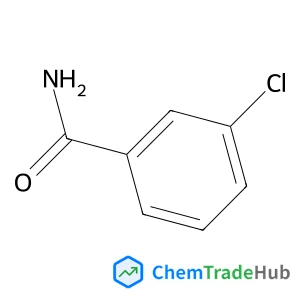
![N-[(1S,2R,4S)-2-Amino-4-(dimethylcarbamoyl)cyclohexyl]-N'-(5-chloro-2-pyridinyl)ethanediamide structure](https://cnstatic.chemtradehub.com/structs/480/480452-37-7-0898.webp "N-[(1S,2R,4S)-2-Amino-4-(dimethylcarbamoyl)cyclohexyl]-N'-(5-chloro-2-pyridinyl)ethanediamide structure")
推荐供应商




免责声明
本页面提供的学术期刊信息仅供参考和研究使用。我们与任何期刊出版商均无关联,也不处理投稿事宜。如有投稿相关咨询,请直接联系相关期刊出版商。
如发现页面信息有误,请发送邮件至 support@chemtradehub.com 联系我们。我们将及时核实并处理您的问题。