









Investigation of energy band alignments and interfacial properties of rutile NMO2/TiO2 (NM = Ru, Rh, Os, and Ir) by first-principles calculations
文献信息
发布日期
2017-10-16
DOI
10.1039/C7CP05106A
影响因子
3.676
作者
Chen Yang, Zong-Yan Zhao
查看原文
摘要
In the field of photocatalysis, constructing hetero-structures is an efficient strategy to improve quantum efficiency. However, a lattice mismatch often induces unfavorable interfacial states that can act as recombination centers for photo-generated electron–hole pairs. If the hetero-structure's components have the same crystal structure, this disadvantage can be easily avoided. Conversely, in the process of loading a noble metal co-catalyst onto the TiO2 surface, a transition layer of noble metal oxides is often formed between the TiO2 layer and the noble metal layer. In this article, interfacial properties of hetero-structures composed of a noble metal dioxide and TiO2 with a rutile crystal structure have been systematically investigated using first-principles calculations. In particular, the Schottky barrier height, band bending, and energy band alignments are studied to provide evidence for practical applications. In all cases, no interfacial states exist in the forbidden band of TiO2, and the interfacial formation energy is very small. A strong internal electric field generated by interfacial electron transfer leads to an efficient separation of photo-generated carriers and band bending. Because of the differences in the atomic properties of the components, RuO2/TiO2 and OsO2/TiO2 hetero-structures demonstrate band dividing, while RhO2/TiO2 and IrO2/TiO2 hetero-structures have a pseudo-gap near the Fermi energy level. Furthermore, NMO2/TiO2 hetero-structures show upward band bending. Conversely, RuO2/TiO2 and OsO2/TiO2 hetero-structures present a relatively strong infrared light absorption, while RhO2/TiO2 and IrO2/TiO2 hetero-structures show an obvious absorption edge in the visible light region. Overall, considering all aspects of their properties, RuO2/TiO2 and OsO2/TiO2 hetero-structures are more suitable than others for improving the photocatalytic performance of TiO2. These findings will provide useful information for understanding the role and effects of a noble metal dioxide as a transition layer between a noble metal co-catalyst and a TiO2 photocatalyst.
相关文献
Effect of PCL end-groups on the self-assembly process of Pluronic in aqueous media
Natalie Gjerde, Kaizheng Zhu, Bo Nyström, Kenneth D. Knudsen
2018-01-04
Paper
DOI: 10.1039/C7CP07240F
Abnormal separation of the silicon–oxygen bond in the liquid layering transition of silicon dioxide in a nanoslit
Zhichao Wang, Tao Li, Yunrui Duan, Weikang Wu, Zhenyang Zhao, Yao Liu, Hui Li
2018-01-02
Paper
DOI: 10.1039/C7CP06843C
Same building block, but diverse surface-confined self-assemblies: solvent and concentration effects-induced structural diversity towards chirality and achirality
Yi Hu, Shaogang Xu, Kai Miao, Xinrui Miao, Wenli Deng
2018-06-06
Paper
DOI: 10.1039/C8CP01308J
Panchromatic cross-conjugated π-bridge NIR dyes for DSCs
Yanbing Zhang, Hammad Cheema, Alexander E. London, Amber Morales, Jason D. Azoulay, Jared H. Delcamp
2018-01-08
Paper
DOI: 10.1039/C7CP06703H
On the origin of high-temperature phenomena in Pt/Al2O3
Alexander S. Lisitsyn, Olga A. Yakovina
2017-12-15
Paper
DOI: 10.1039/C7CP06925A
Study of light-induced formation of photodimers in the i-motif nucleic acid structure by rapid-scan FTIR difference spectroscopy and hybrid hard- and soft-modelling
Sanae Benabou, Cyril Ruckebusch, Michel Sliwa, Anna Aviñó, Ramon Eritja, Raimundo Gargallo, Anna de Juan
2018-07-10
Paper
DOI: 10.1039/C8CP00850G
Effect of transition-metal-ion dopants on the oxygen evolution reaction on NiOOH(0001)
Alexander J. Tkalych, John Mark P. Martirez, Emily A. Carter
2018-07-03
Paper
DOI: 10.1039/C8CP02849D
Revisiting the catalytic mechanism of Mo–Cu carbon monoxide dehydrogenase using QM/MM and DFT calculations
Kai Xu, Hajime Hirao
2018-05-10
Paper
DOI: 10.1039/C8CP00858B
Phonon thermal transport in a graphene/MoSe2 van der Waals heterobilayer
Yang Hong, Ming Gang Ju, Jingchao Zhang, Xiao Cheng Zeng
2017-12-19
Paper
DOI: 10.1039/C7CP06874C
Understanding mode-specific dynamics in the local mode representation
Hongwei Song, Minghui Yang
2018-07-10
Paper
DOI: 10.1039/C8CP03240H
您可能还喜欢
化合物问答
如何处理含有8-氯咪唑并[1,2-A]吡嗪(CAS号:69214-33-1)的废料?
处理含有8-氯咪唑并[1,2-A]吡嗪的废料时,应首先将其收集并进行化学回收或降解。如果无法回收,需采用安全的化学处理方法,如中和、氧化还原或沉淀。处理过程中需...
69214-33-18-chloroimidazo[1,2-...
化合物问答
Calhex 231 hydrochloride(CAS号:2387505-78-2)适用哪些法规指南?
Calhex 231 hydrochloride 需要遵循《全球化学品统一分类和标签制度》(GHS)的分类和标签要求,以及欧盟的《化学品注册、评估、授权和限制条...
2387505-78-24-Chloro-N-[(1S,2S)-...
化合物问答
11-Beta,17-alpha,21-三羟基-5-beta-孕烯-3,20-二酮(CAS号:1482-50-4)的物理化学性质是什么?
11-Beta,17-alpha,21-三羟基-5-beta-孕烯-3,20-二酮是一种无色结晶性粉末,分子量为372.45 g/mol。该化合物在水中的溶解度...
1482-50-45β-Dihydrocortisol
化合物问答
处理5-异丙基-1,3,4-恶二唑-2-羧酸(CAS号:944907-13-5)时应注意哪些实验室安全事项?
处理5-异丙基-1,3,4-恶二唑-2-羧酸时应注意以下安全事项:穿戴适当的个人防护装备,包括实验室外套、手套和护目镜;操作应在通风橱中进行,以减少吸入或接触有...
944907-13-55-Isopropyl-1,3,4-ox...
化合物问答
benzyl 3-bromopropanoate(CAS号:90841-55-7)安全吗?
Benzyl 3-bromopropanoate属于有毒物质,吸入、摄入或皮肤接触均可能对人体造成伤害。操作时应佩戴防护眼镜、口罩和手套,避免吸入蒸汽和直接接触...
90841-55-7Benzyl 3-bromopropan...
化合物问答
什么是(R)-N-苄氧羰基-3,4-二氢-1H-异喹啉羧酸(CAS号:151004-88-5)?
(R)-N-苄氧羰基-3,4-二氢-1H-异喹啉羧酸是一种含有苄氧羰基和异喹啉环结构的化合物,分子式为C17H15NO3。它是一种有机化合物,具有一定的生物活性...
151004-88-5(1R)-2-[(Benzyloxy)c...
化合物问答
在合成中是否有1-苄基吡啶嗡-3-羧酸盐(CAS号:15990-43-9)的替代品?
可以考虑使用1-苄基吡啶-3-羧酸盐作为1-苄基吡啶嗡-3-羧酸盐的替代品。此外,还可以探索其他类似物,如1-苄基吡啶-3-氨基甲酸酯等。具体的替代品选择需根据...
15990-43-91-Benzyl-3-pyridiniu...
化合物问答
(2,6-二甲基吡啶-3-基)甲醇(CAS号:582303-10-4)安全吗?
(2,6-二甲基吡啶-3-基)甲醇在使用时需注意安全,应避免吸入其蒸汽,接触皮肤和眼睛。操作应在通风良好的环境中进行,佩戴适当的个人防护装备。
582303-10-4(2,6-Dimethyl-3-pyri...
化合物问答
5-溴-2-乙烯基吡啶(CAS号:226883-52-9)的物理化学性质是什么?
5-溴-2-乙烯基吡啶是一种有机化合物,外观为白色固体,具有良好的结晶性。分子量约为190.03 g/mol。它的溶解性在水中较差,但在有机溶剂如二氯甲烷、甲醇...
226883-52-95-Bromo-2-vinylpyrid...
化合物问答
2-羟基-3-硝基-5-甲基吡啶(CAS号:7464-14-4)应用于哪些行业?
2-羟基-3-硝基-5-甲基吡啶主要应用于医药、聚合物和半导体行业。在医药领域,它可以用作合成其他药物的中间体。在聚合物领域,它可以作为功能性单体参与聚合反应,...
7464-14-45-Methyl-3-nitro-2(1...
来源期刊
Physical Chemistry Chemical Physics

CiteScore:
5.5
自引率:
10.3%
年发文量:
3036
Physical Chemistry Chemical Physics (PCCP) is an international journal co-owned by 19 physical chemistry and physics societies from around the world. This journal publishes original, cutting-edge research in physical chemistry, chemical physics and biophysical chemistry. To be suitable for publication in PCCP, articles must include significant innovation and/or insight into physical chemistry; this is the most important criterion that reviewers and Editors will judge against when evaluating submissions. The journal has a broad scope and welcomes contributions spanning experiment, theory, computation and data science. Topical coverage includes spectroscopy, dynamics, kinetics, statistical mechanics, thermodynamics, electrochemistry, catalysis, surface science, quantum mechanics, quantum computing and machine learning. Interdisciplinary research areas such as polymers and soft matter, materials, nanoscience, energy, surfaces/interfaces, and biophysical chemistry are welcomed if they demonstrate significant innovation and/or insight into physical chemistry. Joined experimental/theoretical studies are particularly appreciated when complementary and based on up-to-date approaches.
推荐化合物

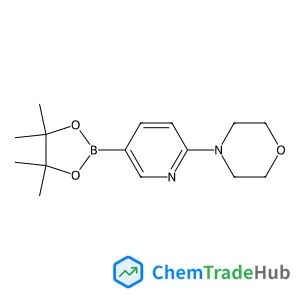
4-(5-(4,4,5,5-tetramethyl-1,3,2-dioxaborolan-2-yl)pyridin-2-yl)morpholine
CAS号:
485799-04-0
分子式:
C15H23BN2O3
![N,N'-1,2-Ethanediylbis[2-(vinylsulfonyl)acetamide] structure](https://cnstatic.chemtradehub.com/structs/667/66710-66-5-b556.webp "N,N'-1,2-Ethanediylbis[2-(vinylsulfonyl)acetamide] structure")
推荐供应商




免责声明
本页面提供的学术期刊信息仅供参考和研究使用。我们与任何期刊出版商均无关联,也不处理投稿事宜。如有投稿相关咨询,请直接联系相关期刊出版商。
如发现页面信息有误,请发送邮件至 support@chemtradehub.com 联系我们。我们将及时核实并处理您的问题。