









Coincident velocity map image reconstruction illustrated by the single-photon valence photoionisation of CF3SF5
文献信息
发布日期
2017-10-30
DOI
10.1039/C7CP05576E
影响因子
3.676
作者
Andras Bodi, Patrick Hemberger, Richard P. Tuckett
查看原文
摘要
Velocity map imaging offers high energy resolution and collection efficiency of the steady flux of photoelectrons and ions in continuous photoionisation experiments. In this proof-of-principle work, we show by the photoionisation of trifluoromethyl sulphur pentafluoride, CF3SF5, that the four-dimensional problem of reconstructing coincident velocity map images of electrons and ions of certain mass can be addressed by separating the energy distribution from the angular anisotropy. The energy spectrum is predominantly determined by the radial distribution of the image, whereas laboratory frame angular anisotropies are revealed based on the radial distribution of the image multiplied with a 2nd-degree Legendre polynomial. The reconstruction yields the energy correlation between the photoion and the photoelectron characteristic of the photoelectron spectrum and the kinetic energy release. The angular anisotropy β-parameter maps of the photoelectrons and photoions are also obtained as 2D functions of the electron and ion kinetic energies. For photoionisation of CF3SF5, the energy correlation reveals suprastatistical kinetic energy release (KER) in CF3+ production in the ground cationic + state, but statistical KER in the excited Ã+ and + state bands. Although the photoelectron distribution is isotropic, the photoion anisotropy in the energy range of the + state speaks for prompt dissociation after preferential ionisation of CF3SF5 molecules aligned with the polarisation vector of the synchrotron radiation. The angular dependence of the photoionisation cross section is confirmed by ab initio calculations for vertical ionisation.
相关文献
Protonation state and fine structure of the active site determine the reactivity of dehydratase: hydration and isomerization of β-myrcene catalyzed by linalool dehydratase/isomerase from Castellaniella defragrans
Xiya Wang, Hao Su, Rutao Liu, Yongjun Liu
2018-06-01
Paper
DOI: 10.1039/C8CP02362J
The importance of grand-canonical quantum mechanical methods to describe the effect of electrode potential on the stability of intermediates involved in both electrochemical CO2 reduction and hydrogen evolution
Haochen Zhang, William A. Goddard, III, Qi Lu, Mu-Jeng Cheng
2018-01-03
Paper
DOI: 10.1039/C7CP08153G
Hidden magnetic order in plutonium dioxide nuclear fuel
Ashley E. Shields, Mark T. Storr, Andrew S. Wills
2018-07-26
Paper
DOI: 10.1039/C8CP03583K
Evolution of the topological properties of two-dimensional group IVA materials and device design‡
2018-01-05
Paper
DOI: 10.1039/C7CP07420D
Hierarchical formation of Fe-9eG supramolecular networks via flexible coordination bonds
Chi Zhang, Lei Xie, Yuanqi Ding, Chunxue Yuan, Wei Xu
2018-01-05
Paper
DOI: 10.1039/C7CP08278A
Effect of transition-metal-ion dopants on the oxygen evolution reaction on NiOOH(0001)
Alexander J. Tkalych, John Mark P. Martirez, Emily A. Carter
2018-07-03
Paper
DOI: 10.1039/C8CP02849D
Tunable polaron-induced coloration of tungsten oxide via a multi-step control of the physicochemical property for the detection of gaseous F
Sang Yeon Lee, Gowoon Shim, Jucheol Park
2018-04-04
Paper
DOI: 10.1039/C8CP00158H
Interplay of proton and electron transfer to determine concerted behavior in the proton-coupled electron transfer of glutathione oxidation
Kejie Meng, Jonnathan Medina-Ramos, Emnet Yibeltal-Ashenafi, Julio C. Alvarez
2018-06-13
Paper
DOI: 10.1039/C8CP01415A
Analyses of trajectory on-the-fly based on the global reaction route map
Takuro Tsutsumi, Yuriko Ono, Satoshi Maeda, Tetsuya Taketsugu
2017-12-08
Paper
DOI: 10.1039/C7CP06528K
Dynamic tailoring of electromagnetic behaviors of graphene plasmonic oligomers by local chemical potential
Junbo Ren, Wangqing Wang, Weibin Qiu, Pingping Qiu, Zeyu Wang, Zhili Lin, Jia-Xian Wang
2018-05-22
Paper
DOI: 10.1039/C8CP01281D
您可能还喜欢
化合物问答
如何处理含有8-氯咪唑并[1,2-A]吡嗪(CAS号:69214-33-1)的废料?
处理含有8-氯咪唑并[1,2-A]吡嗪的废料时,应首先将其收集并进行化学回收或降解。如果无法回收,需采用安全的化学处理方法,如中和、氧化还原或沉淀。处理过程中需...
69214-33-18-chloroimidazo[1,2-...
化合物问答
Calhex 231 hydrochloride(CAS号:2387505-78-2)适用哪些法规指南?
Calhex 231 hydrochloride 需要遵循《全球化学品统一分类和标签制度》(GHS)的分类和标签要求,以及欧盟的《化学品注册、评估、授权和限制条...
2387505-78-24-Chloro-N-[(1S,2S)-...
化合物问答
11-Beta,17-alpha,21-三羟基-5-beta-孕烯-3,20-二酮(CAS号:1482-50-4)的物理化学性质是什么?
11-Beta,17-alpha,21-三羟基-5-beta-孕烯-3,20-二酮是一种无色结晶性粉末,分子量为372.45 g/mol。该化合物在水中的溶解度...
1482-50-45β-Dihydrocortisol
化合物问答
处理5-异丙基-1,3,4-恶二唑-2-羧酸(CAS号:944907-13-5)时应注意哪些实验室安全事项?
处理5-异丙基-1,3,4-恶二唑-2-羧酸时应注意以下安全事项:穿戴适当的个人防护装备,包括实验室外套、手套和护目镜;操作应在通风橱中进行,以减少吸入或接触有...
944907-13-55-Isopropyl-1,3,4-ox...
化合物问答
benzyl 3-bromopropanoate(CAS号:90841-55-7)安全吗?
Benzyl 3-bromopropanoate属于有毒物质,吸入、摄入或皮肤接触均可能对人体造成伤害。操作时应佩戴防护眼镜、口罩和手套,避免吸入蒸汽和直接接触...
90841-55-7Benzyl 3-bromopropan...
化合物问答
什么是(R)-N-苄氧羰基-3,4-二氢-1H-异喹啉羧酸(CAS号:151004-88-5)?
(R)-N-苄氧羰基-3,4-二氢-1H-异喹啉羧酸是一种含有苄氧羰基和异喹啉环结构的化合物,分子式为C17H15NO3。它是一种有机化合物,具有一定的生物活性...
151004-88-5(1R)-2-[(Benzyloxy)c...
化合物问答
在合成中是否有1-苄基吡啶嗡-3-羧酸盐(CAS号:15990-43-9)的替代品?
可以考虑使用1-苄基吡啶-3-羧酸盐作为1-苄基吡啶嗡-3-羧酸盐的替代品。此外,还可以探索其他类似物,如1-苄基吡啶-3-氨基甲酸酯等。具体的替代品选择需根据...
15990-43-91-Benzyl-3-pyridiniu...
化合物问答
(2,6-二甲基吡啶-3-基)甲醇(CAS号:582303-10-4)安全吗?
(2,6-二甲基吡啶-3-基)甲醇在使用时需注意安全,应避免吸入其蒸汽,接触皮肤和眼睛。操作应在通风良好的环境中进行,佩戴适当的个人防护装备。
582303-10-4(2,6-Dimethyl-3-pyri...
化合物问答
5-溴-2-乙烯基吡啶(CAS号:226883-52-9)的物理化学性质是什么?
5-溴-2-乙烯基吡啶是一种有机化合物,外观为白色固体,具有良好的结晶性。分子量约为190.03 g/mol。它的溶解性在水中较差,但在有机溶剂如二氯甲烷、甲醇...
226883-52-95-Bromo-2-vinylpyrid...
化合物问答
2-羟基-3-硝基-5-甲基吡啶(CAS号:7464-14-4)应用于哪些行业?
2-羟基-3-硝基-5-甲基吡啶主要应用于医药、聚合物和半导体行业。在医药领域,它可以用作合成其他药物的中间体。在聚合物领域,它可以作为功能性单体参与聚合反应,...
7464-14-45-Methyl-3-nitro-2(1...
来源期刊
Physical Chemistry Chemical Physics

CiteScore:
5.5
自引率:
10.3%
年发文量:
3036
Physical Chemistry Chemical Physics (PCCP) is an international journal co-owned by 19 physical chemistry and physics societies from around the world. This journal publishes original, cutting-edge research in physical chemistry, chemical physics and biophysical chemistry. To be suitable for publication in PCCP, articles must include significant innovation and/or insight into physical chemistry; this is the most important criterion that reviewers and Editors will judge against when evaluating submissions. The journal has a broad scope and welcomes contributions spanning experiment, theory, computation and data science. Topical coverage includes spectroscopy, dynamics, kinetics, statistical mechanics, thermodynamics, electrochemistry, catalysis, surface science, quantum mechanics, quantum computing and machine learning. Interdisciplinary research areas such as polymers and soft matter, materials, nanoscience, energy, surfaces/interfaces, and biophysical chemistry are welcomed if they demonstrate significant innovation and/or insight into physical chemistry. Joined experimental/theoretical studies are particularly appreciated when complementary and based on up-to-date approaches.
推荐化合物
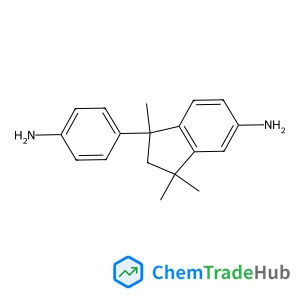
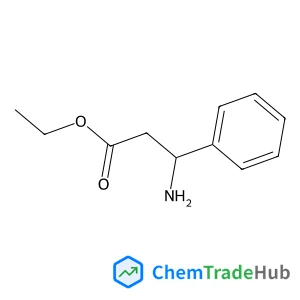
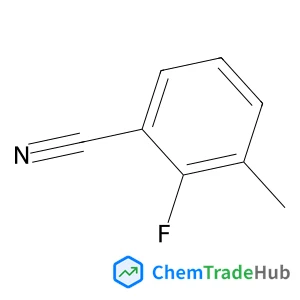
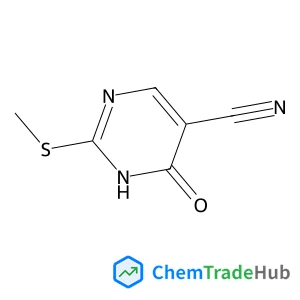
推荐供应商





免责声明
本页面提供的学术期刊信息仅供参考和研究使用。我们与任何期刊出版商均无关联,也不处理投稿事宜。如有投稿相关咨询,请直接联系相关期刊出版商。
如发现页面信息有误,请发送邮件至 support@chemtradehub.com 联系我们。我们将及时核实并处理您的问题。