


Water facilitates oxygen migration on gold surfaces
文献信息
发布日期
2017-12-05
DOI
10.1039/C7CP06451A
影响因子
3.676
作者
Fang Xu, Ioanna Fampiou, Christopher R. O'Connor, Stavros Karakalos, Fanny Hiebel, Robert J. Madix
查看原文
摘要
The water–oxygen–gold interface is important in many surface processes and has potential influence on heterogeneous catalysis. Herein, it is shown that water facilitates the migration of atomic oxygen on Au(110), demonstrating the dynamic nature of surface adsorption. We demonstrate this effect for the first time, using in situ scanning tunnelling microscopy (STM), temperature-programmed reaction spectroscopy (TPRS) and first-principles theoretical calculations. The dynamic interaction of water with adsorbed O maintains a high dispersion of O on the surface, potentially creating reactive transient species. At low temperature and pressure, isotopic experiments show that adsorbed oxygen on the Au(110) surface exchanges with oxygen in H218O. The presence of water modulates local electronic properties and facilitates oxygen exchange. Combining experimental results and theory, we propose that hydroxyl is transiently formed via proton transfer from the water to adsorbed oxygen. Hydroxyl groups easily recombine to regenerate water and adsorbed oxygen atoms, the net result of which is migration of the adsorbed oxygen without significant change in its overall distribution on the surface. The presence of water creates a dynamic surface where mobile surface oxygen atoms and hydroxyls are present, which can lead to a better performance of gold catalysis in oxidation reactions.
期刊推荐
Russian Chemical Bulletin
Russian Journal of General Chemistry
Russian Journal of Bioorganic Chemistry
Organic Process Research & Development
Russian Journal of Applied Chemistry
Journal of Peptide Science
Russian Journal of Coordination Chemistry
Crystallography Reports
Current Opinion in Colloid & Interface Science
Chemistry Education Research and Practice
相关文献
Correlation functions of singly and multiply scattered light analysed by the 3-D cross-correlation technique
2002-04-18
Paper
DOI: 10.1039/B109479C
An upper limit to the concentration of an SO2 complex at the air–water interface at 298 K: infrared experiments and ab initio calculations
Husheng Yang, Aaron M. Gagnon, Barbara J. Finlayson-Pitts
2002-04-16
Paper
DOI: 10.1039/B108907B
Calorimetric and spectroscopic investigations of phytosphingosine ceramide membrane organisation
2002-04-17
Paper
DOI: 10.1039/B108769J
Pore size engineering of mesoporous silicon nitride materials
Stefan Kaskel, Klaus Schlichte, Bodo Zibrowius
2002-03-20
Paper
DOI: 10.1039/B109708N
The C19H39OH–C20H41OH system: Experimental phase diagram and thermodynamic modelling
L. Ventolà, T. Calvet, M. A. Cuevas-Diarte, D. Mondieig, H. A. J. Oonk
2002-04-17
Paper
DOI: 10.1039/B111635E
C–H stretching vibrations of benzene and toluene in their S1 states observed by double resonance vibrational spectroscopy in supersonic jets
Chika Minejima, Takayuki Ebata, Naohiko Mikami
2002-03-19
Paper
DOI: 10.1039/B108039C
Rheology of glycocalix model at air/water interface
Matthias F. Schneider, Kwangmo Lim, Gerald G. Fuller, Motomu Tanaka
2002-04-04
Paper
DOI: 10.1039/B110631G
Successive reactions of iron carbonyl cations with dimethyl ether: direct cleavage versus rearrangement
Sophie Le Caër, Michel Heninger, Pascal Pernot, Hélène Mestdagh
2002-04-12
Paper
DOI: 10.1039/B108261B
The pressure dependence of self-diffusion and spin–lattice relaxation in cold and supercooled H2O and D2O
M. R. Arnold, H.-D. Lüdemann
2002-03-25
Paper
DOI: 10.1039/B110639M
您可能还喜欢
化合物问答
如何储存8-溴-4-羟基-6-(三氟甲氧基)喹啉-3-羧酸乙酯(CAS号:1072944-81-0)?
8-溴-4-羟基-6-(三氟甲氧基)喹啉-3-羧酸乙酯应储存在阴凉、干燥的地方,避免光照和高温。建议使用密封容器进行储存,以防止水分和空气的影响。
1072944-81-0Ethyl 8-bromo-4-hydr...
化合物问答
2,2-二(2-呋喃基)丙烷(CAS号:17920-88-6)的市场或研究趋势如何?
2,2-二(2-呋喃基)丙烷的研究趋势主要集中在新型材料的开发和应用,如高分子材料、有机光电材料等。市场趋势方面,随着环保要求的提高和新材料的应用,该化合物的需...
17920-88-62,2'-(2,2-Propanediy...
化合物问答
如何处理含有螺[呋喃并[3,4-b]吡啶-5(7H),4'-哌啶]-7-酮盐酸盐(CAS号:475152-31-9)的废料?
对于含有螺[呋喃并[3,4-b]吡啶-5(7H),4'-哌啶]-7-酮盐酸盐的废料,应首先进行分类和分离,以减少危险物质的数量。随后,可以考虑通过化学氧化、生物...
475152-31-97H-Spiro[furo[3,4-b]...
化合物问答
Cinnamyl 3-aminobut-2-enoate(CAS号:113898-97-8)安全吗?
Cinnamyl 3-氨基丁-2-烯酸在接触皮肤和眼睛时可能会引起刺激。应避免吸入其粉尘和烟雾。操作时应穿戴适当的个人防护装备,如手套、护目镜和实验室外套。
113898-97-8Cinnamyl 3-aminobut-...
化合物问答
反式-2-十二碳烯二酸(CAS号:6402-36-4)的市场或研究趋势如何?
反式-2-十二碳烯二酸在医药、材料科学等领域有一定的应用,但其市场相对较小。近年来,由于环保意识的提升,对环境友好型化学品的需求增加,研究倾向于开发更绿色的合成...
6402-36-4Traumatic Acid
化合物问答
什么是(9ci)-1H-苯并咪唑-5-乙酸(CAS号:473895-86-2)?
(9ci)-1H-苯并咪唑-5-乙酸是一种含氮杂环化合物,其化学结构为1H-苯并咪唑-5-乙酸。该化合物具有特定的分子式C8H7NO2,属于有机酸类化合物。
473895-86-21H-Benzimidazol-5-yl...
化合物问答
酞菁蓝(CAS号:147-14-8)的主要用途是什么?
酞菁蓝主要用作颜料和染料,广泛应用于塑料、油墨、涂料、纺织品及橡胶工业中。它也用于光敏材料,如太阳能电池和光刻胶。在医疗领域,酞菁蓝因其光敏特性被用于某些光动力...
147-14-8Copper(2+) phthalocy...
化合物问答
5-甲基-1,2,3,4-四氢异喹啉(CAS号:123593-99-7)安全吗?
5-甲基-1,2,3,4-四氢异喹啉在使用和储存时需要谨慎处理。它具有一定的毒性,应避免吸入其蒸气或直接接触皮肤和眼睛。操作此化合物时,建议佩戴防护眼镜、实验服...
123593-99-75-Methyl-1,2,3,4-tet...
化合物问答
如何处理含有3',4',5'-三甲氧基苯乙酮(CAS号:1136-86-3)的废料?
含有3',4',5'-三甲氧基苯乙酮的废液应首先确保其是否为危险废物,根据当地法规确定处理方法。通常,这类有机废液可以采用中和反应降低其pH值,然后通过蒸馏或萃...
1136-86-31-(3,4,5-Trimethoxyp...
化合物问答
如何储存KI-7(CAS号:1489263-00-4)?
KI-7应储存在通风良好的干燥环境中,避免光照和高温。建议使用密封容器储存,并保持在阴凉处。储存温度应控制在室温范围内,一般建议不超过25°C。避免与氧化剂接触...
1489263-00-42-(1-Benzyl-1H-indol...
来源期刊
Physical Chemistry Chemical Physics

CiteScore:
5.5
自引率:
10.3%
年发文量:
3036
Physical Chemistry Chemical Physics (PCCP) is an international journal co-owned by 19 physical chemistry and physics societies from around the world. This journal publishes original, cutting-edge research in physical chemistry, chemical physics and biophysical chemistry. To be suitable for publication in PCCP, articles must include significant innovation and/or insight into physical chemistry; this is the most important criterion that reviewers and Editors will judge against when evaluating submissions. The journal has a broad scope and welcomes contributions spanning experiment, theory, computation and data science. Topical coverage includes spectroscopy, dynamics, kinetics, statistical mechanics, thermodynamics, electrochemistry, catalysis, surface science, quantum mechanics, quantum computing and machine learning. Interdisciplinary research areas such as polymers and soft matter, materials, nanoscience, energy, surfaces/interfaces, and biophysical chemistry are welcomed if they demonstrate significant innovation and/or insight into physical chemistry. Joined experimental/theoretical studies are particularly appreciated when complementary and based on up-to-date approaches.
推荐化合物
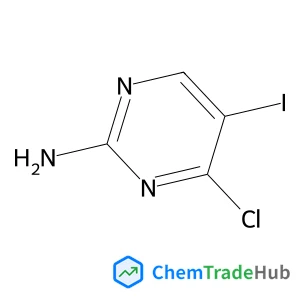
推荐供应商



免责声明
本页面提供的学术期刊信息仅供参考和研究使用。我们与任何期刊出版商均无关联,也不处理投稿事宜。如有投稿相关咨询,请直接联系相关期刊出版商。
如发现页面信息有误,请发送邮件至 support@chemtradehub.com 联系我们。我们将及时核实并处理您的问题。