


N-Doped graphene-supported PdCu nanoalloy as efficient catalyst for reducing Cr(vi) by formic acid
文献信息
发布日期
2018-01-05
DOI
10.1039/C7CP07391G
影响因子
3.676
作者
Shuangzhi Li, Qing Zhao, Chiyang He, Weikai Liu
查看原文
摘要
Reducing Cr(VI) to Cr(III) with formic acid is desirable for environmental protection, but the sluggish kinetics limits its practical application, which currently motivates the intensive study of efficient catalysts for this redox reaction. Here bimetallic PdCu nanoalloy (∼5 nm in size) supported by N-doped graphene was synthesized through a one-pot hydrothermal process. The catalytic activity of PdCu nanoalloy highly depends on the Pd/Cu atomic ratio and N-doped graphene support. The obtained Pd6Cu4/NG shows superior catalysis towards the Cr(VI) reduction by formic acid with a high kinetic constant (kn = 23.2 min−1 mg−1) and a low activation energy (Ea = 34.9 kJ mol−1). Active H atoms were found to be the exact reductant for the Cr(VI) reduction, quite different from the reported H2-reduction route. The enhanced catalysis originates from the electronic and geometric modification of active Pd after formation of PdCu alloy. Electron transfer from Cu to Pd enhances the electron density of Pd atoms, which favors the adsorption of the bridging formate intermediate and subsequent generation of active H atoms over PdCu/NG. The catalyst can be recycled five times without obvious loss of activity. Our work provides an example to explore the alloying effect on the catalytic behavior of PdCu alloy, which may shed light on developing other advanced nanoalloys for Cr(VI) reduction.
期刊推荐
Russian Chemical Bulletin
Russian Journal of Organic Chemistry
Crystallography Reports
Drug Discovery Today
Russian Journal of Applied Chemistry
Chemistry Education Research and Practice
Journal of Natural Medicines
Current Opinion in Solid State & Materials Science
Saudi Pharmaceutical Journal
New Journal of Chemistry
相关文献
Pore size engineering of mesoporous silicon nitride materials
Stefan Kaskel, Klaus Schlichte, Bodo Zibrowius
2002-03-20
Paper
DOI: 10.1039/B109708N
A hybrid SAM phospholipid approach to fabricating a ‘free’ supported lipid bilayer
Arwel V. Hughes, Arach Goldar, Michael C. Gerstenberg, Steve J. Roser, Jeremy Bradshaw
2002-05-01
Paper
DOI: 10.1039/B200409G
C–H stretching vibrations of benzene and toluene in their S1 states observed by double resonance vibrational spectroscopy in supersonic jets
Chika Minejima, Takayuki Ebata, Naohiko Mikami
2002-03-19
Paper
DOI: 10.1039/B108039C
Nanoscale electrodeposition of germanium on Au(111) from an ionic liquid: an in situ STM study of phase formation Part I. Ge from GeBr4
Frank Endres, Sherif Zein El Abedin
2002-03-22
Paper
DOI: 10.1039/B110268K
Rate constants for the reactions of chlorine atoms with a series of unsaturated aldehydes and ketones at 298 K: structure and reactivity
Weihong Wang, Michael J. Ezell, Alisa A. Ezell, Gennady Soskin, Barbara J. Finlayson-Pitts
2002-04-18
Paper
DOI: 10.1039/B111557J
Gravity dependence of waves in the retinal spreading depression and in gel type Belousov–Zhabotinsky systems
Meike Wiedemann, Vera M. Fernandes de Lima, Wolfgang Hanke
2002-02-01
Paper
DOI: 10.1039/B109166M
Nanoscale electrodeposition of germanium on Au(111) from an ionic liquid: an in situ STM study of phase formation Part II. Ge from GeCl4
Frank Endres, Sherif Zein El Abedin
2002-03-22
Paper
DOI: 10.1039/B110560B
Ion exchange in the synthetic gismondine, zeolite MAP
Susan Allen, Stuart Carr, Andrew Chapple, Alan Dyer, Brigid Heywood
2002-05-02
Paper
DOI: 10.1039/B111490P
LIF study of the reactions of the IO radical with NO and NO2 over an extended range of temperature and pressure
2002-04-10
Paper
DOI: 10.1039/B110084J
FTIR spectroscopy of carbon dioxide adsorbed on sodium- and magnesium-exchanged ETS-10 molecular sieves
F. X. Llabrés i Xamena, A. Zecchina
2002-04-18
Paper
DOI: 10.1039/B110483G
您可能还喜欢
化合物问答
如何储存8-溴-4-羟基-6-(三氟甲氧基)喹啉-3-羧酸乙酯(CAS号:1072944-81-0)?
8-溴-4-羟基-6-(三氟甲氧基)喹啉-3-羧酸乙酯应储存在阴凉、干燥的地方,避免光照和高温。建议使用密封容器进行储存,以防止水分和空气的影响。
1072944-81-0Ethyl 8-bromo-4-hydr...
化合物问答
2,2-二(2-呋喃基)丙烷(CAS号:17920-88-6)的市场或研究趋势如何?
2,2-二(2-呋喃基)丙烷的研究趋势主要集中在新型材料的开发和应用,如高分子材料、有机光电材料等。市场趋势方面,随着环保要求的提高和新材料的应用,该化合物的需...
17920-88-62,2'-(2,2-Propanediy...
化合物问答
如何处理含有螺[呋喃并[3,4-b]吡啶-5(7H),4'-哌啶]-7-酮盐酸盐(CAS号:475152-31-9)的废料?
对于含有螺[呋喃并[3,4-b]吡啶-5(7H),4'-哌啶]-7-酮盐酸盐的废料,应首先进行分类和分离,以减少危险物质的数量。随后,可以考虑通过化学氧化、生物...
475152-31-97H-Spiro[furo[3,4-b]...
化合物问答
Cinnamyl 3-aminobut-2-enoate(CAS号:113898-97-8)安全吗?
Cinnamyl 3-氨基丁-2-烯酸在接触皮肤和眼睛时可能会引起刺激。应避免吸入其粉尘和烟雾。操作时应穿戴适当的个人防护装备,如手套、护目镜和实验室外套。
113898-97-8Cinnamyl 3-aminobut-...
化合物问答
反式-2-十二碳烯二酸(CAS号:6402-36-4)的市场或研究趋势如何?
反式-2-十二碳烯二酸在医药、材料科学等领域有一定的应用,但其市场相对较小。近年来,由于环保意识的提升,对环境友好型化学品的需求增加,研究倾向于开发更绿色的合成...
6402-36-4Traumatic Acid
化合物问答
什么是(9ci)-1H-苯并咪唑-5-乙酸(CAS号:473895-86-2)?
(9ci)-1H-苯并咪唑-5-乙酸是一种含氮杂环化合物,其化学结构为1H-苯并咪唑-5-乙酸。该化合物具有特定的分子式C8H7NO2,属于有机酸类化合物。
473895-86-21H-Benzimidazol-5-yl...
化合物问答
酞菁蓝(CAS号:147-14-8)的主要用途是什么?
酞菁蓝主要用作颜料和染料,广泛应用于塑料、油墨、涂料、纺织品及橡胶工业中。它也用于光敏材料,如太阳能电池和光刻胶。在医疗领域,酞菁蓝因其光敏特性被用于某些光动力...
147-14-8Copper(2+) phthalocy...
化合物问答
5-甲基-1,2,3,4-四氢异喹啉(CAS号:123593-99-7)安全吗?
5-甲基-1,2,3,4-四氢异喹啉在使用和储存时需要谨慎处理。它具有一定的毒性,应避免吸入其蒸气或直接接触皮肤和眼睛。操作此化合物时,建议佩戴防护眼镜、实验服...
123593-99-75-Methyl-1,2,3,4-tet...
化合物问答
如何处理含有3',4',5'-三甲氧基苯乙酮(CAS号:1136-86-3)的废料?
含有3',4',5'-三甲氧基苯乙酮的废液应首先确保其是否为危险废物,根据当地法规确定处理方法。通常,这类有机废液可以采用中和反应降低其pH值,然后通过蒸馏或萃...
1136-86-31-(3,4,5-Trimethoxyp...
化合物问答
如何储存KI-7(CAS号:1489263-00-4)?
KI-7应储存在通风良好的干燥环境中,避免光照和高温。建议使用密封容器储存,并保持在阴凉处。储存温度应控制在室温范围内,一般建议不超过25°C。避免与氧化剂接触...
1489263-00-42-(1-Benzyl-1H-indol...
来源期刊
Physical Chemistry Chemical Physics

CiteScore:
5.5
自引率:
10.3%
年发文量:
3036
Physical Chemistry Chemical Physics (PCCP) is an international journal co-owned by 19 physical chemistry and physics societies from around the world. This journal publishes original, cutting-edge research in physical chemistry, chemical physics and biophysical chemistry. To be suitable for publication in PCCP, articles must include significant innovation and/or insight into physical chemistry; this is the most important criterion that reviewers and Editors will judge against when evaluating submissions. The journal has a broad scope and welcomes contributions spanning experiment, theory, computation and data science. Topical coverage includes spectroscopy, dynamics, kinetics, statistical mechanics, thermodynamics, electrochemistry, catalysis, surface science, quantum mechanics, quantum computing and machine learning. Interdisciplinary research areas such as polymers and soft matter, materials, nanoscience, energy, surfaces/interfaces, and biophysical chemistry are welcomed if they demonstrate significant innovation and/or insight into physical chemistry. Joined experimental/theoretical studies are particularly appreciated when complementary and based on up-to-date approaches.
推荐化合物
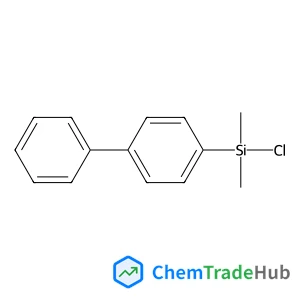
![Methyl 3-({2'-[(E)-(hydroxyhydrazono)methyl]-4-biphenylyl}methyl)-2-oxo-2,3-dihydro-1H-benzimidazole-4-carboxylate structure](https://cnstatic.chemtradehub.com/structs/149/1499167-72-4-034a.webp "Methyl 3-({2'-[(E)-(hydroxyhydrazono)methyl]-4-biphenylyl}methyl)-2-oxo-2,3-dihydro-1H-benzimidazole-4-carboxylate structure")
推荐供应商





免责声明
本页面提供的学术期刊信息仅供参考和研究使用。我们与任何期刊出版商均无关联,也不处理投稿事宜。如有投稿相关咨询,请直接联系相关期刊出版商。
如发现页面信息有误,请发送邮件至 support@chemtradehub.com 联系我们。我们将及时核实并处理您的问题。