


Genetically-encoded fragment-based discovery (GE-FBD) of glycopeptide ligands with differential selectivity for antibodies related to mycobacterial infections
文献信息
发布日期
2017-12-19
DOI
10.1039/C7OB02783D
影响因子
3.876
作者
Ying Chou, Elena N. Kitova, Maju Joe, Richard Brunton, Todd L. Lowary, John S. Klassen, Ratmir Derda
查看原文
摘要
Accurate identification of tuberculosis (TB), caused by Mycobacterium tuberculosis, is important for global disease management. Point-of-care serological tests may improve TB diagnosis; however, specificities of available serodiagnostics are sub-optimal. We employed genetically encoded fragment-based discovery (GE-FBD) to select ligands for antibodies directed against the mycobacterial cell wall component lipoarabinomannan (LAM), a potent antigen. GE-FBD employed a phage displayed library of 108 heptapeptides, chemically modified with an arabinofuranosyl hexasaccharide fragment of LAM (Ara6), and the anti-LAM antibody CS-35 as a bait. The selection gave rise to glycopeptides with an enhanced affinity and selectivity for CS-35 but not for 906.4321 antibody, both of which bind to Ara6 with a comparable affinity. Multivalent assays incorporating the discovered ligands Ara6-ANSSFAP, Ara6-DAHATLR and Ara6-TTYVVNP exhibited up to 19-fold discrimination between CS-35 and 906.4321. The use of the Ara6 antigen alone failed to distinguish these antibodies. Thus, GE-FBD gives rise to ligands that differentiate monoclonal antibodies with enhanced specificity. This technology could facilitate the development of effective point-of-care serological tests for mycobacterial and other infections.
期刊推荐
Russian Journal of Organic Chemistry
Crystallography Reports
Russian Journal of Applied Chemistry
Russian Journal of General Chemistry
Organic Process Research & Development
Current Opinion in Solid State & Materials Science

Chemical Communications
Russian Journal of Bioorganic Chemistry
Nature Medicine
Drug Discovery Today
相关文献
Density minimum of confined water at low temperatures: a combined study by small-angle scattering of X-rays and neutrons
M. Erko, D. Wallacher, A. Hoell, T. Hauß, I. Zizak, O. Paris
2012-01-23
Paper
DOI: 10.1039/C2CP24075K
Molecular origin of differences in hole and electron mobility in amorphous Alq3—a multiscale simulation study
Thomas Steinbrecher, Mario S. Mommer, Yuki Nagata, Marcus Elstner
2012-01-17
Paper
DOI: 10.1039/C2CP23489K
Nano-indentation of a room-temperature ionic liquid film on silica: a computational experiment
P. Ballone, M. G. Del Pópolo, N. Manini
2011-12-14
Paper
DOI: 10.1039/C2CP23459A
A method for finding the ridge between saddle points applied to rare event rate estimates
Jón Bergmann Maronsson, Hannes Jónsson, Tejs Vegge
2011-12-22
Paper
DOI: 10.1039/C2CP23421A
Intermolecular acetaldehyde and dimethoxymethane formation mechanisms viaethenol and methoxymethylene precursors in reactions of atomic carbon with methanol: a computational study
Yavuz Dede, Ilker Ozkan
2011-11-23
Paper
DOI: 10.1039/C2CP23127A
Matrix isolation ESR spectroscopy and quantum chemical calculations on 5-methylhexa-1,2,4-triene-1,3-diyl, a highly delocalized triplet “hybrid” carbene
Eugenii Ya. Misochko, Alexander V. Akimov, Denis V. Korchagin, Artem A. Masitov, Konstantin N. Shavrin
2012-01-10
Paper
DOI: 10.1039/C2CP22853J
From synthetic to biogenic Mg-containing calcites: a comparative study using FTIR microspectroscopy
Xia Long, Yurong Ma, Limin Qi
2012-01-12
Paper
DOI: 10.1039/C2CP22453D
Spectrum of excess partial molar absorptivity. Part II: a near infrared spectroscopic study of aqueous Na-halides
Fumie Sebe, Keiko Nishikawa, Yoshikata Koga
2012-02-09
Paper
DOI: 10.1039/C2CP23255C
Homochiral oligopeptides by chiral amplification: interpretation of experimental data with a copolymerization model
Celia Blanco, David Hochberg
2012-01-12
Paper
DOI: 10.1039/C2CP22813K
您可能还喜欢
化合物问答
2-Bromo-4-chloro-1-(difluoromethyl)benzene(CAS号:1261476-50-9)的市场或研究趋势如何?
随着环保要求的提高和安全意识的增强,该化合物的研究和应用趋势正逐渐转向更安全、更环境友好的替代品。市场关注点主要集中在开发新型合成方法和绿色化学路径,以减少有害...
1261476-50-92-Bromo-4-chloro-1-(...
化合物问答
如何处理含有2,9 - 二苯基-1,10 - 菲罗啉(CAS号:25677-69-4)的废料?
处理含有2,9 - 二苯基 - 1,10 - 菲罗啉的废料时,应先将其收集在适当的容器中,避免与其他化学品混合。随后,可以通过水解或氧化等方法进行处理,直至达到...
25677-69-42,9-Diphenyl-1,10-ph...
化合物问答
处理(6-氯-吡嗪-3-基)-(4-乙基-哌嗪-1-基)-甲酮(CAS号:1178836-15-1)时应注意哪些实验室安全事项?
处理(6-氯-吡嗪-3-基)-(4-乙基-哌嗪-1-基)-甲酮时,应穿戴适当的个人防护装备(PPE),包括手套、护目镜和实验室外套。在通风橱中操作以确保良好的通...
1178836-15-1(6-Chloro-3-pyridazi...
化合物问答
处理(R)-2-氯-1-(2,4-二氯苯基)乙醇(CAS号:114446-57-0)时应注意哪些实验室安全事项?
在处理(R)-2-氯-1-(2,4-二氯苯基)乙醇时,应佩戴防护眼镜、实验室外套和手套,确保通风橱开启以减少接触和吸入的风险。避免直接接触皮肤和眼睛。处理过程中...
114446-57-0(1R)-2-Chloro-1-(2,4...
化合物问答
在合成中是否有3-氯-6-(3-氯哌啶-1-基)吡嗪(CAS号:1185310-37-5)的替代品?
可考虑使用类似结构的化合物作为替代品,如3-氯-6-(哌啶-1-基)吡嗪或3-氯-6-(2-氯哌啶-1-基)吡嗪,这些化合物在结构上与目标化合物相似,可能具有相...
1185310-37-53-Chloro-6-(3-chloro...
化合物问答
苯并三氮唑-5-甲酸乙酯(CAS号:73605-91-1)通常如何合成?
该化合物可以通过乙酸乙酯与5-溴-1H-苯并三氮唑的反应合成,通常在无水条件下进行。合成过程中,需要使用适当的溶剂如乙酸乙酯,并在适当的温度下反应。该反应具有较...
73605-91-1Ethyl 1H-benzotriazo...
化合物问答
什么是一水硫酸镁(CAS号:14168-73-1)?
一水硫酸镁是一种无机化合物,化学式为MgSO₄·H₂O,CAS号为14168-73-1。它由镁离子、硫酸根离子和一个结晶水分子组成,通常呈现为白色粉末或颗粒状固...
14168-73-1Magnesium sulfate hy...
化合物问答
氘代-1,3-二氯-2-丙醇(CAS号:1173020-20-6)应用于哪些行业?
氘代-1,3-二氯-2-丙醇主要应用于医药和有机合成领域,作为研究化合物的氘代替代品,用于标记和追踪反应过程。此外,在聚合物和半导体生产中也有一定的应用潜力。
1173020-20-61,3-Dichloro-2-(~2~H...
化合物问答
如何储存氰乙酸环己酯(CAS号:52688-11-6)?
氰乙酸环己酯应储存在阴凉、干燥、通风良好的环境中,远离火源和热源,防止阳光直射。储存容器应密封良好,避免与空气接触,防止发生不必要的反应。
52688-11-6Cyclohexyl cyanoacet...
化合物问答
2-碘-4-硝基苯胺(CAS号:6293-83-0)的市场或研究趋势如何?
目前,2-碘-4-硝基苯胺在医药和农药领域有一定的研究和应用,尤其是在开发新型药物和农药产品方面。然而,由于其潜在的环境和健康风险,行业正趋向于寻找更为安全和环...
6293-83-02-iodo-4-nitroanilin...
来源期刊
Organic & Biomolecular Chemistry
CiteScore:
3.4
自引率:
10.3%
年发文量:
1041
Organic & Biomolecular Chemistry (OBC) publishes original and high impact research and reviews in organic chemistry. We welcome research that shows new or significantly improved protocols or methodologies in total synthesis, synthetic methodology or physical and theoretical organic chemistry as well as research that shows a significant advance in the organic chemistry or molecular design aspects of chemical biology, catalysis, supramolecular and macromolecular chemistry, theoretical chemistry, mechanism-oriented physical organic chemistry, medicinal chemistry or natural products. Articles published in the journal should report new work which makes a highly-significant impact in the field. Routine and incremental work is generally not suitable for publication in the journal. More details about key areas of our scope are below. In all cases authors should include in their article clear rationale for why their research has been carried out.
推荐化合物
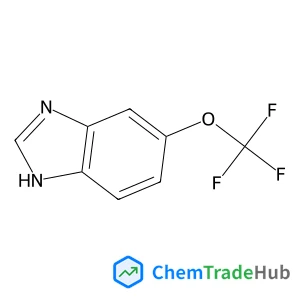
![N-[4-(Cyanoethynyl)phenyl]-16-oxo-4,7,10,13-tetraoxa-17-azahenicos-1-yn-21-amide structure](https://cnstatic.chemtradehub.com/structs/218/2183440-36-8-68cb.webp "N-[4-(Cyanoethynyl)phenyl]-16-oxo-4,7,10,13-tetraoxa-17-azahenicos-1-yn-21-amide structure")
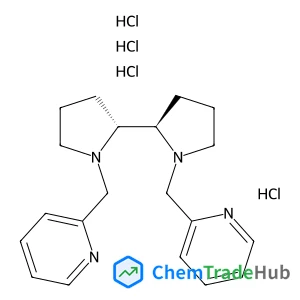
(2R,2'R)-1,1'-Bis(2-pyridinylmethyl)-2,2'-bipyrrolidine tetrahydrochloride
CAS号:
1228077-88-0
分子式:
C20H30Cl4N4
amine structure](https://cnstatic.chemtradehub.com/structs/629/62924-61-2-0728.webp "[(2-chlorophenyl)methyl](ethyl)amine structure")
推荐供应商




免责声明
本页面提供的学术期刊信息仅供参考和研究使用。我们与任何期刊出版商均无关联,也不处理投稿事宜。如有投稿相关咨询,请直接联系相关期刊出版商。
如发现页面信息有误,请发送邮件至 support@chemtradehub.com 联系我们。我们将及时核实并处理您的问题。