


![7-Bromo-5-chloro-1H-pyrazolo[4,3-b]pyridine structure](https://cnstatic.chemtradehub.com/structs/135/1351813-70-1-a716.webp "7-Bromo-5-chloro-1H-pyrazolo[4,3-b]pyridine structure")
Synthesis and characterization of water-soluble macrocyclic peptides stabilizing protein α-turn
文献信息
发布日期
2017-12-13
DOI
10.1039/C7OB02852K
影响因子
3.876
作者
Lei Wang, Pascale Coric, Kexin Zhu, Wang-Qing Liu, Serge Bouaziz, Sylvain Broussy
查看原文
摘要
Short peptides composed of naturally occurring amino acids are usually unstructured in aqueous media. The installation of covalent constraints within their side chains or backbones, resulting in the formation of macrocyclic peptides, is an appealing approach to stabilize them in defined secondary structures. Therefore, with the objective to stabilize α-turn conformation, we designed, synthesized and characterized constrained 13-membered macrocyclic peptides. Their design was inspired by previous work using the replacement of a hydrogen bond by a covalent bond, for the stabilization of α-helical secondary structures. Their synthesis employed our recently published solid-phase method based on Fukuyama–Mitsunobu alkylation reactions. We report herein an optimized synthesis leading to three water-soluble 13-membered macrocyclic peptides 10a–c, including respectively two, one and zero glycine residues. They were characterized by CD and NMR, which indicated the presence of equilibrating conformers. The detailed conformational analysis was based on extensive NMR and molecular dynamics studies. We found that the peptide without glycine residues 10c was mostly present as slowly interconverting conformers whereas the peptide with two glycine residues 10a was mostly present as rapidly interconverting conformers. We did not find a good match between the conformers of 10a and α-turns occurring in proteins, due to the high flexibility of the glycine backbone. Interestingly, we found that the major conformer of 10c accurately matched the “non-classical” or “tight” α-turn of type II-αLS, with a RMSD value of 0.42 Å for heavy atoms constituting the macrocycle. This is, to the best of our knowledge, the first molecule reported to mimic this type of α-turn found in proteins.
期刊推荐
Journal of Natural Medicines
Russian Journal of Applied Chemistry
Crystallography Reports
Russian Journal of Coordination Chemistry
Russian Journal of General Chemistry
Current Opinion in Solid State & Materials Science
Journal of Saudi Chemical Society
Journal of Peptide Science
Organic Process Research & Development
Saudi Pharmaceutical Journal
相关文献
Lyotropic liquid crystalline phase behaviour in amphiphile–protic ionic liquid systems
Tamar L. Greaves, Celesta Fong, Calum J. Drummond
2012-01-19
Paper
DOI: 10.1039/C2CP23698B
Sea urchin TiO2–nanoparticle hybrid composite photoelectrodes for CdS/CdSe/ZnS quantum-dot-sensitized solar cells
Eui-Hyun Kong, Yong-June Chang, Yoon-Cheol Park, Yeon-Hee Yoon, Hyun-Jin Park, Hyun Myung Jang
2012-02-08
Paper
DOI: 10.1039/C2CP24106D
An operando DRIFTS investigation into the resistance against CO2 poisoning of a Rh/alumina catalyst during toluenehydrogenation
Julien Scalbert, Frederic C. Meunier, Cecile Daniel, Yves Schuurman
2011-10-11
Paper
DOI: 10.1039/C1CP22620G
Solvation effects and stabilization of multicharged ions: a case study of ArmBeOq+ complexes
Roberto Linguerri, Najia Komiha, Majdi Hochlaf
2012-02-02
Paper
DOI: 10.1039/C2CP24004A
Hydration and interactions in protein solutions containing concentrated electrolytes studied by small-angle scattering
F. Zhang, F. Roosen-Runge, M. W. A. Skoda, R. M. J. Jacobs, M. Wolf, Ph. Callow, H. Frielinghaus, V. Pipich, S. Prévost, F. Schreiber
2011-12-14
Paper
DOI: 10.1039/C2CP23460B
Mechanism of photocatalytic activities in Cr-doped SrTiO3 under visible-light irradiation: an insight from hybrid density-functional calculations
Pakpoom Reunchan, Shuxin Ouyang
2011-12-01
Paper
DOI: 10.1039/C2CP23348G
Interfacial electron transfer dynamics in dye-modified graphene oxide nanosheets studied by single-molecule fluorescence spectroscopy
Takashi Tachikawa, Shi-Cong Cui, Mamoru Fujitsuka, Tetsuro Majima
2012-02-02
Paper
DOI: 10.1039/C2CP23317G
Surface state engineering of molecule–molecule interactions
Geoffrey Rojas, Scott Simpson, Xumin Chen, Donna A. Kunkel, Justin Nitz, Jie Xiao, Peter A. Dowben, Eva Zurek, Axel Enders
2012-02-20
Paper
DOI: 10.1039/C2CP40254H
Magnetic properties of a doped linear polyarylamine bearing a high concentration of coupled spins (S = 1)
Vincent Maurel, Mohammad Jouni, Piotr Baran, Nicolas Onofrio, Serge Gambarelli, Jean-Marie Mouesca, David Djurado, Lionel Dubois, Jean-François Jacquot, Gérard Desfonds, Irena Kulszewicz-Bajer
2011-12-07
Paper
DOI: 10.1039/C1CP22766A
Reversible formation of a PdCx phase in Pd nanoparticles upon CO and O2 exposure
Olivier Balmes, Andrea Resta, Didier Wermeille, Roberto Felici, Maria E. Messing, Knut Deppert, Zhi Liu, Michael E. Grass, Hendrik Bluhm, Richard van Rijn, Joost W. M. Frenken, Rasmus Westerström, Sara Blomberg, Johan Gustafson, Jesper N. Andersen, Edvin Lundgren
2012-02-24
Paper
DOI: 10.1039/C2CP22873D
您可能还喜欢
化合物问答
2-Bromo-4-chloro-1-(difluoromethyl)benzene(CAS号:1261476-50-9)的市场或研究趋势如何?
随着环保要求的提高和安全意识的增强,该化合物的研究和应用趋势正逐渐转向更安全、更环境友好的替代品。市场关注点主要集中在开发新型合成方法和绿色化学路径,以减少有害...
1261476-50-92-Bromo-4-chloro-1-(...
化合物问答
如何处理含有2,9 - 二苯基-1,10 - 菲罗啉(CAS号:25677-69-4)的废料?
处理含有2,9 - 二苯基 - 1,10 - 菲罗啉的废料时,应先将其收集在适当的容器中,避免与其他化学品混合。随后,可以通过水解或氧化等方法进行处理,直至达到...
25677-69-42,9-Diphenyl-1,10-ph...
化合物问答
处理(6-氯-吡嗪-3-基)-(4-乙基-哌嗪-1-基)-甲酮(CAS号:1178836-15-1)时应注意哪些实验室安全事项?
处理(6-氯-吡嗪-3-基)-(4-乙基-哌嗪-1-基)-甲酮时,应穿戴适当的个人防护装备(PPE),包括手套、护目镜和实验室外套。在通风橱中操作以确保良好的通...
1178836-15-1(6-Chloro-3-pyridazi...
化合物问答
处理(R)-2-氯-1-(2,4-二氯苯基)乙醇(CAS号:114446-57-0)时应注意哪些实验室安全事项?
在处理(R)-2-氯-1-(2,4-二氯苯基)乙醇时,应佩戴防护眼镜、实验室外套和手套,确保通风橱开启以减少接触和吸入的风险。避免直接接触皮肤和眼睛。处理过程中...
114446-57-0(1R)-2-Chloro-1-(2,4...
化合物问答
在合成中是否有3-氯-6-(3-氯哌啶-1-基)吡嗪(CAS号:1185310-37-5)的替代品?
可考虑使用类似结构的化合物作为替代品,如3-氯-6-(哌啶-1-基)吡嗪或3-氯-6-(2-氯哌啶-1-基)吡嗪,这些化合物在结构上与目标化合物相似,可能具有相...
1185310-37-53-Chloro-6-(3-chloro...
化合物问答
苯并三氮唑-5-甲酸乙酯(CAS号:73605-91-1)通常如何合成?
该化合物可以通过乙酸乙酯与5-溴-1H-苯并三氮唑的反应合成,通常在无水条件下进行。合成过程中,需要使用适当的溶剂如乙酸乙酯,并在适当的温度下反应。该反应具有较...
73605-91-1Ethyl 1H-benzotriazo...
化合物问答
什么是一水硫酸镁(CAS号:14168-73-1)?
一水硫酸镁是一种无机化合物,化学式为MgSO₄·H₂O,CAS号为14168-73-1。它由镁离子、硫酸根离子和一个结晶水分子组成,通常呈现为白色粉末或颗粒状固...
14168-73-1Magnesium sulfate hy...
化合物问答
氘代-1,3-二氯-2-丙醇(CAS号:1173020-20-6)应用于哪些行业?
氘代-1,3-二氯-2-丙醇主要应用于医药和有机合成领域,作为研究化合物的氘代替代品,用于标记和追踪反应过程。此外,在聚合物和半导体生产中也有一定的应用潜力。
1173020-20-61,3-Dichloro-2-(~2~H...
化合物问答
如何储存氰乙酸环己酯(CAS号:52688-11-6)?
氰乙酸环己酯应储存在阴凉、干燥、通风良好的环境中,远离火源和热源,防止阳光直射。储存容器应密封良好,避免与空气接触,防止发生不必要的反应。
52688-11-6Cyclohexyl cyanoacet...
化合物问答
2-碘-4-硝基苯胺(CAS号:6293-83-0)的市场或研究趋势如何?
目前,2-碘-4-硝基苯胺在医药和农药领域有一定的研究和应用,尤其是在开发新型药物和农药产品方面。然而,由于其潜在的环境和健康风险,行业正趋向于寻找更为安全和环...
6293-83-02-iodo-4-nitroanilin...
来源期刊
Organic & Biomolecular Chemistry
CiteScore:
3.4
自引率:
10.3%
年发文量:
1041
Organic & Biomolecular Chemistry (OBC) publishes original and high impact research and reviews in organic chemistry. We welcome research that shows new or significantly improved protocols or methodologies in total synthesis, synthetic methodology or physical and theoretical organic chemistry as well as research that shows a significant advance in the organic chemistry or molecular design aspects of chemical biology, catalysis, supramolecular and macromolecular chemistry, theoretical chemistry, mechanism-oriented physical organic chemistry, medicinal chemistry or natural products. Articles published in the journal should report new work which makes a highly-significant impact in the field. Routine and incremental work is generally not suitable for publication in the journal. More details about key areas of our scope are below. In all cases authors should include in their article clear rationale for why their research has been carried out.
推荐化合物
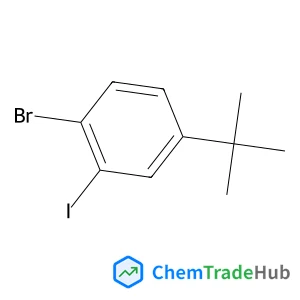
![N-[4-(Cyanoethynyl)phenyl]-16-oxo-4,7,10,13-tetraoxa-17-azahenicos-1-yn-21-amide structure](https://cnstatic.chemtradehub.com/structs/218/2183440-36-8-68cb.webp "N-[4-(Cyanoethynyl)phenyl]-16-oxo-4,7,10,13-tetraoxa-17-azahenicos-1-yn-21-amide structure")
推荐供应商






免责声明
本页面提供的学术期刊信息仅供参考和研究使用。我们与任何期刊出版商均无关联,也不处理投稿事宜。如有投稿相关咨询,请直接联系相关期刊出版商。
如发现页面信息有误,请发送邮件至 support@chemtradehub.com 联系我们。我们将及时核实并处理您的问题。