


![1-[(4-Methylphenyl)sulfonyl]-3-(4,4,5,5-tetramethyl-1,3,2-dioxaborolan-2-yl)-1H-pyrrolo[2,3-b]pyridine-5-carbonitrile structure](https://cnstatic.chemtradehub.com/structs/143/1434747-57-5-fc0d.webp "1-[(4-Methylphenyl)sulfonyl]-3-(4,4,5,5-tetramethyl-1,3,2-dioxaborolan-2-yl)-1H-pyrrolo[2,3-b]pyridine-5-carbonitrile structure")
Poly(fluoroacrylate)s with tunable surface hydrophobicity via radical copolymerization of 2,2,2-trifluoroethyl α-fluoroacrylate and 2-(trifluoromethyl)acrylic acid
文献信息
发布日期
2017-03-07
DOI
10.1039/C7PY00209B
影响因子
5.582
作者
Sanjib Banerjee, Bhausaheb V. Tawade, Vincent Ladmiral, Lionel X. Dupuy, Bruno Améduri
查看原文
摘要
The synthesis of poly(fluoroacrylate)s with tunable wettability and improved adhesion for potential application as functional coatings was achieved via radical copolymerization of 2,2,2-trifluoroethyl α-fluoroacrylate (FATRIFE) with 2-(trifluoromethyl)acrylic acid (MAF), an adhesion-promoting monomer. These copolymerizations, initiated by tert-butyl peroxypivalate at varying comonomer feed ([FATRIFE]0/[MAF]0) ratios led to a series of poly(FATRIFE-co-MAF) copolymers with different molar compositions in fair to good conversions (32–87%) depending on the MAF feed content. The microstructures of the synthesized poly(FATRIFE-co-MAF) copolymers were determined by 19F NMR spectroscopy. Even at MAF feed contents higher than 50%, MAF incorporation into the copolymers was lower than 50%, since MAF does not undergo any homopolymerization under radical polymerization conditions. The reactivity ratios of the (FATRIFE; MAF) monomer pair were also determined (rFATRIFE = 1.65 ± 0.07 and rMAF = 0 at 56 °C) evidencing the formation of statistical copolymers. Initiation involving a highly branched perfluorinated radical that released a ˙CF3 radical enabled the demonstration of the regioselective attack of the latter radical onto the CH2 of FATRIFE. The resulting poly(FATRIFE-co-MAF) copolymers exhibited various glass transition temperatures (Tgs) depending on their compositions. Tg values increased with increasing MAF contents in the copolymer. In addition, their thermal stability (the temperature for 10% weight loss in air, Td10%) increased with increasing FATRIFE content in the copolymer and reached 348 °C (for that containing 93 mol% FATRIFE). Finally, a high copolymer MAF content led to both a good adhesion onto metal substrates and to improved hydrophilicity, as revealed by the decrease of the water contact angle from 107° (for a reference PFATRIFE homopolymer) to 81° (for a copolymer containing 42 mol% MAF).
期刊推荐
Journal of Natural Medicines
Current Opinion in Colloid & Interface Science
Russian Journal of Coordination Chemistry

Chemical Communications
Journal of Saudi Chemical Society
Russian Journal of Bioorganic Chemistry
Journal of Peptide Science

Chemistry Education Research and Practice
Russian Chemical Bulletin

Acta Materialia
相关文献
Correction: Thermodynamics, kinetics and electronic properties of point defects in β-FeSi2
Chen Ming, Pengfei Qiu, Yi-Yang Sun, Lidong Chen
2019-09-25
Correction
DOI: 10.1039/C9CP90237F
Micro-kinetic model of electrochemical carbon dioxide reduction over platinum in non-aqueous solvents
Brian A. Rohr, Aayush R. Singh, Joseph A. Gauthier, Michael J. Statt, Jens K. Nørskov
2020-02-10
Paper
DOI: 10.1039/C9CP05751J
Formation of resonances and anionic fragments upon electron attachment to benzaldehyde
E. Arthur-Baidoo, J. Pereira-da-Silva, M. Ryszka, I. Carmichael, L. M. Cornetta, M. T. do N. Varella, F. Ferreira da Silva, S. Denifl
2020-03-16
Paper
DOI: 10.1039/D0CP00029A
Electric-field control of single-molecule tautomerization
Shai Mangel, Katharina Polyudov, Christian Dette, Tobias Wollandt, Paul Punke, Dongzhe Li, Roberto Urcuyo, Soon Jung Jung
2020-02-25
Paper
DOI: 10.1039/C9CP06868F
The co-reactant role during plasma enhanced atomic layer deposition of palladium
Ji-Yu Feng, Matthias M. Minjauw, Ranjith K. Ramachandran, Michiel Van Daele, Hilde Poelman, Timo Sajavaara, Jolien Dendooven, Christophe Detavernier
2020-04-07
Paper
DOI: 10.1039/D0CP00786B
Molecular mechanisms for thermal degradation of CO2-loaded aqueous monoethanolamine solution: a first-principles study
Bohak Yoon, Haley M. Stowe
2019-09-25
Paper
DOI: 10.1039/C9CP04518J
Achieving long carrier lifetime and high optical gain in all-inorganic CsPbBr3 perovskite films via top and bottom surface modification
Li Jiang, Zhishan Fang, Haoran Lou, Chen Lin, Zhanhang Chen, Jing Li, Haiping He, Zhizhen Ye
2019-09-07
Paper
DOI: 10.1039/C9CP04033A
Effect of graphene between photoanode and sensitizer on the intramolecular and intermolecular electron transfer process
Xiaofei Wang, Yuanzuo Li, Peng Song, Fengcai Ma, Yanhui Yang
2020-02-28
Paper
DOI: 10.1039/C9CP06543A
Linking structure to performance of Li1.2Mn0.54Ni0.13Co0.13O2 (Li and Mn rich NMC) cathode materials synthesized by different methods
N. Leifer, T. Penki, R. Nanda, J. Grinblat, S. Luski, D. Aurbach, G. Goobes
2020-04-02
Paper
DOI: 10.1039/D0CP00400F
Caffeine destabilizes preformed Aβ protofilaments: insights from all atom molecular dynamics simulations
Shivani Gupta
2019-09-16
Paper
DOI: 10.1039/C9CP04162A
您可能还喜欢
化合物问答
如何储存1,2-环己二酮环乙缩醛(CAS号:4746-96-7)?
1,2-环己二酮环乙缩醛应储存在阴凉、干燥、通风良好的地方,避免阳光直射。建议使用密封容器保存,并保持环境温度在室温范围内,远离火源和热源。
4746-96-71,4-Dioxaspiro[4.5]d...
化合物问答
Ecopladib(CAS号:381683-92-7)的市场或研究趋势如何?
Ecopladib作为一种新型的药物,主要应用于治疗高胆固醇等疾病。目前,市场和研究趋势显示,Ecopladib因其独特的药理作用而受到关注。随着对心血管疾病治...
381683-92-7Ecopladib
化合物问答
2,3-Dimethyl-3H-imidazo[4,5-c]pyridine(CAS号:52538-09-7)通常如何合成?
2,3-二甲基-3H-咪唑[4,5-c]吡啶通常通过咪唑和2,3-二甲基吡啶的缩合反应合成。具体来说,将咪唑和2,3-二甲基吡啶在适当的溶剂中进行加热或加压反应...
52538-09-72,3-Dimethyl-3H-imid...
化合物问答
2,3,4,5-tetrahydro-1H-3-苯并氮杂环;盐酸盐(CAS号:17379-01-0)的市场或研究趋势如何?
该化合物在药物化学和有机合成中有一定的应用。近年来,随着对新型药物化合物的需求增加,该化合物的研究趋势主要集中在探索其生物活性,尤其是其在神经系统疾病治疗中的潜...
17379-01-02,3,4,5-Tetrahydro-1...
68-90-6(2-Ethyl-1-benzofura...
化合物问答
如何储存盐酸甘氨酸丁酯(CAS号:13048-99-2)?
盐酸甘氨酸丁酯应储存在阴凉、干燥、通风良好的地方,避免阳光直射和高温环境,温度应控制在25℃以下。储存容器应密封,避免与空气中的水分和酸性物质接触,以防发生水解...
13048-99-2Butyl glycinate hydr...
化合物问答
什么是2-Iodo-N,N-dimethylbenzamide(CAS号:54616-46-5)?
2-碘-N,N-二甲基苯胺是一种有机化合物,化学名为2-Iodo-N,N-dimethylbenzamide。其分子式为C<sub>9</sub>H<sub>1...
54616-46-52-Iodo-N,N-dimethylb...
16817-90-6N-Cyclohexylglycinam...
化合物问答
5-溴-2-(4H-1,2,4-三唑-4-基)吡啶(CAS号:959240-99-4)的市场或研究趋势如何?
随着医药、农药和新材料领域的发展,该化合物作为关键中间体的应用日益增多。特别是在药物合成中,由于其独特的化学性质,可以用于合成多种药物分子。未来的研究趋势可能集...
959240-99-45-Bromo-2-(4H-1,2,4-...
化合物问答
2,4-二溴-6-三氟甲基嘧啶(CAS号:785778-00-9)通常如何合成?
2,4-二溴-6-三氟甲基嘧啶通常通过溴化反应合成。首先,将6-三氟甲基嘧啶与溴化剂(如液溴)在适当的溶剂(如二氯甲烷、四氢呋喃)中反应,加入适当的催化剂(如四...
785778-00-92,4-Dibromo-6-(trifl...
来源期刊
Polymer Chemistry

CiteScore:
8.6
自引率:
7.3%
年发文量:
457
Polymer Chemistry welcomes submissions in all areas of polymer science that have a strong focus on macromolecular chemistry. Manuscripts may cover a broad range of fields, yet no direct application focus is required.
推荐化合物
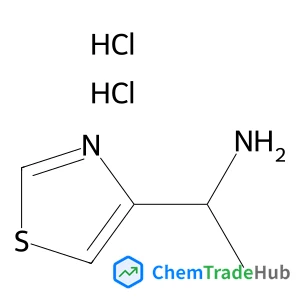
![S-[2,3-Bis(palmitoyloxy)propyl]-N-[(9H-fluoren-9-ylmethoxy)(hydroxy)methylene]cysteine structure](https://cnstatic.chemtradehub.com/structs/210/210532-98-2-f6a7.webp "S-[2,3-Bis(palmitoyloxy)propyl]-N-[(9H-fluoren-9-ylmethoxy)(hydroxy)methylene]cysteine structure")
推荐供应商





免责声明
本页面提供的学术期刊信息仅供参考和研究使用。我们与任何期刊出版商均无关联,也不处理投稿事宜。如有投稿相关咨询,请直接联系相关期刊出版商。
如发现页面信息有误,请发送邮件至 support@chemtradehub.com 联系我们。我们将及时核实并处理您的问题。