


Visible-light-induced living radical polymerization using in situ bromine-iodine transformation as an internal boost
文献信息
发布日期
2017-03-24
DOI
10.1039/C7PY00366H
影响因子
5.582
作者
Xiaodong Liu, Qinghua Xu, Lifen Zhang, Zhenping Cheng, Xiulin Zhu
查看原文
摘要
A facile and effective visible-light-induced living radical polymerization (LRP) system was successfully developed at room temperature using typical alkyl bromides (such as ethyl α-bromophenylacetate (EBPA) and 2-bromopropanenitrile (BPN)) as the initiator in the presence of sodium iodide (NaI) for the first time. Water-soluble poly(ethylene glycol) methyl ether methacrylate (PEGMA) was used as the model monomer. By investigating the influencing factors including initiator and solvent type, solvent volume, light source, activator (sodium iodide) and catalyst (triethylamine) concentration, and degree of polymerization (DP), optimized polymerization conditions could be established. Excellent control over molecular weights and distributions (Mw/Mn = 1.05–1.33) of the polymers was achieved under light-emitting diode (LED) irradiation. In addition, the moderate polymerization rate could be drastically promoted in the presence of triethylamine (TEA) as the catalyst. This polymerization system exhibited instantaneous control in response to the on–off switch of the irradiation stimulus. Various types of other monomers (such as methyl methacrylate (MMA) and glycidyl methacrylate (GMA)) and illumination sources (especially sunlight) also proved to be compatible with this LRP system. The possible polymerization mechanism was investigated, and the bromine-iodine transformation activated LRP in this study will enable the facile preparation of well-defined materials with satisfactory controllability and versatile architectures.
期刊推荐

Russian Journal of Applied Chemistry
Journal of Natural Medicines
Journal of Peptide Science
Russian Chemical Bulletin
Current Opinion in Solid State & Materials Science

Nature Medicine

Current Opinion in Colloid & Interface Science

Acta Materialia

Chemical Communications
Russian Journal of General Chemistry
相关文献
Understanding the properties of dithienylethenes functionalized for supramolecular self-assembly: a molecular modeling study
Laura Le Bras, Roxanne Berthin, Ismaïl Hamdi, Maroua Louati, Stéphane Aloïse, Michinori Takeshita
2020-03-09
Paper
DOI: 10.1039/C9CP06590C
Molecular dynamics involving proton exchange of a protic ionic liquid–water mixture studied by NMR spectroscopy
Mohammad Hasani, Lars Nordstierna, Anna Martinelli
2019-09-17
Paper
DOI: 10.1039/C9CP03563J
Allosteric modulation of the sarcoplasmic reticulum Ca2+ ATPase by thapsigargin via decoupling of functional motions
Noureldin Saleh, Yong Wang, Poul Nissen, Kresten Lindorff-Larsen
2019-09-17
Paper
DOI: 10.1039/C9CP04736K
Lanthanide-induced conformational change of methanol dehydrogenase involving coordination change of cofactor pyrroloquinoline quinone
2019-09-04
Paper
DOI: 10.1039/C9CP03953H
Understanding the selectivity of inhibitors toward PI4KIIIα and PI4KIIIβ based molecular modeling
Shuaizhen Tian, Jinzhe Zeng, Xiao Liu, Jianzhong Chen
2019-09-18
Paper
DOI: 10.1039/C9CP03598B
Taming quantum interference in single molecule junctions: induction and resonance are key
2020-01-31
Paper
DOI: 10.1039/C9CP06384F
A revised model of silicon oxidation during the dissolution of silicon in HF/HNO3 mixtures
Anja Rietig, Thomas Langner, Jörg Acker
2019-09-17
Paper
DOI: 10.1039/C9CP04429A
Caffeine destabilizes preformed Aβ protofilaments: insights from all atom molecular dynamics simulations
Shivani Gupta
2019-09-16
Paper
DOI: 10.1039/C9CP04162A
On the wetting translucency of hexagonal boron nitride
Enrique Wagemann, Yanbin Wang, Siddhartha Das, Sushanta K. Mitra
2020-02-27
Paper
DOI: 10.1039/D0CP00200C
Magnon-driven interfacial magnetoelectric coupling in Co/PMN-PT multiferroic heterostructures
Changjun Jiang
2019-09-03
Paper
DOI: 10.1039/C9CP04169A
您可能还喜欢
化合物问答
如何储存1,2-环己二酮环乙缩醛(CAS号:4746-96-7)?
1,2-环己二酮环乙缩醛应储存在阴凉、干燥、通风良好的地方,避免阳光直射。建议使用密封容器保存,并保持环境温度在室温范围内,远离火源和热源。
4746-96-71,4-Dioxaspiro[4.5]d...
化合物问答
Ecopladib(CAS号:381683-92-7)的市场或研究趋势如何?
Ecopladib作为一种新型的药物,主要应用于治疗高胆固醇等疾病。目前,市场和研究趋势显示,Ecopladib因其独特的药理作用而受到关注。随着对心血管疾病治...
381683-92-7Ecopladib
化合物问答
2,3-Dimethyl-3H-imidazo[4,5-c]pyridine(CAS号:52538-09-7)通常如何合成?
2,3-二甲基-3H-咪唑[4,5-c]吡啶通常通过咪唑和2,3-二甲基吡啶的缩合反应合成。具体来说,将咪唑和2,3-二甲基吡啶在适当的溶剂中进行加热或加压反应...
52538-09-72,3-Dimethyl-3H-imid...
化合物问答
2,3,4,5-tetrahydro-1H-3-苯并氮杂环;盐酸盐(CAS号:17379-01-0)的市场或研究趋势如何?
该化合物在药物化学和有机合成中有一定的应用。近年来,随着对新型药物化合物的需求增加,该化合物的研究趋势主要集中在探索其生物活性,尤其是其在神经系统疾病治疗中的潜...
17379-01-02,3,4,5-Tetrahydro-1...
68-90-6(2-Ethyl-1-benzofura...
化合物问答
如何储存盐酸甘氨酸丁酯(CAS号:13048-99-2)?
盐酸甘氨酸丁酯应储存在阴凉、干燥、通风良好的地方,避免阳光直射和高温环境,温度应控制在25℃以下。储存容器应密封,避免与空气中的水分和酸性物质接触,以防发生水解...
13048-99-2Butyl glycinate hydr...
化合物问答
什么是2-Iodo-N,N-dimethylbenzamide(CAS号:54616-46-5)?
2-碘-N,N-二甲基苯胺是一种有机化合物,化学名为2-Iodo-N,N-dimethylbenzamide。其分子式为C<sub>9</sub>H<sub>1...
54616-46-52-Iodo-N,N-dimethylb...
16817-90-6N-Cyclohexylglycinam...
化合物问答
5-溴-2-(4H-1,2,4-三唑-4-基)吡啶(CAS号:959240-99-4)的市场或研究趋势如何?
随着医药、农药和新材料领域的发展,该化合物作为关键中间体的应用日益增多。特别是在药物合成中,由于其独特的化学性质,可以用于合成多种药物分子。未来的研究趋势可能集...
959240-99-45-Bromo-2-(4H-1,2,4-...
化合物问答
2,4-二溴-6-三氟甲基嘧啶(CAS号:785778-00-9)通常如何合成?
2,4-二溴-6-三氟甲基嘧啶通常通过溴化反应合成。首先,将6-三氟甲基嘧啶与溴化剂(如液溴)在适当的溶剂(如二氯甲烷、四氢呋喃)中反应,加入适当的催化剂(如四...
785778-00-92,4-Dibromo-6-(trifl...
来源期刊
Polymer Chemistry

CiteScore:
8.6
自引率:
7.3%
年发文量:
457
Polymer Chemistry welcomes submissions in all areas of polymer science that have a strong focus on macromolecular chemistry. Manuscripts may cover a broad range of fields, yet no direct application focus is required.
推荐化合物
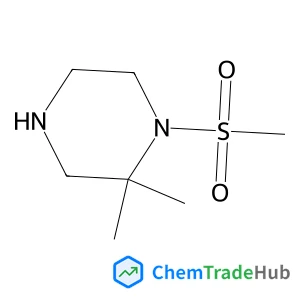
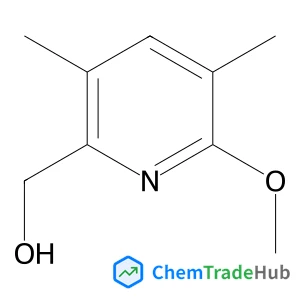
推荐供应商





免责声明
本页面提供的学术期刊信息仅供参考和研究使用。我们与任何期刊出版商均无关联,也不处理投稿事宜。如有投稿相关咨询,请直接联系相关期刊出版商。
如发现页面信息有误,请发送邮件至 support@chemtradehub.com 联系我们。我们将及时核实并处理您的问题。