












phosphoryl}methyl 4-methylbenzenesulfonate structure](https://cnstatic.chemtradehub.com/structs/864/864068-45-1-ba7c.webp "{[3-(Hexadecyloxy)propoxy](hydroxy)phosphoryl}methyl 4-methylbenzenesulfonate structure")
The living anionic polymerization of activated aziridines: a systematic study of reaction conditions and kinetics
文献信息
发布日期
2017-04-06
DOI
10.1039/C7PY00436B
影响因子
5.582
作者
Elisabeth Rieger, Tassilo Gleede, Katja Weber, Angelika Manhart, Manfred Wagner, Frederik R. Wurm
查看原文
摘要
“A living race” – polymerization kinetics of anionic polymerizations depends strongly on the solvent polarity and reactivity of the growing chain end. Both the carb- and oxyanionic polymerization is under control at the university lab and on the industrial level, however, no information for the aza-anionic polymerization of aziridines has been reported systematically. This work studies the polymerization of two activated aziridines (2-methyl-N-mesylaziridine (MsMAz) and 2-methyl-N-tosylaziridine (TsMAz)) by real-time 1H NMR spectroscopy. This technique allows monitoring the consumption of the monomer precisely during the polymerization under different conditions (temperature, solvent, initiator and counter-ion variation). From the experimental data, propagation rate constants (kp) were calculated and analyzed. The polymerization of MsMAz was monitored at different temperatures (20, 50, and 100 °C). The increase of temperature increases the speed of polymerization, but keeps the living behavior. Furthermore, the influence of different solvents on the polymerization speed was examined, proving solvating solvents such as DMSO and DMF as the fastest solvents. Two different initiators, the potassium salts of N,N′-(1,4-phenylenebis(methylene))dimethanesulfonamide (BnBis(NHMs)), the first bifunctional initiator for the AROP of aziridines, and of N-benzyl-sulfonamide (BnNHMs) were compared. The variation of the counter ions Li+, Na+, K+, and Cs+ (generated from the respective bis(trimethylsilyl)amide salts) proved successful polymerization of both monomers with all counter ions. Slight variations have been detected in the order: Cs+ > Li+ > Na+ > K+, which is in strong contrast for the AROP of epoxides, shows a strong gegenion-dependent kinetic profile. This allows the use of commercially available initiators, such as BuLi for the synthesis of PAz. With these results in hand, the azaanionic polymerization can be used as a valuable tool in the family of anionic polymerization for the preparation of structurally diverse polysulfonamides and polyamines under a broad variety of conditions, while maintaining the living behavior.
期刊推荐
相关文献
A unique pentagonal network structure of the NiS2 monolayer with high stability and a tunable bandgap
2020-03-07
Paper
DOI: 10.1039/D0CP00434K
Taming quantum interference in single molecule junctions: induction and resonance are key
2020-01-31
Paper
DOI: 10.1039/C9CP06384F
The influence of a type III antifreeze protein and its mutants on methane hydrate adsorption–inhibition: a molecular dynamics simulation study
Mitra Maddah, Mina Maddah, Kiana Peyvandi
2019-08-31
Paper
DOI: 10.1039/C9CP03833G
Large volume liquid state scalar Overhauser dynamic nuclear polarization at high magnetic field
Thierry Dubroca, Sungsool Wi, Johan van Tol
2019-06-25
Communication
DOI: 10.1039/C9CP02997D
Magnon-driven interfacial magnetoelectric coupling in Co/PMN-PT multiferroic heterostructures
Changjun Jiang
2019-09-03
Paper
DOI: 10.1039/C9CP04169A
Thermal decomposition of mixed calcium oxalate hydrates – kinetic deconvolution of complex heterogeneous processes
Roman Svoboda, Zuzana Olmrová Zmrhalová, Dušan Galusek, Daniela Brandová, Jozef Chovanec
2020-03-23
Paper
DOI: 10.1039/C9CP06867H
Lanthanide-induced conformational change of methanol dehydrogenase involving coordination change of cofactor pyrroloquinoline quinone
2019-09-04
Paper
DOI: 10.1039/C9CP03953H
Automated exploration of the low-energy chemical space with fast quantum chemical methods
Philipp Pracht, Fabian Bohle, Stefan Grimme
2020-02-12
Paper
DOI: 10.1039/C9CP06869D
Photochemistry of HNSO2 in cryogenic matrices: spectroscopic identification of the intermediates and mechanism
Changyun Chen, Lina Wang, Xiaofang Zhao, Zhuang Wu, Bastian Bernhardt, André K. Eckhardt, Peter R. Schreiner
2020-03-26
Paper
DOI: 10.1039/D0CP00962H
Embedding of atoms into the nanopore sites of the C6N6 and C6N8 porous carbon nitride monolayers with tunable electronic properties
Catherine Stampfl, Berna Akgenc, Mitra Ghergherehchi, Ch. V. Nguyen
2020-02-20
Paper
DOI: 10.1039/D0CP00093K
您可能还喜欢
化合物问答
如何储存1,2-环己二酮环乙缩醛(CAS号:4746-96-7)?
1,2-环己二酮环乙缩醛应储存在阴凉、干燥、通风良好的地方,避免阳光直射。建议使用密封容器保存,并保持环境温度在室温范围内,远离火源和热源。
4746-96-71,4-Dioxaspiro[4.5]d...
化合物问答
Ecopladib(CAS号:381683-92-7)的市场或研究趋势如何?
Ecopladib作为一种新型的药物,主要应用于治疗高胆固醇等疾病。目前,市场和研究趋势显示,Ecopladib因其独特的药理作用而受到关注。随着对心血管疾病治...
381683-92-7Ecopladib
化合物问答
2,3-Dimethyl-3H-imidazo[4,5-c]pyridine(CAS号:52538-09-7)通常如何合成?
2,3-二甲基-3H-咪唑[4,5-c]吡啶通常通过咪唑和2,3-二甲基吡啶的缩合反应合成。具体来说,将咪唑和2,3-二甲基吡啶在适当的溶剂中进行加热或加压反应...
52538-09-72,3-Dimethyl-3H-imid...
化合物问答
2,3,4,5-tetrahydro-1H-3-苯并氮杂环;盐酸盐(CAS号:17379-01-0)的市场或研究趋势如何?
该化合物在药物化学和有机合成中有一定的应用。近年来,随着对新型药物化合物的需求增加,该化合物的研究趋势主要集中在探索其生物活性,尤其是其在神经系统疾病治疗中的潜...
17379-01-02,3,4,5-Tetrahydro-1...
68-90-6(2-Ethyl-1-benzofura...
化合物问答
如何储存盐酸甘氨酸丁酯(CAS号:13048-99-2)?
盐酸甘氨酸丁酯应储存在阴凉、干燥、通风良好的地方,避免阳光直射和高温环境,温度应控制在25℃以下。储存容器应密封,避免与空气中的水分和酸性物质接触,以防发生水解...
13048-99-2Butyl glycinate hydr...
化合物问答
什么是2-Iodo-N,N-dimethylbenzamide(CAS号:54616-46-5)?
2-碘-N,N-二甲基苯胺是一种有机化合物,化学名为2-Iodo-N,N-dimethylbenzamide。其分子式为C<sub>9</sub>H<sub>1...
54616-46-52-Iodo-N,N-dimethylb...
16817-90-6N-Cyclohexylglycinam...
化合物问答
5-溴-2-(4H-1,2,4-三唑-4-基)吡啶(CAS号:959240-99-4)的市场或研究趋势如何?
随着医药、农药和新材料领域的发展,该化合物作为关键中间体的应用日益增多。特别是在药物合成中,由于其独特的化学性质,可以用于合成多种药物分子。未来的研究趋势可能集...
959240-99-45-Bromo-2-(4H-1,2,4-...
化合物问答
2,4-二溴-6-三氟甲基嘧啶(CAS号:785778-00-9)通常如何合成?
2,4-二溴-6-三氟甲基嘧啶通常通过溴化反应合成。首先,将6-三氟甲基嘧啶与溴化剂(如液溴)在适当的溶剂(如二氯甲烷、四氢呋喃)中反应,加入适当的催化剂(如四...
785778-00-92,4-Dibromo-6-(trifl...
来源期刊
Polymer Chemistry

CiteScore:
8.6
自引率:
7.3%
年发文量:
457
Polymer Chemistry welcomes submissions in all areas of polymer science that have a strong focus on macromolecular chemistry. Manuscripts may cover a broad range of fields, yet no direct application focus is required.
推荐化合物
![(3R,5R)-1-[(Benzyloxy)carbonyl]-5-methyl-3-piperidinecarboxylic acid structure](https://cnstatic.chemtradehub.com/structs/126/1269757-29-0-c552.webp "(3R,5R)-1-[(Benzyloxy)carbonyl]-5-methyl-3-piperidinecarboxylic acid structure")
(3R,5R)-1-[(Benzyloxy)carbonyl]-5-methyl-3-piperidinecarboxylic acid
CAS号:
1269757-29-0
分子式:
C15H19NO4

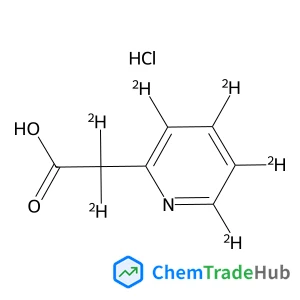
2,2-dideuterio-2-(3,4,5,6-tetradeuterio-2-pyridyl)acetic acid;hydrochloride
CAS号:
1329799-67-8
分子式:
C7H2ClD6NO2
推荐供应商



免责声明
本页面提供的学术期刊信息仅供参考和研究使用。我们与任何期刊出版商均无关联,也不处理投稿事宜。如有投稿相关咨询,请直接联系相关期刊出版商。
如发现页面信息有误,请发送邮件至 support@chemtradehub.com 联系我们。我们将及时核实并处理您的问题。