


![1-[6-(1H-Imidazol-1-yl)-3-pyridinyl]methanamine structure](https://cnstatic.chemtradehub.com/structs/914/914637-08-4-8825.webp "1-[6-(1H-Imidazol-1-yl)-3-pyridinyl]methanamine structure")
Recent advances in merging photonic crystals and plasmonics for bioanalytical applications
文献信息
发布日期
2018-04-18
DOI
10.1039/C8AN00144H
影响因子
4.616
作者
Hosein Monshat
查看原文
摘要
Photonic crystals (PhCs) and plasmonic nanostructures offer the unprecedented capability to control the interaction of light and biomolecules at the nanoscale. Based on PhC and plasmonic phenomena, a variety of analytical techniques have been demonstrated and successfully implemented in many fields, such as biological sciences, clinical diagnosis, drug discovery, and environmental monitoring. During the past decades, PhC and plasmonic technologies have progressed in parallel with their pros and cons. The merging of photonic crystals with plasmonics will significantly improve biosensor performances and enlarge the linear detection range of analytical targets. Here, we review the state-of-the-art biosensors that combine PhC and plasmonic nanomaterials for quantitative analysis. The optical mechanisms of PhCs, plasmonic crystals, and metal nanoparticles (NPs) are presented, along with their integration and potential applications. By explaining the optical coupling of photonic crystals and plasmonics, the review manifests how PhC–plasmonic hybrid biosensors can achieve the advantages, including high sensitivity, low cost, and short assay time as well. The review also discusses the challenges and future opportunities in this fascinating field.
期刊推荐
Russian Chemical Reviews
Planta Medica

Pharmacological Reviews
Organic Preparations and Procedures International

Science

European Journal of Wood and Wood Products
Proceedings of the National Academy of Sciences of the United States of America
Kinetics and Catalysis
Israel Journal of Chemistry
Journal of Organometallic Chemistry
相关文献
Fourier transform infrared spectroscopy and ab initio theory of acid–hydrogen sulfide clusters: H2S–HCl, D2S–DCl and H2S–(HCl)2
Pierre Asselin, Pascale Soulard, Bruno Madebène, Marius Lewerenz
2007-04-16
Paper
DOI: 10.1039/B702824E
Gas-phase electronic spectrum of the C14 ring
A. E. Boguslavskiy, J. P. Maier
2006-11-13
Paper
DOI: 10.1039/B613109C
Anion photoelectron imaging of deprotonated thymine and cytosine
Bradley F. Parsons, Sean M. Sheehan, Terry A. Yen, Daniel M. Neumark, Nadine Wehres, Rainer Weinkauf
2007-05-03
Paper
DOI: 10.1039/B703045B
Oxidative properties of FeO2+: electronic structure and solvation effects‡
Manuel J. Louwerse, Evert Jan Baerends
2006-11-28
Paper
DOI: 10.1039/B613182D
Crossed beam studies of radical–radical reactions: O(3P) + C3H5 (allyl)
F. Leonori, N. Balucani, G. Capozza, E. Segoloni, D. Stranges, P. Casavecchia
2007-02-01
Communication
DOI: 10.1039/B618971G
NMR measurements of scalar-coupling distributions in disordered solids
Sylvian Cadars, Anne Lesage, Michel Trierweiler, Laurent Heux, Lyndon Emsley
2006-10-24
Paper
DOI: 10.1039/B611096G
A computational chemistry insight in the role of structure directing agents in the synthesis of zeolites
2007-01-18
Invited Article
DOI: 10.1039/B615035G
Energy-directed tree search: an efficient systematic algorithm for finding the lowest energy conformation of molecules
Ekaterina I. Izgorodina, Ching Yeh Lin, Michelle L. Coote
2007-04-04
Paper
DOI: 10.1039/B700938K
您可能还喜欢
化合物问答
(5-氨基吡唑-3-基)乙酸(CAS号:174891-10-2)的物理化学性质是什么?
(5-氨基吡唑-3-基)乙酸是一种无色至白色固体,分子量为174.15 g/mol。它在水中具有较好的溶解性,在有机溶剂中的溶解度较低。该化合物具有较好的反应活...
174891-10-2(3-Amino-1H-pyrazol-...
化合物问答
3-氟-4,5-二氯苯胺(CAS号:35754-38-2)适用哪些法规指南?
3-氟-4,5-二氯苯胺受到多项法规指南的约束,包括但不限于GHS(全球化学品统一分类和标签制度)的危险分类标准、欧盟的REACH法规(注册、评估、授权和限制)...
35754-38-23,4-Dichloro-5-fluor...
化合物问答
什么是(R)-(+)-2,2',6,6'-四甲氧基-4,4'-联(二(3,5-二甲苯基基)膦基)-3,3'-二联吡啶(CAS号:442905-33-1)?
这是一种有机化合物,化学名为(R)-(+)-2,2',6,6'-四甲氧基-4,4'-联(二(3,5-二甲苯基基)膦基)-3,3'-二联吡啶,CAS号为44290...
442905-33-14,4'-Bis[bis(3,5-dim...
化合物问答
1-氨基-2-氰基萘(CAS号:3100-67-2)应用于哪些行业?
1-氨基-2-氰基萘在医药、聚合物、传感器和半导体等行业中有应用。在医药领域,它可用作中间体合成某些药物。在聚合物行业,它可以用于制备具有特定性能的聚合物。此外...
3100-67-21-Amino-2-naphthonit...
化合物问答
如何处理含有1-溴-4-(异丙氧基甲基)苯(CAS号:98446-84-5)的废料?
处理含1-溴-4-(异丙氧基甲基)苯的废料时,首先应确保废液收集在防渗漏的容器中,避免泄露。然后,可以考虑采用化学降解法或物理吸附法进行处理。在特定条件下,可通...
98446-84-51-Bromo-4-(isopropox...
化合物问答
6-Chloro-8-(trifluoromethyl)chroman-4-one(CAS号:1344889-75-3)的主要用途是什么?
6-氯-8-三氟甲基-2,3-二氢-4H-色喃-4-酮主要用于有机合成中的中间体,也可作为研究试剂使用。
1344889-75-36-Chloro-8-(trifluor...
化合物问答
7-乙氧基-2-萘酚(CAS号:57944-44-2)通常如何合成?
7-乙氧基-2-萘酚通常通过N-乙氧基化反应合成,首先将2-萘酚与乙醇钠在乙醇中反应生成7-乙氧基-2-萘酚钠盐,再通过酸化进一步得到7-乙氧基-2-萘酚。该合...
57944-44-27-Ethoxy-2-naphthol
化合物问答
4-(1,1-二氧硫代吗啉)丁醇(CAS号:59801-41-1)适用哪些法规指南?
该化合物需遵循一系列的法规指南,包括但不限于GHS全球统一分类和标签制度,其分类可能包括易燃液体和可能危害水生环境。在欧洲,还需遵循REACH法规,确保物质和混...
59801-41-14-(4-Hydroxybutyl)th...
化合物问答
4-甲氧基苄基叠氮甲酸酯(CAS号:25474-85-5)的物理化学性质是什么?
4-甲氧基苄基叠氮甲酸酯是一种无色液体,具有一定的挥发性。其分子量为198.16,熔点为-69°C,沸点为105°C。该化合物在水中溶解度较低,在有机溶剂如乙醇...
25474-85-54-Methoxybenzyl carb...
化合物问答
如何处理含有4-氯-2-氟嘧啶(CAS号:51422-00-5)的废料?
含有4-氯-2-氟嘧啶的废料应按照危险废物处理。首先,应收集并分类这些废料,避免与其他废物混合。然后,可以采用焚烧处理或者交由专业机构进行处置。在处理过程中,需...
51422-00-54-Chloro-2-fluoropyr...
来源期刊
Analyst

CiteScore:
7.8
自引率:
5.6%
年发文量:
653
Analyst publishes analytical and bioanalytical research that reports premier fundamental discoveries and inventions, and the applications of those discoveries, unconfined by traditional discipline barriers.
推荐化合物
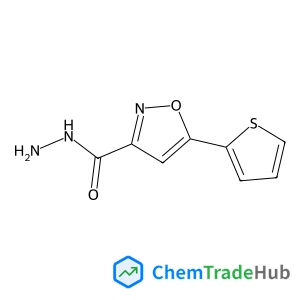
![(2R,6S)-6-[(Benzyloxy)methyl]-4-{[(2-methyl-2-propanyl)oxy]carbonyl}-2-morpholinecarboxylic acid structure](https://cnstatic.chemtradehub.com/structs/109/1093085-91-6-3382.webp "(2R,6S)-6-[(Benzyloxy)methyl]-4-{[(2-methyl-2-propanyl)oxy]carbonyl}-2-morpholinecarboxylic acid structure")
![1,10-bis(3,5-dimethylphenyl)-12-hydroxy-4,5,6,7-tetrahydroiindeno[7,1-de:1',7'-fg][1,3,2]dioxaphosphocine 12-oxide structure](https://cnstatic.chemtradehub.com/structs/141/1412439-82-7-b9a9.webp "1,10-bis(3,5-dimethylphenyl)-12-hydroxy-4,5,6,7-tetrahydroiindeno[7,1-de:1',7'-fg][1,3,2]dioxaphosphocine 12-oxide structure")
推荐供应商



免责声明
本页面提供的学术期刊信息仅供参考和研究使用。我们与任何期刊出版商均无关联,也不处理投稿事宜。如有投稿相关咨询,请直接联系相关期刊出版商。
如发现页面信息有误,请发送邮件至 support@chemtradehub.com 联系我们。我们将及时核实并处理您的问题。