











A novel electrochemical immunoassay for carcinoembryonic antigen based on glucose oxidase-encapsulated nanogold hollow spheres with a pH meter readout
文献信息
发布日期
2018-09-13
DOI
10.1039/C8AN01436A
影响因子
4.616
作者
Yu Jiang, Zhiying Su, Jian Zhang, Meijiao Cai, Lili Wu
查看原文
摘要
A portable electrochemical immunosensing protocol was designed for the sensitive detection of a disease-related tumor biomarker (carcinoembryonic antigen, CEA, used in this case) on a pH meter using glucose oxidase (GOx)-encapsulated gold hollow microspheres (AuHMs) for signal amplification. The assay was carried out on a monoclonal anti-CEA capture antibody-coated microplate with a sandwich-type reaction mode. The GOx-entrapped AuHM was first synthesized using the reverse micelle method and then used as the signal-generation tag for the labeling of polyclonal anti-CEA detection antibody. Accompanying the formation of the sandwiched immunocomplexes, the loaded GOx molecules in the microsphere could catalyze glucose into gluconic acid and hydrogen peroxide. The as-produced gluconic acid changed the microenvironment of the detection solution, thus resulting in the shift of the pH value, which could be quantitatively determined on a portable pH meter. The use of gold hollow microspheres was expected to enhance the loaded amount of GOx for signal amplification. Two labeling protocols including GOx-labeled secondary antibody and GOx-AuHM-labeled secondary antibody were investigated for CEA detection, and improved analytical features were acquired with GOx-AuHM labeling. With the GOx-AuHM labeling strategy, the pH meter-based immunosensing device exhibited a good analytical performance for CEA detection within the dynamic linear range of 0.1–100 ng mL−1 at a detection limit of 0.062 ng mL−1. The strong attachment of anti-CEA antibodies to GOx-AuHM brought a good repeatability and intermediate precision down to 10%. Importantly, no significant differences at the 0.05 significance level were encountered in the analysis of 12 human serum specimens between the developed immunoassay and the commercialized electrochemiluminescent method for CEA determination.
相关文献
A 3D-RISM-SCF method with dual solvent boxes for a highly polarized system: application to 1,6-anhydrosugar formation reaction of phenyl α- and β-d-glucosides under basic conditions
Shinji Aono, Takashi Hosoya, Shigeyoshi Sakaki
2013-03-01
Paper
DOI: 10.1039/C3CP43892A
Ultrafast photoinduced dynamics of halogenated cyclopentadienes: observation of geminate charge-transfer complexes in solution
T. J. A. Wolf, R. Radloff, P. Lang, A. Stolow, A.-N. Unterreiner
2013-02-11
Paper
DOI: 10.1039/C3CP44295K
Enhancing the stability of polymer solar cells by improving the conductivity of the nanostructured MoO3 hole-transport layer
Amitaksha Saha, Chellappan Vijila, Rajan Jose, Zhang Jie, Seeram Ramakrishna
2013-03-12
Paper
DOI: 10.1039/C3CP50994J
Ligand strain and conformations in a family of Fe(ii) spin crossover hexadentate complexes involving the 2-pyridylmethyl-amino moiety: DFT modelling
Galina S. Matouzenko, Serguei A. Borshch, Volker Schünemann, Juliusz A. Wolny
2013-03-22
Paper
DOI: 10.1039/C3CP44570D
Recovering degraded quasi-solid-state dye-sensitized solar cells by applying electrical pulses
Xi Zhang, Xuezhen Huang
2013-03-14
Paper
DOI: 10.1039/C3CP51071A
Fast phase formation of double-filled p-type skutterudites by ball-milling and hot-pressing
Qing Jie, Hengzhi Wang, Weishu Liu, Hui Wang, Gang Chen, Zhifeng Ren
2013-02-11
Paper
DOI: 10.1039/C3CP50327E
On the signature of the hydrophobic effect at a single molecule level
Giuseppe Graziano
2013-03-25
Paper
DOI: 10.1039/C3CP50616A
The effect of axial ligand on the oxidation of syringyl alcohol by Co(salen) adducts
Thomas Elder, Joseph J. Bozell, Diana Cedeno
2013-04-03
Paper
DOI: 10.1039/C3CP44404J
Raman microspectroscopy and vibrational sum frequency generation spectroscopy as probes of the bulk and surface compositions of size-resolved sea spray aerosol particles
Andrew P. Ault, Defeng Zhao, Carlena J. Ebben, Michael J. Tauber, Franz M. Geiger, Vicki H. Grassian
2013-02-19
Paper
DOI: 10.1039/C3CP43899F
您可能还喜欢
化合物问答
(5-氨基吡唑-3-基)乙酸(CAS号:174891-10-2)的物理化学性质是什么?
(5-氨基吡唑-3-基)乙酸是一种无色至白色固体,分子量为174.15 g/mol。它在水中具有较好的溶解性,在有机溶剂中的溶解度较低。该化合物具有较好的反应活...
174891-10-2(3-Amino-1H-pyrazol-...
化合物问答
3-氟-4,5-二氯苯胺(CAS号:35754-38-2)适用哪些法规指南?
3-氟-4,5-二氯苯胺受到多项法规指南的约束,包括但不限于GHS(全球化学品统一分类和标签制度)的危险分类标准、欧盟的REACH法规(注册、评估、授权和限制)...
35754-38-23,4-Dichloro-5-fluor...
化合物问答
什么是(R)-(+)-2,2',6,6'-四甲氧基-4,4'-联(二(3,5-二甲苯基基)膦基)-3,3'-二联吡啶(CAS号:442905-33-1)?
这是一种有机化合物,化学名为(R)-(+)-2,2',6,6'-四甲氧基-4,4'-联(二(3,5-二甲苯基基)膦基)-3,3'-二联吡啶,CAS号为44290...
442905-33-14,4'-Bis[bis(3,5-dim...
化合物问答
1-氨基-2-氰基萘(CAS号:3100-67-2)应用于哪些行业?
1-氨基-2-氰基萘在医药、聚合物、传感器和半导体等行业中有应用。在医药领域,它可用作中间体合成某些药物。在聚合物行业,它可以用于制备具有特定性能的聚合物。此外...
3100-67-21-Amino-2-naphthonit...
化合物问答
如何处理含有1-溴-4-(异丙氧基甲基)苯(CAS号:98446-84-5)的废料?
处理含1-溴-4-(异丙氧基甲基)苯的废料时,首先应确保废液收集在防渗漏的容器中,避免泄露。然后,可以考虑采用化学降解法或物理吸附法进行处理。在特定条件下,可通...
98446-84-51-Bromo-4-(isopropox...
化合物问答
6-Chloro-8-(trifluoromethyl)chroman-4-one(CAS号:1344889-75-3)的主要用途是什么?
6-氯-8-三氟甲基-2,3-二氢-4H-色喃-4-酮主要用于有机合成中的中间体,也可作为研究试剂使用。
1344889-75-36-Chloro-8-(trifluor...
化合物问答
7-乙氧基-2-萘酚(CAS号:57944-44-2)通常如何合成?
7-乙氧基-2-萘酚通常通过N-乙氧基化反应合成,首先将2-萘酚与乙醇钠在乙醇中反应生成7-乙氧基-2-萘酚钠盐,再通过酸化进一步得到7-乙氧基-2-萘酚。该合...
57944-44-27-Ethoxy-2-naphthol
化合物问答
4-(1,1-二氧硫代吗啉)丁醇(CAS号:59801-41-1)适用哪些法规指南?
该化合物需遵循一系列的法规指南,包括但不限于GHS全球统一分类和标签制度,其分类可能包括易燃液体和可能危害水生环境。在欧洲,还需遵循REACH法规,确保物质和混...
59801-41-14-(4-Hydroxybutyl)th...
化合物问答
4-甲氧基苄基叠氮甲酸酯(CAS号:25474-85-5)的物理化学性质是什么?
4-甲氧基苄基叠氮甲酸酯是一种无色液体,具有一定的挥发性。其分子量为198.16,熔点为-69°C,沸点为105°C。该化合物在水中溶解度较低,在有机溶剂如乙醇...
25474-85-54-Methoxybenzyl carb...
化合物问答
如何处理含有4-氯-2-氟嘧啶(CAS号:51422-00-5)的废料?
含有4-氯-2-氟嘧啶的废料应按照危险废物处理。首先,应收集并分类这些废料,避免与其他废物混合。然后,可以采用焚烧处理或者交由专业机构进行处置。在处理过程中,需...
51422-00-54-Chloro-2-fluoropyr...
来源期刊
Analyst

CiteScore:
7.8
自引率:
5.6%
年发文量:
653
Analyst publishes analytical and bioanalytical research that reports premier fundamental discoveries and inventions, and the applications of those discoveries, unconfined by traditional discipline barriers.
推荐化合物


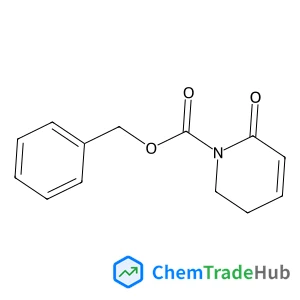
![1-(1-Benzyl-1,2,3,6-tetrahydropyridin-4-yl)-1H-benzo[d]imidazol-2(3H)-one structure](https://cnstatic.chemtradehub.com/structs/603/60373-71-9-7dfb.webp "1-(1-Benzyl-1,2,3,6-tetrahydropyridin-4-yl)-1H-benzo[d]imidazol-2(3H)-one structure")
推荐供应商






免责声明
本页面提供的学术期刊信息仅供参考和研究使用。我们与任何期刊出版商均无关联,也不处理投稿事宜。如有投稿相关咨询,请直接联系相关期刊出版商。
如发现页面信息有误,请发送邮件至 support@chemtradehub.com 联系我们。我们将及时核实并处理您的问题。