



Electron-withdrawing effects on the molecular structure of 2- and 3-nitrobenzonitrile revealed by broadband rotational spectroscopy and their comparison with 4-nitrobenzonitrile
文献信息
发布日期
2018-08-03
DOI
10.1039/C8CP01539B
影响因子
3.676
作者
William C. Bailey
查看原文
摘要
The rotational spectra of 2- and 3-nitrobenzonitrile were recorded via chirped-pulse Fourier transform microwave spectroscopy in the frequency range of 2–8 GHz. These molecules each display large dipole moments, making them viable candidates for deceleration and trapping experiments with AC-electric fields. For both molecules, the main isotopologues and all isotopologues of the respective 13C-, 15N-, 18O-monosubstituted species in their natural abundance were assigned. These assignments allowed for the structural determination of 2- and 3-nitrobenzonitrile via Kraitchman's equations as well as a mass-dependent least-squares fitting approach. The experimentally determined structural parameters are then compared to those obtained from quantum-chemical calculations for these two molecules and 4-nitrobenzonitrile. Structural changes caused by steric interaction and competition for the electron density of the phenyl ring highlight how these strong electron-withdrawing substituents affect one another according to their respective positions on the phenyl ring.
期刊推荐
Journal of Saudi Chemical Society
Current Opinion in Colloid & Interface Science
Organic Process Research & Development
Russian Journal of Organic Chemistry
Russian Chemical Bulletin

Saudi Pharmaceutical Journal

Current Opinion in Solid State & Materials Science
Chemical Communications

Chemistry Education Research and Practice
Russian Journal of Coordination Chemistry
相关文献
Conformational preference and cationic structure of 2-methylpyrazine by VUV-MATI spectroscopy and natural bond orbital analysis
Do Won Kang, Hong Lae Kim, Chan Ho Kwon
2019-04-16
Paper
DOI: 10.1039/C9CP00766K
Photoelectron spectroscopy of solvated dicarboxylate and alkali metal ion clusters, M+[O2C(CH2)2CO2]2− [H2O]n (M = Na, K; n = 1–6)
Shihu H. M. Deng, Gao-Lei Hou, Marat Valiev, Xue-Bin Wang
2018-11-02
Paper
DOI: 10.1039/C8CP03896A
Oscillations of pH in the urea–urease system in a membrane reactor
František Muzika, Matěj Růžička, Lenka Schreiberová, Igor Schreiber
2019-04-02
Communication
DOI: 10.1039/C9CP00630C
Conformational changes of DNA induced by a trans-azobenzene derivative via non-covalent interactions
Hong Zhang, Haohao Fu, Antonio Monari
2018-08-06
Paper
DOI: 10.1039/C8CP03836H
Self-adaptive multiscaling algorithm for efficient simulations of many-protein systems in crowded conditions
2018-10-29
Paper
DOI: 10.1039/C8CP05517C
A proton transfer network that generates deprotonated tyrosine is a key to producing reactive oxygen species in phototoxic KillerRed protein
Wook Lee, Inkoo Kim, Young Min Rhee
2018-08-03
Paper
DOI: 10.1039/C8CP02939C
Closed bipolar electrochemistry in a four-electrode configuration
Alonso Gamero-Quijano, Andrés F. Molina-Osorio, Pekka Peljo
2019-05-03
Perspective
DOI: 10.1039/C9CP00774A
Quantum anomalous Hall effect in metal-bis(dithiolene), magnetic properties, doping and interfacing graphene
F. Crasto de Lima, Gerson J. Ferreira, R. H. Miwa
2018-08-10
Paper
DOI: 10.1039/C8CP03792B
Boron-based binary Be6B102− cluster: three-layered aromatic sandwich, electronic transmutation, and dynamic structural fluxionality
Lin-Yan Feng, Peng-Fei Li, Hua-Jin Zhai
2018-08-13
Paper
DOI: 10.1039/C8CP04332A
您可能还喜欢
化合物问答
如何储存1,2-环己二酮环乙缩醛(CAS号:4746-96-7)?
1,2-环己二酮环乙缩醛应储存在阴凉、干燥、通风良好的地方,避免阳光直射。建议使用密封容器保存,并保持环境温度在室温范围内,远离火源和热源。
4746-96-71,4-Dioxaspiro[4.5]d...
化合物问答
Ecopladib(CAS号:381683-92-7)的市场或研究趋势如何?
Ecopladib作为一种新型的药物,主要应用于治疗高胆固醇等疾病。目前,市场和研究趋势显示,Ecopladib因其独特的药理作用而受到关注。随着对心血管疾病治...
381683-92-7Ecopladib
化合物问答
2,3-Dimethyl-3H-imidazo[4,5-c]pyridine(CAS号:52538-09-7)通常如何合成?
2,3-二甲基-3H-咪唑[4,5-c]吡啶通常通过咪唑和2,3-二甲基吡啶的缩合反应合成。具体来说,将咪唑和2,3-二甲基吡啶在适当的溶剂中进行加热或加压反应...
52538-09-72,3-Dimethyl-3H-imid...
化合物问答
2,3,4,5-tetrahydro-1H-3-苯并氮杂环;盐酸盐(CAS号:17379-01-0)的市场或研究趋势如何?
该化合物在药物化学和有机合成中有一定的应用。近年来,随着对新型药物化合物的需求增加,该化合物的研究趋势主要集中在探索其生物活性,尤其是其在神经系统疾病治疗中的潜...
17379-01-02,3,4,5-Tetrahydro-1...
68-90-6(2-Ethyl-1-benzofura...
化合物问答
如何储存盐酸甘氨酸丁酯(CAS号:13048-99-2)?
盐酸甘氨酸丁酯应储存在阴凉、干燥、通风良好的地方,避免阳光直射和高温环境,温度应控制在25℃以下。储存容器应密封,避免与空气中的水分和酸性物质接触,以防发生水解...
13048-99-2Butyl glycinate hydr...
化合物问答
什么是2-Iodo-N,N-dimethylbenzamide(CAS号:54616-46-5)?
2-碘-N,N-二甲基苯胺是一种有机化合物,化学名为2-Iodo-N,N-dimethylbenzamide。其分子式为C<sub>9</sub>H<sub>1...
54616-46-52-Iodo-N,N-dimethylb...
16817-90-6N-Cyclohexylglycinam...
化合物问答
5-溴-2-(4H-1,2,4-三唑-4-基)吡啶(CAS号:959240-99-4)的市场或研究趋势如何?
随着医药、农药和新材料领域的发展,该化合物作为关键中间体的应用日益增多。特别是在药物合成中,由于其独特的化学性质,可以用于合成多种药物分子。未来的研究趋势可能集...
959240-99-45-Bromo-2-(4H-1,2,4-...
化合物问答
2,4-二溴-6-三氟甲基嘧啶(CAS号:785778-00-9)通常如何合成?
2,4-二溴-6-三氟甲基嘧啶通常通过溴化反应合成。首先,将6-三氟甲基嘧啶与溴化剂(如液溴)在适当的溶剂(如二氯甲烷、四氢呋喃)中反应,加入适当的催化剂(如四...
785778-00-92,4-Dibromo-6-(trifl...
来源期刊
Physical Chemistry Chemical Physics

CiteScore:
5.5
自引率:
10.3%
年发文量:
3036
Physical Chemistry Chemical Physics (PCCP) is an international journal co-owned by 19 physical chemistry and physics societies from around the world. This journal publishes original, cutting-edge research in physical chemistry, chemical physics and biophysical chemistry. To be suitable for publication in PCCP, articles must include significant innovation and/or insight into physical chemistry; this is the most important criterion that reviewers and Editors will judge against when evaluating submissions. The journal has a broad scope and welcomes contributions spanning experiment, theory, computation and data science. Topical coverage includes spectroscopy, dynamics, kinetics, statistical mechanics, thermodynamics, electrochemistry, catalysis, surface science, quantum mechanics, quantum computing and machine learning. Interdisciplinary research areas such as polymers and soft matter, materials, nanoscience, energy, surfaces/interfaces, and biophysical chemistry are welcomed if they demonstrate significant innovation and/or insight into physical chemistry. Joined experimental/theoretical studies are particularly appreciated when complementary and based on up-to-date approaches.
推荐化合物
![S-[2,3-Bis(palmitoyloxy)propyl]-N-[(9H-fluoren-9-ylmethoxy)(hydroxy)methylene]cysteine structure](https://cnstatic.chemtradehub.com/structs/210/210532-98-2-f6a7.webp "S-[2,3-Bis(palmitoyloxy)propyl]-N-[(9H-fluoren-9-ylmethoxy)(hydroxy)methylene]cysteine structure")

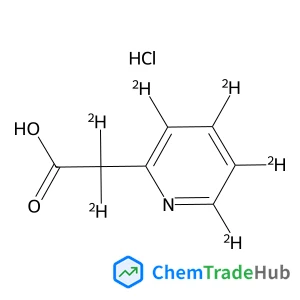
2,2-dideuterio-2-(3,4,5,6-tetradeuterio-2-pyridyl)acetic acid;hydrochloride
CAS号:
1329799-67-8
分子式:
C7H2ClD6NO2

推荐供应商





免责声明
本页面提供的学术期刊信息仅供参考和研究使用。我们与任何期刊出版商均无关联,也不处理投稿事宜。如有投稿相关咨询,请直接联系相关期刊出版商。
如发现页面信息有误,请发送邮件至 support@chemtradehub.com 联系我们。我们将及时核实并处理您的问题。