


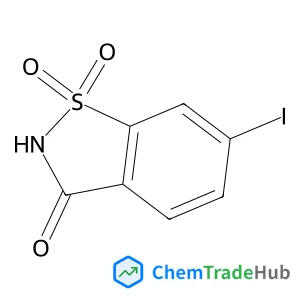
![1-[(4-Methylphenyl)sulfonyl]-3-(4,4,5,5-tetramethyl-1,3,2-dioxaborolan-2-yl)-1H-pyrrolo[2,3-b]pyridine-5-carbonitrile structure](https://cnstatic.chemtradehub.com/structs/143/1434747-57-5-fc0d.webp "1-[(4-Methylphenyl)sulfonyl]-3-(4,4,5,5-tetramethyl-1,3,2-dioxaborolan-2-yl)-1H-pyrrolo[2,3-b]pyridine-5-carbonitrile structure")
Tuning oxygen electrocatalysis via strain on LaNiO3(001)‡
文献信息
发布日期
2018-10-15
DOI
10.1039/C8CP02405G
影响因子
3.676
作者
Simuck F. Yuk, Valentino R. Cooper
查看原文
摘要
The slow kinetics of the oxygen evolution (OER) and oxygen reduction (ORR) reactions hamper the development of renewable energy storage and conversion technologies. Transition-metal oxides (TMOs) are cost-effective replacements to conventional noble metal catalysts for driving these electrochemical systems. Strain is known to greatly affect the electronic structure of TMO surfaces, leading to significant changes in their electrocatalytic activities. In this study, we explore the influence of strain on the OER and ORR mechanisms on the LaNiO3(001) surface using density functional theory (DFT). Through a comparison of the overpotential and the largest change in Gibbs free energy (ΔG) in the reaction pathway, we determined that the OER activity on the LaNiO3 surface is directly related to the desorption of –H from the surface, which can be tuned as a function of strain. Moreover, tensile strain shuts off the reaction pathway to forming the –O2H intermediate state, due to the dissociation of –O2H into –O2 and –H. This is largely a consequence of the strong binding of H to the surface O, leading to a significant increase in the largest ΔG for the ORR on the tensile-strained surfaces by promoting an alternative reaction pathway. Overall, our results show that tensile strain on LaNiO3(001) leads to a decrease in both OER and ORR activities. Interestingly, in both cases, we find that the reaction is driven by the interactions with surface O ions, thus calling for a reinterpretation of the role that Ni eg orbital polarization plays in defining the OER and ORR catalytic activity on the TMO surfaces. Here, it is an indirect measure of changes in Ni–O hybridization, which controls the binding of –H species to the surface. As such, these results highlight the importance of surface O ions; particularly as it relates to defining molecule–surface interactions that ultimately tune and enhance the electrocatalytic efficiency of perovskite materials through the modulation of strains.
期刊推荐
Organic Process Research & Development
Nature Medicine
Russian Journal of Coordination Chemistry

Journal of Natural Medicines

Current Opinion in Solid State & Materials Science

Journal of Peptide Science

Russian Journal of Organic Chemistry

Journal of Saudi Chemical Society

Russian Journal of Applied Chemistry

Russian Journal of General Chemistry
相关文献
A new method to analyze and understand molecular linear and nonlinear optical responses via field-induced functions: a straightforward alternative to sum-over-states (SOS) analysis
Nicolás Otero, Marcos Mandado
2019-02-20
Paper
DOI: 10.1039/C8CP07362G
Suppressing depolarization by tail substitution in an organic supramolecular ferroelectric
Indre Urbanaviciute, Subham Bhattacharjee, Michal Biler, Jody A. M. Lugger, Tim D. Cornelissen, Patrick Norman, Rint P. Sijbesma, Martijn Kemerink
2019-01-02
Paper
DOI: 10.1039/C8CP06315J
Building intermixed donor–acceptor architectures for water-processable organic photovoltaics
Melissa Marks, Natalie P. Holmes, Xun Pan, Riku Chowdhury, Matthew G. Barr, Coralie Fenn, Matthew J. Griffith, A. L. David Kilcoyne, David A. Lewis, Mats R. Andersson, Warwick J. Belcher, Paul C. Dastoor
2019-02-19
Paper
DOI: 10.1039/C8CP07137C
Tunable electronic properties of an Sb/InSe van der Waals heterostructure by electric field effects
Zhihui Zhang, Yan Zhang, Zifeng Xie, Xing Wei, Tingting Guo, Jibin Fan, Lei Ni, Ye Tian, Jian Liu, Li Duan
2019-02-12
Paper
DOI: 10.1039/C8CP07407K
Photoinduced electron transfer in 5-bromouracil labeled DNA. A contrathermodynamic mechanism revisited by electron transfer theories
Lorenzo Cupellini, Benedetta Mennucci, Janusz Rak
2019-01-21
Paper
DOI: 10.1039/C8CP07700B
A stochastic model study on the self-assembly process of a Pd2L4 cage consisting of rigid ditopic ligands
Satoshi Takahashi, Yuya Sasaki, Shuichi Hiraoka
2018-11-28
Paper
DOI: 10.1039/C8CP06102E
A comparison between hydrogen and halogen bonding: the hypohalous acid–water dimers, HOX⋯H2O (X = F, Cl, Br)
Mark E. Wolf, Boyi Zhang, Justin M. Turney, Henry F. Schaefer, III
2019-02-20
Paper
DOI: 10.1039/C9CP00422J
Origin band of the first photoionizing transition of hydrogen isocyanide
Bérenger Gans, Gustavo A. Garcia, Séverine Boyé-Péronne, Stephen T. Pratt, Jean-Claude Guillemin, Alfredo Aguado, Octavio Roncero, Jean-Christophe Loison
2019-01-10
Paper
DOI: 10.1039/C8CP07737A
您可能还喜欢
化合物问答
如何储存1,2-环己二酮环乙缩醛(CAS号:4746-96-7)?
1,2-环己二酮环乙缩醛应储存在阴凉、干燥、通风良好的地方,避免阳光直射。建议使用密封容器保存,并保持环境温度在室温范围内,远离火源和热源。
4746-96-71,4-Dioxaspiro[4.5]d...
化合物问答
Ecopladib(CAS号:381683-92-7)的市场或研究趋势如何?
Ecopladib作为一种新型的药物,主要应用于治疗高胆固醇等疾病。目前,市场和研究趋势显示,Ecopladib因其独特的药理作用而受到关注。随着对心血管疾病治...
381683-92-7Ecopladib
化合物问答
2,3-Dimethyl-3H-imidazo[4,5-c]pyridine(CAS号:52538-09-7)通常如何合成?
2,3-二甲基-3H-咪唑[4,5-c]吡啶通常通过咪唑和2,3-二甲基吡啶的缩合反应合成。具体来说,将咪唑和2,3-二甲基吡啶在适当的溶剂中进行加热或加压反应...
52538-09-72,3-Dimethyl-3H-imid...
化合物问答
2,3,4,5-tetrahydro-1H-3-苯并氮杂环;盐酸盐(CAS号:17379-01-0)的市场或研究趋势如何?
该化合物在药物化学和有机合成中有一定的应用。近年来,随着对新型药物化合物的需求增加,该化合物的研究趋势主要集中在探索其生物活性,尤其是其在神经系统疾病治疗中的潜...
17379-01-02,3,4,5-Tetrahydro-1...
68-90-6(2-Ethyl-1-benzofura...
化合物问答
如何储存盐酸甘氨酸丁酯(CAS号:13048-99-2)?
盐酸甘氨酸丁酯应储存在阴凉、干燥、通风良好的地方,避免阳光直射和高温环境,温度应控制在25℃以下。储存容器应密封,避免与空气中的水分和酸性物质接触,以防发生水解...
13048-99-2Butyl glycinate hydr...
化合物问答
什么是2-Iodo-N,N-dimethylbenzamide(CAS号:54616-46-5)?
2-碘-N,N-二甲基苯胺是一种有机化合物,化学名为2-Iodo-N,N-dimethylbenzamide。其分子式为C<sub>9</sub>H<sub>1...
54616-46-52-Iodo-N,N-dimethylb...
16817-90-6N-Cyclohexylglycinam...
化合物问答
5-溴-2-(4H-1,2,4-三唑-4-基)吡啶(CAS号:959240-99-4)的市场或研究趋势如何?
随着医药、农药和新材料领域的发展,该化合物作为关键中间体的应用日益增多。特别是在药物合成中,由于其独特的化学性质,可以用于合成多种药物分子。未来的研究趋势可能集...
959240-99-45-Bromo-2-(4H-1,2,4-...
化合物问答
2,4-二溴-6-三氟甲基嘧啶(CAS号:785778-00-9)通常如何合成?
2,4-二溴-6-三氟甲基嘧啶通常通过溴化反应合成。首先,将6-三氟甲基嘧啶与溴化剂(如液溴)在适当的溶剂(如二氯甲烷、四氢呋喃)中反应,加入适当的催化剂(如四...
785778-00-92,4-Dibromo-6-(trifl...
来源期刊
Physical Chemistry Chemical Physics

CiteScore:
5.5
自引率:
10.3%
年发文量:
3036
Physical Chemistry Chemical Physics (PCCP) is an international journal co-owned by 19 physical chemistry and physics societies from around the world. This journal publishes original, cutting-edge research in physical chemistry, chemical physics and biophysical chemistry. To be suitable for publication in PCCP, articles must include significant innovation and/or insight into physical chemistry; this is the most important criterion that reviewers and Editors will judge against when evaluating submissions. The journal has a broad scope and welcomes contributions spanning experiment, theory, computation and data science. Topical coverage includes spectroscopy, dynamics, kinetics, statistical mechanics, thermodynamics, electrochemistry, catalysis, surface science, quantum mechanics, quantum computing and machine learning. Interdisciplinary research areas such as polymers and soft matter, materials, nanoscience, energy, surfaces/interfaces, and biophysical chemistry are welcomed if they demonstrate significant innovation and/or insight into physical chemistry. Joined experimental/theoretical studies are particularly appreciated when complementary and based on up-to-date approaches.
推荐化合物
![[(1S,2S,3R,4S,7R,9S,10S,12R,15S)-4,12-Diacetyloxy-15-[(2R,3S)-3-benzamido-3-phenyl-2-(2,2,2-trichloroethoxycarbonyloxy)propanoyl]oxy-1,9-dihydroxy-10,14,17,17-tetramethyl-11-oxo-6-oxatetracyclo[11.3.1.03,10.04,7]heptadec-13-en-2-yl] benzoate structure](https://cnstatic.chemtradehub.com/structs/100/100431-55-8-7104.webp "[(1S,2S,3R,4S,7R,9S,10S,12R,15S)-4,12-Diacetyloxy-15-[(2R,3S)-3-benzamido-3-phenyl-2-(2,2,2-trichloroethoxycarbonyloxy)propanoyl]oxy-1,9-dihydroxy-10,14,17,17-tetramethyl-11-oxo-6-oxatetracyclo[11.3.1.03,10.04,7]heptadec-13-en-2-yl] benzoate structure")

推荐供应商






免责声明
本页面提供的学术期刊信息仅供参考和研究使用。我们与任何期刊出版商均无关联,也不处理投稿事宜。如有投稿相关咨询,请直接联系相关期刊出版商。
如发现页面信息有误,请发送邮件至 support@chemtradehub.com 联系我们。我们将及时核实并处理您的问题。