


![Bis(1,2,2,6,6-pentamethyl-4-piperidinyl) butyl[4-hydroxy-3,5-bis(2-methyl-2-propanyl)benzyl]malonate structure](https://cnstatic.chemtradehub.com/structs/638/63843-89-0-665e.webp "Bis(1,2,2,6,6-pentamethyl-4-piperidinyl) butyl[4-hydroxy-3,5-bis(2-methyl-2-propanyl)benzyl]malonate structure")
Spin density distributions on graphene clusters and ribbons with carbene-like active sites
文献信息
发布日期
2018-10-17
DOI
10.1039/C8CP03313G
影响因子
3.676
作者
Patrick R. Briddon, Mark J. Rayson
查看原文
摘要
Aiming to better understand the reactivity of graphene-based materials, the present work employs density functional theory that provides detailed information about spin-density distributions for single and contiguous pairs of carbene-like active sites. In order to examine the extent to which different models, methodologies, and approximations affect the outcome, our calculations employ the AIMPRO, QuantumEspresso and Gaussian program packages. Models are in the form of polycyclic aromatic hydrocarbons (PAHs) and graphene nanoribbons (GNRs), both isolated and within supercells with periodic boundary conditions. Benchmarking calculations for the phenyl radical and cation are also presented. General agreement is found among the methods and also with previous studies. A significant electron spin polarization (spin density >1.096 electron spin) on the active sites is seen in both periodic and cluster systems, but it tends to be lower for GNRs than graphene clusters. The effect of the functional seems to be much more important than the position of singularities at the edges of the GNRs. Finally, we show the interactions and effects on spin density when a single site lies at the edge of a bilayer GNR, where bonding between layers may occur under specific circumstances.
期刊推荐
Journal of Asian Natural Products Research

Bioorganic & Medicinal Chemistry

Topics in Catalysis

Biocatalysis and Biotransformation

Atomization and Sprays
Journal of Chemical Sciences

Herald of the Russian Academy of Sciences

Chinese Journal of Chemistry

Acta Metallurgica Sinica-English Letters
Electroanalysis
相关文献
Theoretical insights into surface-phase transition and ion competition during alkali ion intercalation on the Cu4Se4 nanosheet
Yang-Xin Yu
2023-11-21
Paper
DOI: 10.1039/D3CP05423C
Fine comminution of torrefied wheat straw for energy applications: properties of the powder and energy balances of the production route
Jean-Michel Commandré, Jean-Eudes Maigret, Bruno Piriou, Camille Goudenhooft, Sylvie Durand, Alain Bourmaud, Johnny Beaugrand
2023-10-16
Paper
DOI: 10.1039/D3SE00873H
Electrochemical CO2 conversion technologies: state-of-the-art and future perspectives
Remko J. Detz, Claire J. Ferchaud, Arie J. Kalkman, Jasmin Kemper, Carlos Sánchez-Martínez, Marija Saric, Manoj V. Shinde
2023-10-25
Perspective
DOI: 10.1039/D3SE00775H
f-Block reactions of metal cations with carbon dioxide studied by inductively coupled plasma tandem mass spectrometry
Richard M Cox, Kali M. Melby, Amanda D. French, Michael J. Rodriguez
2023-12-05
Paper
DOI: 10.1039/D3CP04180H
Differential effects of MoO3 and MoO2 sacrificial layers on the J–V performance of Cu2ZnSn(S,Se)4 solar cells
Jinhui Zhang, Chuanhe Ma, Haixuan Gao, Jinchun Jiang, Hailong Wang
2023-12-14
Paper
DOI: 10.1039/D3SE01409F
First-principles prediction of the thermal conductivity of two configurations of difluorinated graphene monolayer
Ao Chen, Hua Tong, Cheng-Wei Wu, Shi-Yi Li, Pin-Zhen Jia, Wu-Xing Zhou
2023-11-25
Paper
DOI: 10.1039/D3CP04923J
Quantum phase transitions in skewed ladder systems
Sambunath Das, Dayasindhu Dey, Rajamani Raghunathan, Zoltan G. Soos, Manoranjan Kumar, S. Ramasesha
2023-12-09
Review Article
DOI: 10.1039/D3CP04179D
CeO2-supported multi-nuclear NbxSy clusters for hydrogen evolution reaction
Hongxian Liu, Chencheng Zhao, Hong Li, Xuelan Li, Xianfeng Mu, Dunhua Hong, Furu Zhong, Zhenxing Fang, Yanning Zhang
2023-10-23
Communication
DOI: 10.1039/D3SE01241G
Selective C–O bond cleavage in diphenyl ether via catalytic transfer hydrogenolysis over Ru-decorated nanocrystalline H-ZSM-5
Atul Kumar, Rajendra Srivastava
2023-11-09
Paper
DOI: 10.1039/D3SE01285A
Hydrogen production by waste tire recycling by photo-pyrolysis
Bhawna Nagar, Dennis Ellersiek, Luc Bondaz, Jordi Espín, Mathieu Soutrenon, Hubert H. Girault
2023-11-07
Paper
DOI: 10.1039/D3SE01319G
您可能还喜欢
化合物问答
如何储存8-溴-4-羟基-6-(三氟甲氧基)喹啉-3-羧酸乙酯(CAS号:1072944-81-0)?
8-溴-4-羟基-6-(三氟甲氧基)喹啉-3-羧酸乙酯应储存在阴凉、干燥的地方,避免光照和高温。建议使用密封容器进行储存,以防止水分和空气的影响。
1072944-81-0Ethyl 8-bromo-4-hydr...
化合物问答
2,2-二(2-呋喃基)丙烷(CAS号:17920-88-6)的市场或研究趋势如何?
2,2-二(2-呋喃基)丙烷的研究趋势主要集中在新型材料的开发和应用,如高分子材料、有机光电材料等。市场趋势方面,随着环保要求的提高和新材料的应用,该化合物的需...
17920-88-62,2'-(2,2-Propanediy...
化合物问答
如何处理含有螺[呋喃并[3,4-b]吡啶-5(7H),4'-哌啶]-7-酮盐酸盐(CAS号:475152-31-9)的废料?
对于含有螺[呋喃并[3,4-b]吡啶-5(7H),4'-哌啶]-7-酮盐酸盐的废料,应首先进行分类和分离,以减少危险物质的数量。随后,可以考虑通过化学氧化、生物...
475152-31-97H-Spiro[furo[3,4-b]...
化合物问答
Cinnamyl 3-aminobut-2-enoate(CAS号:113898-97-8)安全吗?
Cinnamyl 3-氨基丁-2-烯酸在接触皮肤和眼睛时可能会引起刺激。应避免吸入其粉尘和烟雾。操作时应穿戴适当的个人防护装备,如手套、护目镜和实验室外套。
113898-97-8Cinnamyl 3-aminobut-...
化合物问答
反式-2-十二碳烯二酸(CAS号:6402-36-4)的市场或研究趋势如何?
反式-2-十二碳烯二酸在医药、材料科学等领域有一定的应用,但其市场相对较小。近年来,由于环保意识的提升,对环境友好型化学品的需求增加,研究倾向于开发更绿色的合成...
6402-36-4Traumatic Acid
化合物问答
什么是(9ci)-1H-苯并咪唑-5-乙酸(CAS号:473895-86-2)?
(9ci)-1H-苯并咪唑-5-乙酸是一种含氮杂环化合物,其化学结构为1H-苯并咪唑-5-乙酸。该化合物具有特定的分子式C8H7NO2,属于有机酸类化合物。
473895-86-21H-Benzimidazol-5-yl...
化合物问答
酞菁蓝(CAS号:147-14-8)的主要用途是什么?
酞菁蓝主要用作颜料和染料,广泛应用于塑料、油墨、涂料、纺织品及橡胶工业中。它也用于光敏材料,如太阳能电池和光刻胶。在医疗领域,酞菁蓝因其光敏特性被用于某些光动力...
147-14-8Copper(2+) phthalocy...
化合物问答
5-甲基-1,2,3,4-四氢异喹啉(CAS号:123593-99-7)安全吗?
5-甲基-1,2,3,4-四氢异喹啉在使用和储存时需要谨慎处理。它具有一定的毒性,应避免吸入其蒸气或直接接触皮肤和眼睛。操作此化合物时,建议佩戴防护眼镜、实验服...
123593-99-75-Methyl-1,2,3,4-tet...
化合物问答
如何处理含有3',4',5'-三甲氧基苯乙酮(CAS号:1136-86-3)的废料?
含有3',4',5'-三甲氧基苯乙酮的废液应首先确保其是否为危险废物,根据当地法规确定处理方法。通常,这类有机废液可以采用中和反应降低其pH值,然后通过蒸馏或萃...
1136-86-31-(3,4,5-Trimethoxyp...
化合物问答
如何储存KI-7(CAS号:1489263-00-4)?
KI-7应储存在通风良好的干燥环境中,避免光照和高温。建议使用密封容器储存,并保持在阴凉处。储存温度应控制在室温范围内,一般建议不超过25°C。避免与氧化剂接触...
1489263-00-42-(1-Benzyl-1H-indol...
来源期刊
Physical Chemistry Chemical Physics

CiteScore:
5.5
自引率:
10.3%
年发文量:
3036
Physical Chemistry Chemical Physics (PCCP) is an international journal co-owned by 19 physical chemistry and physics societies from around the world. This journal publishes original, cutting-edge research in physical chemistry, chemical physics and biophysical chemistry. To be suitable for publication in PCCP, articles must include significant innovation and/or insight into physical chemistry; this is the most important criterion that reviewers and Editors will judge against when evaluating submissions. The journal has a broad scope and welcomes contributions spanning experiment, theory, computation and data science. Topical coverage includes spectroscopy, dynamics, kinetics, statistical mechanics, thermodynamics, electrochemistry, catalysis, surface science, quantum mechanics, quantum computing and machine learning. Interdisciplinary research areas such as polymers and soft matter, materials, nanoscience, energy, surfaces/interfaces, and biophysical chemistry are welcomed if they demonstrate significant innovation and/or insight into physical chemistry. Joined experimental/theoretical studies are particularly appreciated when complementary and based on up-to-date approaches.
推荐化合物
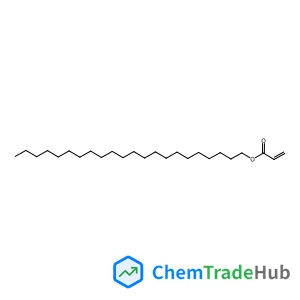
![(2R)-2,7,8-Trimethyl-2-[(4R,8R)-4,8,12-trimethyltridecyl]-6-chromanol structure](https://cnstatic.chemtradehub.com/structs/54-/54-28-4-155c.webp "(2R)-2,7,8-Trimethyl-2-[(4R,8R)-4,8,12-trimethyltridecyl]-6-chromanol structure")

推荐供应商





免责声明
本页面提供的学术期刊信息仅供参考和研究使用。我们与任何期刊出版商均无关联,也不处理投稿事宜。如有投稿相关咨询,请直接联系相关期刊出版商。
如发现页面信息有误,请发送邮件至 support@chemtradehub.com 联系我们。我们将及时核实并处理您的问题。