


Atomically-defined model catalysts in ultrahigh vacuum and in liquid electrolytes: particle size-dependent CO adsorption on Pt nanoparticles on ordered Co3O4(111) films
文献信息
发布日期
2018-08-29
DOI
10.1039/C8CP03770A
影响因子
3.676
作者
Firas Faisal, Corinna Stumm, Manon Bertram, Tobias Wähler, Ralf Schuster, Feifei Xiang, Ole Lytken, Ioannis Katsounaros, Karl J. J. Mayrhofer, M. Alexander Schneider, Olaf Brummel
查看原文
摘要
We have studied particle size effects on atomically-defined model catalysts both in ultrahigh vacuum (UHV) and under electrochemical (EC) conditions in liquid electrolytes. The model catalysts were prepared in UHV by physical vapour deposition (PVD) of Pt onto an ordered Co3O4(111) film on Ir(100), yielding nanoparticles (NPs) with an average size from 10 to 500 atoms per particle (0.8 to 3 nm). The model systems were characterized in UHV using surface science methods including scanning tunnelling microscopy (STM), before transferring them out of the UHV and into the electrolyte without contact to ambient conditions. By X-ray photoelectron spectroscopy (XPS) we show that the model surfaces are stable in the EC environment under the applied conditions (0.1 to 1 M phosphate buffer, pH 10, 0.33 to 1.03 VRHE). As a reference, we study Pt(111) under identical conditions. In UHV, we also investigated the adsorption of CO using infrared reflection absorption spectroscopy (IRRAS). Under EC conditions, we performed equivalent experiments using EC infrared reflection absorption spectroscopy (EC-IRRAS) in combination with cyclic voltammetry (CV). Characteristic differences were observed between the IR spectra under EC conditions and in UHV. Besides the red-shift induced by the interfacial electric field (Stark effect), the EC IR bands of CO on Pt(111) show a larger width (by a factor of 2) as a result of local variations in the CO environment and coupling to the electrolyte. The CO IR bands of the Pt NPs are even broader (by a factor of 5), which is attributed to local variations of the interfacial electric field at the NP surface. Further pronounced differences are observed between the spectra taken in UHV and in the electrolyte regarding the site occupation and its dependence on particle size. In UHV, adsorption at on-top sites is preferred on Pt(111) at low coverage and similar adsorption ratios of on-top and bridge-bonded CO are formed at saturation coverage. In sharp contrast, on-top adsorption of CO on Pt(111) is partially suppressed under EC conditions. This effect is attributed to the competitive adsorption of anions from the electrolyte and leads to a clear preference for bridge sites at higher potentials (>0.5 VRHE). For the Pt NPs, the situation is different and an increasing fraction of on-top CO is observed with decreasing particle size, both under EC conditions and in UHV. For the smallest particles (10–20 atoms) we do not detect any bridge-bonded CO. This change in site preference as a function of particle size is attributed to stronger on-top adsorption on low-coordinated Pt atoms of small Pt NPs. The effect leads to a clear preference for on-top adsorption in the electrolyte even at low CO coverage and over the full potential range studied.
期刊推荐

Acta Materialia
Nature Medicine
Journal of Saudi Chemical Society
Saudi Pharmaceutical Journal
Russian Journal of Organic Chemistry
Russian Journal of Coordination Chemistry
Russian Journal of Applied Chemistry

Chemistry Education Research and Practice
New Journal of Chemistry
Russian Journal of General Chemistry
相关文献
Two-body dissociation of isoxazole following double photoionization – an experimental PEPIPICO and theoretical DFT and MP2 study
Tomasz J. Wasowicz, Iwona Dąbkowska, Antti Kivimäki, Robert Richter
2023-11-03
Paper
DOI: 10.1039/D3CP03760F
High-pressure structural studies and pressure-induced sensitisation of 3,4,5-trinitro-1H-pyrazole
Jack Hemingway, Xiaojiao Liu, Adam A. L. Michalchuk, Carole A. Morrison, Colin R. Pulham
2023-11-09
Paper
DOI: 10.1039/D3CP04526A
Enhancement of wide-band trace terahertz absorption spectroscopy based on microstructures: a review
Jining Li, Wenxin Lu
2023-11-09
Review Article
DOI: 10.1039/D3CP04746F
The effect of thionation of the carbonyl group on the photophysics of compact spiro rhodamine-naphthalimide electron donor–acceptor dyads: intersystem crossing, charge separation, and electron spin dynamics
Xiao Xiao, Tong Mu, Andrey A. Sukhanov, Yihang Zhou, Peiran Yu, Fabiao Yu, Ayhan Elmali, Jianzhang Zhao, Ahmet Karatay, Violeta K. Voronkova
2023-11-02
Paper
DOI: 10.1039/D3CP04891H
Single-molecule scale quantification reveals interactions underlying protein–protein interface: from forces to non-covalent bonds
Heng Sun, Yichen Tian, Yuna Fu, Yongrong Lei, Yani Wang, Xinrui Yan, Jianhua Wang
2023-11-07
Paper
DOI: 10.1039/D3CP04351G
您可能还喜欢
化合物问答
4,5-二甲基-2-硝基苯甲酸(CAS号:4315-14-4)的市场或研究趋势如何?
4,5-二甲基-2-硝基苯甲酸主要应用于制药、染料和农药等行业。由于其潜在的毒性,其市场趋势可能受到法规限制和环保考量的影响,推动了替代产品的研发。在研究领域,...
4315-14-44,5-Dimethyl-2-nitro...
化合物问答
处理直接黑22(CAS号:6473-13-8)时应注意哪些实验室安全事项?
处理直接黑22时应穿戴适当的个人防护装备(PPE),包括实验服、手套、护目镜和口罩。操作应在通风橱内进行,以避免吸入有害气体。如果发生泄漏,应立即清理,并使用大...
6473-13-82-Naphthalenesulfoni...
化合物问答
处理2,1,3-苯并噻二唑-4-基异氰酸酯(CAS号:342411-14-7)时应注意哪些实验室安全事项?
处理2,1,3-苯并噻二唑-4-基异氰酸酯时应注意以下安全事项:穿戴个人防护装备,如实验室外套、防护眼镜和手套;在通风橱中操作,确保良好的通风;保持实验室环境干...
342411-14-74-Isocyanato-2,1,3-b...
化合物问答
如何处理含有Δ-8,9-脱氢雌酮(CAS号:204077-66-7)的废料?
含有Δ-8,9-脱氢雌酮的废料需要进行适当的处理以确保环境和人体安全。首先,收集废液并存放于密封容器中,避免泄漏。其次,可以考虑将其转化为无害物质或通过专业处理...
204077-66-7Thioquinapiperifil d...
化合物问答
如何储存5-溴戊酸(CAS号:2067-33-6)?
5-溴戊酸应储存在阴凉、干燥、通风良好的环境中,避免阳光直射。建议在室温(约15-25°C)下保存,保持相对湿度低于60%。应使用密封的玻璃或塑料容器,并远离热...
2067-33-65-Bromopentanoic aci...
化合物问答
4-(甲基亚磺酰基)苯胺(CAS号:22865-62-9)应用于哪些行业?
4-(甲基亚磺酰基)苯胺在医药、聚合物和传感器等领域有一定的应用。在医药方面,它可以用作合成药物的中间体;在聚合物领域,可以作为合成特殊性能高分子材料的单体;在...
22865-62-94-Methylsulfinylanil...
化合物问答
什么是1-(2-FLUOROPHENYL)-5-METHYL-1H-PYRAZOLE-4-CARBOHYDRAZIDE(CAS号:618092-58-3)?
1-(2-氟苯基)-5-甲基-1H-吡唑-4-亚甲基肼是一种有机化合物,其分子式为C9H9FN3O。该化合物具有特定的物理化学性质,如熔点、沸点等,但具体值需查...
618092-58-31-(2-Fluorophenyl)-5...
化合物问答
Dauricumine(CAS号:345641-00-1)通常如何合成?
Dauricumine通常通过复杂的合成路线制备,涉及多个步骤,包括环化、氧化、卤化等反应。合成过程中使用了多种催化剂和试剂,例如金属催化剂、氧化剂等。产率通常...
345641-00-1(1R,1'S,5R,6'S,8'S)-...
化合物问答
5-氰基苯酞(CAS号:82104-74-3)安全吗?
5-氰基苯酞在正常使用条件下相对安全,但其具有一定的毒性,需谨慎操作。在实验或工业应用中,应采取适当的防护措施,如佩戴防护手套、护目镜和实验服,确保通风良好。误...
82104-74-31-Oxo-1,3-dihydro-2-...
化合物问答
2-Methyl-1-(phenylsulfonyl)-1H-pyrrolo[2,3-b]pyridin-5-amine(CAS号:1186502-59-9)安全吗?
该化合物在使用时需要谨慎操作。虽然其毒性和健康风险尚未完全明确,但建议在通风良好的环境中操作,并穿戴适当的个人防护装备,如手套和防护眼镜。
1186502-59-92-Methyl-1-(phenylsu...
来源期刊
Physical Chemistry Chemical Physics

CiteScore:
5.5
自引率:
10.3%
年发文量:
3036
Physical Chemistry Chemical Physics (PCCP) is an international journal co-owned by 19 physical chemistry and physics societies from around the world. This journal publishes original, cutting-edge research in physical chemistry, chemical physics and biophysical chemistry. To be suitable for publication in PCCP, articles must include significant innovation and/or insight into physical chemistry; this is the most important criterion that reviewers and Editors will judge against when evaluating submissions. The journal has a broad scope and welcomes contributions spanning experiment, theory, computation and data science. Topical coverage includes spectroscopy, dynamics, kinetics, statistical mechanics, thermodynamics, electrochemistry, catalysis, surface science, quantum mechanics, quantum computing and machine learning. Interdisciplinary research areas such as polymers and soft matter, materials, nanoscience, energy, surfaces/interfaces, and biophysical chemistry are welcomed if they demonstrate significant innovation and/or insight into physical chemistry. Joined experimental/theoretical studies are particularly appreciated when complementary and based on up-to-date approaches.
推荐化合物
![(2S)-2-{[(9H-Fluoren-9-ylmethoxy)carbonyl]amino}-4-(methylselanyl)butanoic acid structure](https://cnstatic.chemtradehub.com/structs/121/1217852-49-7-f252.webp "(2S)-2-{[(9H-Fluoren-9-ylmethoxy)carbonyl]amino}-4-(methylselanyl)butanoic acid structure")
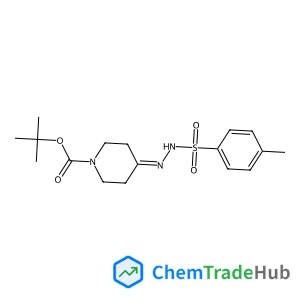
tert-Butyl 4-(2-(p-Tolylsulfonyl)hydrazono)piperidine-1-carboxylate
CAS号:
1046478-89-0
分子式:
C17H25N3O4S
推荐供应商






免责声明
本页面提供的学术期刊信息仅供参考和研究使用。我们与任何期刊出版商均无关联,也不处理投稿事宜。如有投稿相关咨询,请直接联系相关期刊出版商。
如发现页面信息有误,请发送邮件至 support@chemtradehub.com 联系我们。我们将及时核实并处理您的问题。