


Impact of Y3+-ions on the structure and phase behavior of phospholipid model membranes
文献信息
发布日期
2019-02-19
DOI
10.1039/C8CP07413E
影响因子
3.676
作者
Steffen Bornemann, Marius Herzog, Roland Winter
查看原文
摘要
Trivalent yttrium cations are able to mimic the behavior of Ca2+ in many important biochemical processes, and their application in medicinal chemistry has increased in recent years. While the effect of mono- and divalent salts on lipid membranes has been studied extensively, the effect of trivalent cations, such as Y3+, on the structure and phase behavior of lipid bilayers is largely unknown. Here, we studied the effect of YCl3 on the structure, phase behavior and thermodynamic parameters of zwitterionic DPPC, 20% anionic DPPC/DPPG (80/20) and 10% anionic DOPC/DOPG/DPPC/DPPG/cholesterol (20/5/45/5/25) model biomembrane systems using Fourier-transform infrared spectroscopy, differential scanning calorimetry, Laurdan fluorescence spectroscopy, confocal fluorescence microscopy, zeta potential measurements and atomic force microscopy, covering a wide range of salt concentrations, temperature and pressure. Y3+ ions penetrate deep into the lipid headgroup region and are coordinated to the phosphate groups, resulting in a stronger lipid packing and partial dehydration of the headgroup region. Increasing Y3+ concentration leads to a pronounced increase of the gel-to-fluid phase transition temperature of the phospholipid bilayers, owing to an increased lateral compression pressure, particularly for anionic lipid membranes. Increased lipid chain order and phase segregation of anionic membranes is fostered at high salt concentrations owing to lipid sorting. The fluid-to-gel phase transition pressure decreases significantly with the concentration of the trivalent ion, most pronounced for the negatively charged lipid vesicles. Remarkably, the Y3+-induced ordering effect is much stronger than a hydrostatic pressure-induced ordering of the lipid chains.
期刊推荐
Organic Process Research & Development
Current Opinion in Colloid & Interface Science
Chemistry Education Research and Practice
Current Opinion in Solid State & Materials Science
Russian Journal of Bioorganic Chemistry
Nature Medicine
Chemical Communications
Saudi Pharmaceutical Journal
Crystallography Reports
Journal of Natural Medicines
相关文献
Impact of Y3+-ions on the structure and phase behavior of phospholipid model membranes
Steffen Bornemann, Marius Herzog, Roland Winter
2019-02-19
Paper
DOI: 10.1039/C8CP07413E
BAR-based multi-dimensional nonequilibrium pulling for indirect construction of a QM/MM free energy landscape
2019-03-11
Paper
DOI: 10.1039/C8CP07012A
Vacancy induced formation of nanoporous silicon, carbon and silicon carbide
G. Opletal, B. Sun, T. C. Petersen, S. P. Russo, A. S. Barnard
2019-02-28
Paper
DOI: 10.1039/C8CP06649C
Structural evolution and electronic properties of CoSin− (n = 3–12) clusters: mass-selected anion photoelectron spectroscopy and quantum chemistry calculations
2019-02-20
Paper
DOI: 10.1039/C8CP07734G
Stability and behaviour in aqueous solutions of the anionic cubic silsesquioxane substituted with tetramethylammonium
Emelie J. Nilsson, Marina Huber, Göran Carlström, Olle Söderman, Daniel T. Bowron, Viveka Alfredsson
2019-03-04
Paper
DOI: 10.1039/C8CP05682J
Temperature dependence of the cooperative out-of-equilibrium elastic switching in a spin-crossover material
Roman Bertoni, Eric Collet, Hervé Cailleau, Marie-Laure Boillot, Antoine Tissot, Jérôme Laisney, Cristian Enachescu, Maciej Lorenc
2019-02-27
Paper
DOI: 10.1039/C8CP07074A
Manipulation of dipolar magnetism in low-dimensional iron oxide nanoparticle assemblies
Asma Qdemat, Oleg Petracic, Emmanuel Kentzinger, Ulrich Rücker, Fengshan Zheng, Peng-Han Lu, Xian-Kui Wei, Rafal E. Dunin-Borkowski, Thomas Brückel
2019-02-25
Paper
DOI: 10.1039/C9CP00302A
Carrier dynamics in highly excited TlInS2: evidence of 2D electron–hole charge separation at parallel layers
Vytautas Grivickas, Patrik Ščajev, Vitalijus Bikbajevas, Olga V. Korolik, Alexander V. Mazanik
2018-12-21
Paper
DOI: 10.1039/C8CP06209A
A study on the comprehension of differences in specific kinetic energy of TKX-50 and HMX from the perspective of gas products
Chuande Zhao, Yu Chi, Qiang Peng, Fang Yang, Jianhua Zhou, Xinfeng Wang, Kun Yu, Guijuan Fan, Jie Sun
2019-02-25
Paper
DOI: 10.1039/C8CP07487A
您可能还喜欢
化合物问答
如何储存1,2-环己二酮环乙缩醛(CAS号:4746-96-7)?
1,2-环己二酮环乙缩醛应储存在阴凉、干燥、通风良好的地方,避免阳光直射。建议使用密封容器保存,并保持环境温度在室温范围内,远离火源和热源。
4746-96-71,4-Dioxaspiro[4.5]d...
化合物问答
Ecopladib(CAS号:381683-92-7)的市场或研究趋势如何?
Ecopladib作为一种新型的药物,主要应用于治疗高胆固醇等疾病。目前,市场和研究趋势显示,Ecopladib因其独特的药理作用而受到关注。随着对心血管疾病治...
381683-92-7Ecopladib
化合物问答
2,3-Dimethyl-3H-imidazo[4,5-c]pyridine(CAS号:52538-09-7)通常如何合成?
2,3-二甲基-3H-咪唑[4,5-c]吡啶通常通过咪唑和2,3-二甲基吡啶的缩合反应合成。具体来说,将咪唑和2,3-二甲基吡啶在适当的溶剂中进行加热或加压反应...
52538-09-72,3-Dimethyl-3H-imid...
化合物问答
2,3,4,5-tetrahydro-1H-3-苯并氮杂环;盐酸盐(CAS号:17379-01-0)的市场或研究趋势如何?
该化合物在药物化学和有机合成中有一定的应用。近年来,随着对新型药物化合物的需求增加,该化合物的研究趋势主要集中在探索其生物活性,尤其是其在神经系统疾病治疗中的潜...
17379-01-02,3,4,5-Tetrahydro-1...
68-90-6(2-Ethyl-1-benzofura...
化合物问答
如何储存盐酸甘氨酸丁酯(CAS号:13048-99-2)?
盐酸甘氨酸丁酯应储存在阴凉、干燥、通风良好的地方,避免阳光直射和高温环境,温度应控制在25℃以下。储存容器应密封,避免与空气中的水分和酸性物质接触,以防发生水解...
13048-99-2Butyl glycinate hydr...
化合物问答
什么是2-Iodo-N,N-dimethylbenzamide(CAS号:54616-46-5)?
2-碘-N,N-二甲基苯胺是一种有机化合物,化学名为2-Iodo-N,N-dimethylbenzamide。其分子式为C<sub>9</sub>H<sub>1...
54616-46-52-Iodo-N,N-dimethylb...
16817-90-6N-Cyclohexylglycinam...
化合物问答
5-溴-2-(4H-1,2,4-三唑-4-基)吡啶(CAS号:959240-99-4)的市场或研究趋势如何?
随着医药、农药和新材料领域的发展,该化合物作为关键中间体的应用日益增多。特别是在药物合成中,由于其独特的化学性质,可以用于合成多种药物分子。未来的研究趋势可能集...
959240-99-45-Bromo-2-(4H-1,2,4-...
化合物问答
2,4-二溴-6-三氟甲基嘧啶(CAS号:785778-00-9)通常如何合成?
2,4-二溴-6-三氟甲基嘧啶通常通过溴化反应合成。首先,将6-三氟甲基嘧啶与溴化剂(如液溴)在适当的溶剂(如二氯甲烷、四氢呋喃)中反应,加入适当的催化剂(如四...
785778-00-92,4-Dibromo-6-(trifl...
来源期刊
Physical Chemistry Chemical Physics

CiteScore:
5.5
自引率:
10.3%
年发文量:
3036
Physical Chemistry Chemical Physics (PCCP) is an international journal co-owned by 19 physical chemistry and physics societies from around the world. This journal publishes original, cutting-edge research in physical chemistry, chemical physics and biophysical chemistry. To be suitable for publication in PCCP, articles must include significant innovation and/or insight into physical chemistry; this is the most important criterion that reviewers and Editors will judge against when evaluating submissions. The journal has a broad scope and welcomes contributions spanning experiment, theory, computation and data science. Topical coverage includes spectroscopy, dynamics, kinetics, statistical mechanics, thermodynamics, electrochemistry, catalysis, surface science, quantum mechanics, quantum computing and machine learning. Interdisciplinary research areas such as polymers and soft matter, materials, nanoscience, energy, surfaces/interfaces, and biophysical chemistry are welcomed if they demonstrate significant innovation and/or insight into physical chemistry. Joined experimental/theoretical studies are particularly appreciated when complementary and based on up-to-date approaches.
推荐化合物
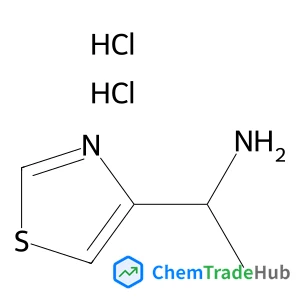
推荐供应商


免责声明
本页面提供的学术期刊信息仅供参考和研究使用。我们与任何期刊出版商均无关联,也不处理投稿事宜。如有投稿相关咨询,请直接联系相关期刊出版商。
如发现页面信息有误,请发送邮件至 support@chemtradehub.com 联系我们。我们将及时核实并处理您的问题。