


![N-[2-(4-Hydroxyphenoxy)-4-nitrophenyl]methanesulfonamide structure](https://cnstatic.chemtradehub.com/structs/109/109032-22-6-7c88.webp "N-[2-(4-Hydroxyphenoxy)-4-nitrophenyl]methanesulfonamide structure")
Comparison of hydrogen vacancies in KDP and ADP crystals: a combination of density functional theory calculations and experiment
文献信息
发布日期
2019-02-22
DOI
10.1039/C8CP07685E
影响因子
3.676
作者
Tingting Sui, Yafei Lian, Mingxia Xu, Lisong Zhang, Yanlu Li, Xian Zhao, Xinguang Xu, Xun Sun
查看原文
摘要
The hydrogen vacancy (VH) is the most common point defect that may lead to optical damage of potassium dihydrogen phosphate (KDP) and its analog ammonium dihydrogen phosphate (ADP), further limiting their practical application in high-power laser systems. In this work, we have grown KDP and ADP crystals by using a rapid growth method, and investigated the physical origin of the different stability of VH as well as the defect-induced electronic structure and optical absorption in KDP and ADP crystals. The inclusion of van der Waals correction to density functional theory calculations is found to have little influence on VH energetics of KDP whereas it largely reduces the charge transition level ε(+/−) of VH by >2 eV in ADP. It is found that hydrogen vacancies mainly contribute to the redshift of the measured absorption edges of both KDP and ADP crystals. Owing to the varied lattice environments and locations, the VH defects exhibit different stability, and electronic and optical properties in KDP and ADP crystals. Notably, the extra optical absorption caused by the positively-charged VH in KDP could be largely reduced by decreasing the defect concentration, whereas ADP exhibits defect-location dependence – the optical damage center of the VH in the NH4+ group could not be eliminated because of electron capture of its neighboring N atoms. The calculation results help us to better understand the origin of laser damage in KDP and ADP crystals.
期刊推荐

New Journal of Chemistry

Current Opinion in Solid State & Materials Science
Journal of Peptide Science

Chemical Communications
Drug Discovery Today
Organic Process Research & Development

Journal of Natural Medicines
Russian Journal of General Chemistry
Russian Journal of Bioorganic Chemistry
Russian Chemical Bulletin
相关文献
The study of rhenium pentacarbonyl complexes using single-atom chemistry in the gas phase
Yang Wang, Shiwei Cao, Fangli Fan, Jie Yang, Hiromitsu Haba, Yukiko Komori, Takuya Yokokita, Kouji Morimoto, Daiya Kaji, Andreas Türler
2019-03-07
Paper
DOI: 10.1039/C8CP07844K
Kinetics of the reactions of NO3 radical with alkanes
Li Zhou, Mahmoud Idir, Véronique Daële, Abdelwahid Mellouki
2019-02-05
Paper
DOI: 10.1039/C8CP07675H
Enhanced thermal transport across a bi-crystalline graphene–polymer interface: an atomistic approach
Akarsh Verma, Rajesh Kumar, Avinash Parashar
2019-02-25
Paper
DOI: 10.1039/C9CP00362B
Shape-selective synthesis of nanoceria for degradation of paraoxon as a chemical warfare simulant
Greta Camilla Magnano, Marie Alexandrine Bolzinger, Lucian Roiban, Frédéric Chaput, Isabelle Pitault, Stéphanie Briançon, Thierry Devers, Karine Masenelli-Varlot, Matthieu Bugnet, David Amans
2019-02-15
Paper
DOI: 10.1039/C9CP00179D
Temperature dependence of the cooperative out-of-equilibrium elastic switching in a spin-crossover material
Roman Bertoni, Eric Collet, Hervé Cailleau, Marie-Laure Boillot, Antoine Tissot, Jérôme Laisney, Cristian Enachescu, Maciej Lorenc
2019-02-27
Paper
DOI: 10.1039/C8CP07074A
Role of direct and inverted undoped spiro-OMeTAD–perovskite architectures in determining solar cells performances: an investigation via electrical impedance spectroscopy
Marianna Ambrico, Paolo F. Ambrico, Luisa De Marco, Rosabianca Iacobellis, Arianna D’Abramo, Teresa Ligonzo
2019-02-22
Paper
DOI: 10.1039/C9CP00564A
Piezo-phototronic effect-modulated carrier transport behavior in different regions of a Si/CdS heterojunction photodetector under a Vis–NIR waveband
Zhi-Hao Zhao, Yejing Dai
2019-04-10
Paper
DOI: 10.1039/C9CP00415G
Evaluation of spin-flip scattering in chirality-induced spin selectivity using the Riccati equation
Daniel Nürenberg, Helmut Zacharias
2019-01-22
Paper
DOI: 10.1039/C8CP07257D
您可能还喜欢
化合物问答
如何储存1,2-环己二酮环乙缩醛(CAS号:4746-96-7)?
1,2-环己二酮环乙缩醛应储存在阴凉、干燥、通风良好的地方,避免阳光直射。建议使用密封容器保存,并保持环境温度在室温范围内,远离火源和热源。
4746-96-71,4-Dioxaspiro[4.5]d...
化合物问答
Ecopladib(CAS号:381683-92-7)的市场或研究趋势如何?
Ecopladib作为一种新型的药物,主要应用于治疗高胆固醇等疾病。目前,市场和研究趋势显示,Ecopladib因其独特的药理作用而受到关注。随着对心血管疾病治...
381683-92-7Ecopladib
化合物问答
2,3-Dimethyl-3H-imidazo[4,5-c]pyridine(CAS号:52538-09-7)通常如何合成?
2,3-二甲基-3H-咪唑[4,5-c]吡啶通常通过咪唑和2,3-二甲基吡啶的缩合反应合成。具体来说,将咪唑和2,3-二甲基吡啶在适当的溶剂中进行加热或加压反应...
52538-09-72,3-Dimethyl-3H-imid...
化合物问答
2,3,4,5-tetrahydro-1H-3-苯并氮杂环;盐酸盐(CAS号:17379-01-0)的市场或研究趋势如何?
该化合物在药物化学和有机合成中有一定的应用。近年来,随着对新型药物化合物的需求增加,该化合物的研究趋势主要集中在探索其生物活性,尤其是其在神经系统疾病治疗中的潜...
17379-01-02,3,4,5-Tetrahydro-1...
68-90-6(2-Ethyl-1-benzofura...
化合物问答
如何储存盐酸甘氨酸丁酯(CAS号:13048-99-2)?
盐酸甘氨酸丁酯应储存在阴凉、干燥、通风良好的地方,避免阳光直射和高温环境,温度应控制在25℃以下。储存容器应密封,避免与空气中的水分和酸性物质接触,以防发生水解...
13048-99-2Butyl glycinate hydr...
化合物问答
什么是2-Iodo-N,N-dimethylbenzamide(CAS号:54616-46-5)?
2-碘-N,N-二甲基苯胺是一种有机化合物,化学名为2-Iodo-N,N-dimethylbenzamide。其分子式为C<sub>9</sub>H<sub>1...
54616-46-52-Iodo-N,N-dimethylb...
16817-90-6N-Cyclohexylglycinam...
化合物问答
5-溴-2-(4H-1,2,4-三唑-4-基)吡啶(CAS号:959240-99-4)的市场或研究趋势如何?
随着医药、农药和新材料领域的发展,该化合物作为关键中间体的应用日益增多。特别是在药物合成中,由于其独特的化学性质,可以用于合成多种药物分子。未来的研究趋势可能集...
959240-99-45-Bromo-2-(4H-1,2,4-...
化合物问答
2,4-二溴-6-三氟甲基嘧啶(CAS号:785778-00-9)通常如何合成?
2,4-二溴-6-三氟甲基嘧啶通常通过溴化反应合成。首先,将6-三氟甲基嘧啶与溴化剂(如液溴)在适当的溶剂(如二氯甲烷、四氢呋喃)中反应,加入适当的催化剂(如四...
785778-00-92,4-Dibromo-6-(trifl...
来源期刊
Physical Chemistry Chemical Physics

CiteScore:
5.5
自引率:
10.3%
年发文量:
3036
Physical Chemistry Chemical Physics (PCCP) is an international journal co-owned by 19 physical chemistry and physics societies from around the world. This journal publishes original, cutting-edge research in physical chemistry, chemical physics and biophysical chemistry. To be suitable for publication in PCCP, articles must include significant innovation and/or insight into physical chemistry; this is the most important criterion that reviewers and Editors will judge against when evaluating submissions. The journal has a broad scope and welcomes contributions spanning experiment, theory, computation and data science. Topical coverage includes spectroscopy, dynamics, kinetics, statistical mechanics, thermodynamics, electrochemistry, catalysis, surface science, quantum mechanics, quantum computing and machine learning. Interdisciplinary research areas such as polymers and soft matter, materials, nanoscience, energy, surfaces/interfaces, and biophysical chemistry are welcomed if they demonstrate significant innovation and/or insight into physical chemistry. Joined experimental/theoretical studies are particularly appreciated when complementary and based on up-to-date approaches.
推荐化合物
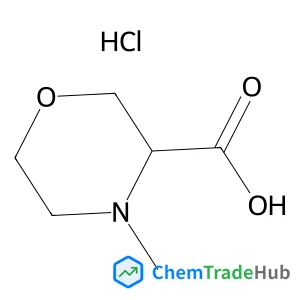
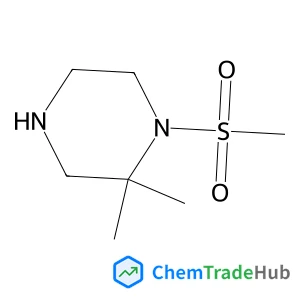
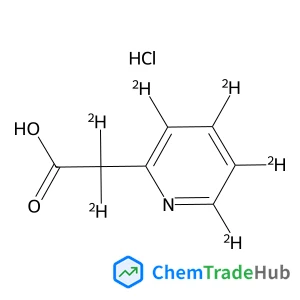
2,2-dideuterio-2-(3,4,5,6-tetradeuterio-2-pyridyl)acetic acid;hydrochloride
CAS号:
1329799-67-8
分子式:
C7H2ClD6NO2
推荐供应商







免责声明
本页面提供的学术期刊信息仅供参考和研究使用。我们与任何期刊出版商均无关联,也不处理投稿事宜。如有投稿相关咨询,请直接联系相关期刊出版商。
如发现页面信息有误,请发送邮件至 support@chemtradehub.com 联系我们。我们将及时核实并处理您的问题。