


An experimental and computational study on isomerically pure, soluble azaphthalocyanines and their complexes and boron azasubphthalocyanines of a varying number of aza units
文献信息
发布日期
2018-08-20
DOI
10.1039/C8OB01705K
影响因子
3.876
作者
Martin Liebold, Eugen Sharikow, Elisabeth Seikel, Lukas Trombach, Klaus Harms, Petr Zimcik, Veronika Novakova, Ralf Tonner, Jörg Sundermeyer
查看原文
摘要
Herein, we present a series of isomerically pure, peripherally alkyl substituted, soluble and low aggregating azaphthalocyanines as well as their new, smaller hybrid homologues, azasubphthalocyanines. The focus lies on the effect of the systematically increasing number of aza building blocks [–N] replacing the non-peripheral [–CH] units and their influence on the physical and photophysical properties of these chromophores. The absolute and relative HOMO–LUMO energies of azaphthalocyanines were analyzed using UV-Vis and CV and compared to the density functional theory calculations (B3LYP, TD-DFT). The lowering of the HOMO level is revealed as the determining factor for the trend in the adsorption energies by electronic structure analysis. Crystals of substituted subphthalocyanines, N2-Pc*H2 and N4-[Pc*Zn·H2O], were obtained out of DCM. For the synthesis of the valuable tetramethyltetralin phthalocyanine building block a new highly efficient synthesis involving a nearly quantitative CoII catalyzed aerobic autoxidation step is introduced replacing inefficient KMnO4/pyridine as the oxidant.
期刊推荐
Chemistry Education Research and Practice
Current Opinion in Colloid & Interface Science
Russian Journal of Bioorganic Chemistry
Russian Journal of Applied Chemistry
Russian Journal of Organic Chemistry
Saudi Pharmaceutical Journal
Current Opinion in Solid State & Materials Science
Journal of Peptide Science
Journal of Natural Medicines
Russian Journal of Coordination Chemistry
相关文献
Incorporating semiflexible linkers into double-cable conjugated polymers via a click reaction
Zhaofan Yang, Shijie Liang, Baiqiao Liu, Jing Wang, Fan Yang, Qiaomei Chen, Chengyi Xiao, Zheng Tang, Weiwei Li
2021-11-09
Paper
DOI: 10.1039/D1PY01188J
Aqueous copper-mediated reversible deactivation radical polymerization (RDRP) utilizing polyetheramine derived initiators‡
Jirui Zhang, Evelina Liarou, James Town, Yongguang Li, Alan M. Wemyss, David M. Haddleton
2020-08-03
Paper
DOI: 10.1039/D0PY00555J
Amino-acid-substituted polyacetylene-based chiral core–shell microspheres: helix structure induction and application for chiral resolution and adsorption
Lijie Yin, Huimin Duan, Tao Chen, Dongming Qi, Jianping Deng
2021-09-20
Paper
DOI: 10.1039/D1PY01067K
Synthesis and optoelectronic properties of benzodithiophene-based conjugated polymers with hydrogen bonding nucleobase side chain functionality
Sina Sabury, Tyler J. Adams, Margaret Kocherga, Michael G. Walter
2020-08-11
Paper
DOI: 10.1039/D0PY00972E
Alginate-based diblock polymers: preparation, characterization and Ca-induced self-assembly
Amalie Solberg, Ingrid V. Mo, Finn L. Aachmann, Christophe Schatz, Bjørn E. Christensen
2021-09-09
Paper
DOI: 10.1039/D1PY00727K
Imidazole based dual photo/thermal initiators for highly efficient radical polymerization under air with a metal-free approach‡
2021-10-22
Communication
DOI: 10.1039/D1PY01079D
The influences of monomer structure and solvent on the radical copolymerization of tertiary amine and PEGylated methacrylates
Priscila Quiñonez-Angulo, Robin A. Hutchinson, Ángel Licea-Claveríe, Enrique Saldívar-Guerra, Iván Zapata-González
2021-08-24
Paper
DOI: 10.1039/D1PY00750E
Impact of multi-vinyl taxogen dimensions on high molecular weight soluble polymer synthesis using transfer-dominated branching radical telomerisation
Oliver B. Penrhyn-Lowe, Sean Flynn, Savannah R. Cassin, Samuel Mckeating, Sarah Lomas, Stephen Wright, Pierre Chambon, Steve P. Rannard
2021-10-22
Paper
DOI: 10.1039/D1PY01103K
Effects of various Cu(0), Fe(0), and proanthocyanidin reducing agents on Fe(iii)-catalysed ATRP for the synthesis of PMMA block copolymers and their self-assembly behaviours
Yi-Shen Huang, Han-Yu Hsueh, Junko Aimi, Li-Chieh Chou, Yu-Chi Lu, Chung-Chi Wang, Kuo-Yu Chen, Chih-Feng Huang
2020-06-18
Paper
DOI: 10.1039/D0PY00658K
Synthesis of polyethers from epoxides via a binary organocatalyst system
Ge-Ge Gu, Li-Yang Wang, Rong Zhang, Tian-Jun Yue, Bai-Hao Ren, Wei-Min Ren
2021-10-19
Paper
DOI: 10.1039/D1PY01085A
您可能还喜欢
化合物问答
(5-氨基吡唑-3-基)乙酸(CAS号:174891-10-2)的物理化学性质是什么?
(5-氨基吡唑-3-基)乙酸是一种无色至白色固体,分子量为174.15 g/mol。它在水中具有较好的溶解性,在有机溶剂中的溶解度较低。该化合物具有较好的反应活...
174891-10-2(3-Amino-1H-pyrazol-...
化合物问答
3-氟-4,5-二氯苯胺(CAS号:35754-38-2)适用哪些法规指南?
3-氟-4,5-二氯苯胺受到多项法规指南的约束,包括但不限于GHS(全球化学品统一分类和标签制度)的危险分类标准、欧盟的REACH法规(注册、评估、授权和限制)...
35754-38-23,4-Dichloro-5-fluor...
化合物问答
什么是(R)-(+)-2,2',6,6'-四甲氧基-4,4'-联(二(3,5-二甲苯基基)膦基)-3,3'-二联吡啶(CAS号:442905-33-1)?
这是一种有机化合物,化学名为(R)-(+)-2,2',6,6'-四甲氧基-4,4'-联(二(3,5-二甲苯基基)膦基)-3,3'-二联吡啶,CAS号为44290...
442905-33-14,4'-Bis[bis(3,5-dim...
化合物问答
1-氨基-2-氰基萘(CAS号:3100-67-2)应用于哪些行业?
1-氨基-2-氰基萘在医药、聚合物、传感器和半导体等行业中有应用。在医药领域,它可用作中间体合成某些药物。在聚合物行业,它可以用于制备具有特定性能的聚合物。此外...
3100-67-21-Amino-2-naphthonit...
化合物问答
如何处理含有1-溴-4-(异丙氧基甲基)苯(CAS号:98446-84-5)的废料?
处理含1-溴-4-(异丙氧基甲基)苯的废料时,首先应确保废液收集在防渗漏的容器中,避免泄露。然后,可以考虑采用化学降解法或物理吸附法进行处理。在特定条件下,可通...
98446-84-51-Bromo-4-(isopropox...
化合物问答
6-Chloro-8-(trifluoromethyl)chroman-4-one(CAS号:1344889-75-3)的主要用途是什么?
6-氯-8-三氟甲基-2,3-二氢-4H-色喃-4-酮主要用于有机合成中的中间体,也可作为研究试剂使用。
1344889-75-36-Chloro-8-(trifluor...
化合物问答
7-乙氧基-2-萘酚(CAS号:57944-44-2)通常如何合成?
7-乙氧基-2-萘酚通常通过N-乙氧基化反应合成,首先将2-萘酚与乙醇钠在乙醇中反应生成7-乙氧基-2-萘酚钠盐,再通过酸化进一步得到7-乙氧基-2-萘酚。该合...
57944-44-27-Ethoxy-2-naphthol
化合物问答
4-(1,1-二氧硫代吗啉)丁醇(CAS号:59801-41-1)适用哪些法规指南?
该化合物需遵循一系列的法规指南,包括但不限于GHS全球统一分类和标签制度,其分类可能包括易燃液体和可能危害水生环境。在欧洲,还需遵循REACH法规,确保物质和混...
59801-41-14-(4-Hydroxybutyl)th...
化合物问答
4-甲氧基苄基叠氮甲酸酯(CAS号:25474-85-5)的物理化学性质是什么?
4-甲氧基苄基叠氮甲酸酯是一种无色液体,具有一定的挥发性。其分子量为198.16,熔点为-69°C,沸点为105°C。该化合物在水中溶解度较低,在有机溶剂如乙醇...
25474-85-54-Methoxybenzyl carb...
化合物问答
如何处理含有4-氯-2-氟嘧啶(CAS号:51422-00-5)的废料?
含有4-氯-2-氟嘧啶的废料应按照危险废物处理。首先,应收集并分类这些废料,避免与其他废物混合。然后,可以采用焚烧处理或者交由专业机构进行处置。在处理过程中,需...
51422-00-54-Chloro-2-fluoropyr...
来源期刊
Organic & Biomolecular Chemistry

CiteScore:
3.4
自引率:
10.3%
年发文量:
1041
Organic & Biomolecular Chemistry (OBC) publishes original and high impact research and reviews in organic chemistry. We welcome research that shows new or significantly improved protocols or methodologies in total synthesis, synthetic methodology or physical and theoretical organic chemistry as well as research that shows a significant advance in the organic chemistry or molecular design aspects of chemical biology, catalysis, supramolecular and macromolecular chemistry, theoretical chemistry, mechanism-oriented physical organic chemistry, medicinal chemistry or natural products. Articles published in the journal should report new work which makes a highly-significant impact in the field. Routine and incremental work is generally not suitable for publication in the journal. More details about key areas of our scope are below. In all cases authors should include in their article clear rationale for why their research has been carried out.
推荐化合物
![N-{15-[(2,5-Dioxo-1-pyrrolidinyl)oxy]-15-oxo-3,6,9,12-tetraoxapentadec-1-yl}-2-(2-propyn-1-yloxy)acetamide structure](https://cnstatic.chemtradehub.com/structs/210/2101206-92-0-2eb5.webp "N-{15-[(2,5-Dioxo-1-pyrrolidinyl)oxy]-15-oxo-3,6,9,12-tetraoxapentadec-1-yl}-2-(2-propyn-1-yloxy)acetamide structure")
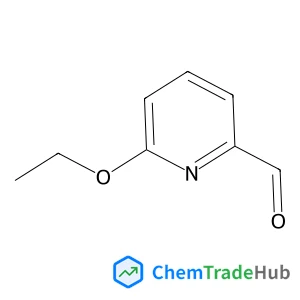
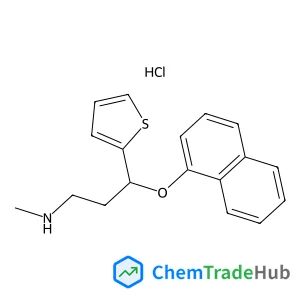
N-Methyl-3-(1-naphthyloxy)-3-(2-thienyl)-1-propanamine hydrochloride (1:1)
CAS号:
1188266-11-6
分子式:
C18H20ClNOS
推荐供应商


免责声明
本页面提供的学术期刊信息仅供参考和研究使用。我们与任何期刊出版商均无关联,也不处理投稿事宜。如有投稿相关咨询,请直接联系相关期刊出版商。
如发现页面信息有误,请发送邮件至 support@chemtradehub.com 联系我们。我们将及时核实并处理您的问题。