


Strong influence of weak hydrogen bonding on actinide–phosphonate complexation: accurate predictions from DFT followed by experimental validation
文献信息
发布日期
2019-02-13
DOI
10.1039/C9CP00479C
影响因子
3.676
作者
Aditi Chandrasekar, Tapan K. Ghanty, C. V. S. Brahmmananda Rao, Mahesh Sundararajan, N. Sivaraman
查看原文
摘要
Among the varied classes of weak hydrogen bond, the CH⋯O type is one of immense interest as it governs the finer structures of biological and chemical molecules, hence determining their functionalities. In the present work, this weak hydrogen bond has been shown to strongly influence the complexation behaviour of uranyl nitrate [UO2(NO3)2] with diamyl-H-phosphonate (DAHP) and its branched isomer disecamyl-H-phosphonate (DsAHP). The structures of the bare ligands and complexes have been optimized by density functional theory (DFT) calculations. Surprisingly, despite having the same chemical composition the branched UO2(NO3)2·2DsAHP complex shows a remarkably higher stability (by ∼14 kcal mol−1) compared to the UO2(NO3)2·2DAHP complex. Careful inspection of the optimized structures reveals the existence of multiple CH⋯O hydrogen-bonding interactions between the nitrate oxygens or UO oxygens and the α-hydrogens in the alkyl chains of the ligands. Comparatively stronger such bonds are found in the UO2(NO3)2·2DsAHP complex. The binding free energies associated with the complexes are computed and favoured superior binding energetics for the more stable UO2(NO3)2·2DsAHP complex. Calculations involving diisoamyl-H-phosphonate (DiAHP) and its complexes have also been performed. Theoretical predictions are experimentally tested by carrying out the extraction of U(VI) from nitric acid media using these ligands. DAHP, DsAHP and DiAHP are synthesised, characterised by NMR and evaluated for their physicochemical properties viz. viscosity, density and aqueous solubility. It was experimentally discovered that indeed DsAHP complexation with uranyl nitrate is more favoured. H-phosphonates are generically classified as acidic extractants owing to the formation of an enol tautomer at lower acidities, hence complexing the metal ion by proton exchange. Our experiments interestingly reveal a neutral ligand characteristic for DsAHP alone which is generically an acidic extractant. Furthermore, the enol tautomer of H-phosphonates that governs their extraction profiles at low acidities is also explored by DFT and the anomalous pH dependent complexation trend of DsAHP could be successfully explained. The extractions of Pu(IV) and Th(IV) have also been carried out in addition to U(VI). Solvent extraction behaviour of Am(III) was also studied with all three ligands; the positive binding energies computed for the Am(III) complexation corroborate with our experimental results on the poor extraction of Am(III).
期刊推荐

Chemical Communications
Russian Journal of Bioorganic Chemistry

Journal of Saudi Chemical Society
Nature Medicine
Crystallography Reports

Current Opinion in Solid State & Materials Science

Russian Chemical Bulletin
Russian Journal of Applied Chemistry
Russian Journal of Coordination Chemistry

Journal of Natural Medicines
相关文献
Polytriphenylamine derivatives as materials for hole transporting layers in electroluminescent devices
Paper
DOI: 10.1039/A808613C
Bi adsorption on Pt(111) in perchloric acid solution: A rotating ring–disk electrode and XPS study
T. J. Schmidt, B. N. Grgur, R. J. Behm, N. M. Markovic, P. N. Ross, Jr.
2000-09-13
Paper
DOI: 10.1039/B003767M
Adsorption of CO2 on FSM-type mesoporous silicas
Masahiro Katoh, Keiichi Sakamoto, Mituo Kamiyamane, Tahei Tomida
2000-09-05
Paper
DOI: 10.1039/B004505P
Caging and excited state emission of ICN trapped in cryogenic matrices: experiment and theory
Jan Helbing, Majed Chergui, Sebastian Fernandez-Alberti, Julian Echave, Nadine Halberstadt, J. Alberto Beswick
2000-07-13
Paper
DOI: 10.1039/B003181J
Effects of carboxylic acid adsorbates on CO adsorption and crotonaldehyde hydrogenation over Cu/Al2O3 catalyst
Halim A. Abdullah, Colin H. Rochester, James A. Anderson, Jillian E. Bailie, Neville V. Richardson, Graham J. Hutchings
2000-08-04
Paper
DOI: 10.1039/B003429K
Charge carrier transport in poly(p-phenylenevinylene) light-emitting devices
Paper
DOI: 10.1039/A808614A
Static (hyper-)polarizabilities of infinite, conjugated polymers in the framework of density-functional theory
Paper
DOI: 10.1039/A808605B
Electron transfer at a distance induced by site-selective photoionization of 2-aminopurine in oligonucleotides and investigated by transient absorption techniques
Vladimir Shafirovich, Alexander Dourandin, Weidong Huang, Natalia P. Luneva, Nicholas E. Geacintov
2000-09-15
Paper
DOI: 10.1039/B004896H
An inelastic neutron scattering spectroscopic investigation of the adsorption of ethene and propene on carbon
David Lennon, John McNamara, Jon R. Phillips, Richard M. Ibberson, Stewart F. Parker
2000-09-06
Paper
DOI: 10.1039/B005144F
您可能还喜欢
化合物问答
如何储存1,2-环己二酮环乙缩醛(CAS号:4746-96-7)?
1,2-环己二酮环乙缩醛应储存在阴凉、干燥、通风良好的地方,避免阳光直射。建议使用密封容器保存,并保持环境温度在室温范围内,远离火源和热源。
4746-96-71,4-Dioxaspiro[4.5]d...
化合物问答
Ecopladib(CAS号:381683-92-7)的市场或研究趋势如何?
Ecopladib作为一种新型的药物,主要应用于治疗高胆固醇等疾病。目前,市场和研究趋势显示,Ecopladib因其独特的药理作用而受到关注。随着对心血管疾病治...
381683-92-7Ecopladib
化合物问答
2,3-Dimethyl-3H-imidazo[4,5-c]pyridine(CAS号:52538-09-7)通常如何合成?
2,3-二甲基-3H-咪唑[4,5-c]吡啶通常通过咪唑和2,3-二甲基吡啶的缩合反应合成。具体来说,将咪唑和2,3-二甲基吡啶在适当的溶剂中进行加热或加压反应...
52538-09-72,3-Dimethyl-3H-imid...
化合物问答
2,3,4,5-tetrahydro-1H-3-苯并氮杂环;盐酸盐(CAS号:17379-01-0)的市场或研究趋势如何?
该化合物在药物化学和有机合成中有一定的应用。近年来,随着对新型药物化合物的需求增加,该化合物的研究趋势主要集中在探索其生物活性,尤其是其在神经系统疾病治疗中的潜...
17379-01-02,3,4,5-Tetrahydro-1...
68-90-6(2-Ethyl-1-benzofura...
化合物问答
如何储存盐酸甘氨酸丁酯(CAS号:13048-99-2)?
盐酸甘氨酸丁酯应储存在阴凉、干燥、通风良好的地方,避免阳光直射和高温环境,温度应控制在25℃以下。储存容器应密封,避免与空气中的水分和酸性物质接触,以防发生水解...
13048-99-2Butyl glycinate hydr...
化合物问答
什么是2-Iodo-N,N-dimethylbenzamide(CAS号:54616-46-5)?
2-碘-N,N-二甲基苯胺是一种有机化合物,化学名为2-Iodo-N,N-dimethylbenzamide。其分子式为C<sub>9</sub>H<sub>1...
54616-46-52-Iodo-N,N-dimethylb...
16817-90-6N-Cyclohexylglycinam...
化合物问答
5-溴-2-(4H-1,2,4-三唑-4-基)吡啶(CAS号:959240-99-4)的市场或研究趋势如何?
随着医药、农药和新材料领域的发展,该化合物作为关键中间体的应用日益增多。特别是在药物合成中,由于其独特的化学性质,可以用于合成多种药物分子。未来的研究趋势可能集...
959240-99-45-Bromo-2-(4H-1,2,4-...
化合物问答
2,4-二溴-6-三氟甲基嘧啶(CAS号:785778-00-9)通常如何合成?
2,4-二溴-6-三氟甲基嘧啶通常通过溴化反应合成。首先,将6-三氟甲基嘧啶与溴化剂(如液溴)在适当的溶剂(如二氯甲烷、四氢呋喃)中反应,加入适当的催化剂(如四...
785778-00-92,4-Dibromo-6-(trifl...
来源期刊
Physical Chemistry Chemical Physics

CiteScore:
5.5
自引率:
10.3%
年发文量:
3036
Physical Chemistry Chemical Physics (PCCP) is an international journal co-owned by 19 physical chemistry and physics societies from around the world. This journal publishes original, cutting-edge research in physical chemistry, chemical physics and biophysical chemistry. To be suitable for publication in PCCP, articles must include significant innovation and/or insight into physical chemistry; this is the most important criterion that reviewers and Editors will judge against when evaluating submissions. The journal has a broad scope and welcomes contributions spanning experiment, theory, computation and data science. Topical coverage includes spectroscopy, dynamics, kinetics, statistical mechanics, thermodynamics, electrochemistry, catalysis, surface science, quantum mechanics, quantum computing and machine learning. Interdisciplinary research areas such as polymers and soft matter, materials, nanoscience, energy, surfaces/interfaces, and biophysical chemistry are welcomed if they demonstrate significant innovation and/or insight into physical chemistry. Joined experimental/theoretical studies are particularly appreciated when complementary and based on up-to-date approaches.
推荐化合物
![N-[2-(4-Hydroxyphenoxy)-4-nitrophenyl]methanesulfonamide structure](https://cnstatic.chemtradehub.com/structs/109/109032-22-6-7c88.webp "N-[2-(4-Hydroxyphenoxy)-4-nitrophenyl]methanesulfonamide structure")

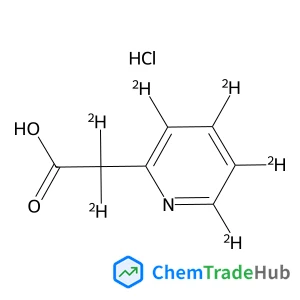
2,2-dideuterio-2-(3,4,5,6-tetradeuterio-2-pyridyl)acetic acid;hydrochloride
CAS号:
1329799-67-8
分子式:
C7H2ClD6NO2
![(3R,5R)-1-[(Benzyloxy)carbonyl]-5-methyl-3-piperidinecarboxylic acid structure](https://cnstatic.chemtradehub.com/structs/126/1269757-29-0-c552.webp "(3R,5R)-1-[(Benzyloxy)carbonyl]-5-methyl-3-piperidinecarboxylic acid structure")
(3R,5R)-1-[(Benzyloxy)carbonyl]-5-methyl-3-piperidinecarboxylic acid
CAS号:
1269757-29-0
分子式:
C15H19NO4
推荐供应商



免责声明
本页面提供的学术期刊信息仅供参考和研究使用。我们与任何期刊出版商均无关联,也不处理投稿事宜。如有投稿相关咨询,请直接联系相关期刊出版商。
如发现页面信息有误,请发送邮件至 support@chemtradehub.com 联系我们。我们将及时核实并处理您的问题。