


Conformational preference and cationic structure of 2-methylpyrazine by VUV-MATI spectroscopy and natural bond orbital analysis
文献信息
发布日期
2019-04-16
DOI
10.1039/C9CP00766K
影响因子
3.676
作者
Do Won Kang, Hong Lae Kim, Chan Ho Kwon
查看原文
摘要
Alkylpyrazines, which are well-known as aromatic substances and traditional medicines, are interesting molecular systems, and their methyl conformations result in unique structural and dynamical properties. We explored the conformational preference of the methyl group and the highest occupied molecular orbitals (HOMOs) of 2-methylpyrazine and its cation by utilizing high-resolution one-photon vacuum ultraviolet mass-analyzed threshold ionization (VUV-MATI) spectroscopy and natural bond orbital analysis to understand the relevant molecular activities. The measured VUV-MATI spectrum of 2-methylpyrazine revealed its adiabatic ionization energy and the vibrational frequencies of its cation. From the 0–0 band in the MATI spectrum under the zero-field limit, the accurate adiabatic ionization energy was determined as 9.0439 ± 0.0006 eV (72 944 ± 5 cm−1), which is lower than that of pyrazine. The peaks observed in the spectrum were unambiguously assigned based on vibrational frequencies and Franck–Condon factors from quantum chemical calculations for individual totally symmetric transitions between the S0 and D0 states using the simple one-photon dipole selection rules. The most convincing molecular structure of the 2-methylpyrazine cation was determined by Franck–Condon fit spectral simulations. Upon removal of an electron from the non-bonding orbital (HOMO) on the para nitrogen atoms, a significant structural change takes place along the vibrational motion associated with ring distortion by contraction of the N–N distance, resulting in prominent overtones and combination bands. In addition, the methyl substitution of pyrazine lowered the adiabatic ionization energy and the methyl group preferred the anti-configuration with respect to the pyrazine moiety in the D0 state, resulting in a frozen internal rotation regardless of ionization.
期刊推荐

Saudi Pharmaceutical Journal

Journal of Natural Medicines
Russian Journal of Applied Chemistry

Chemistry Education Research and Practice
Crystallography Reports
Russian Journal of Bioorganic Chemistry
Journal of Saudi Chemical Society
Organic Process Research & Development

Acta Materialia
Russian Journal of Coordination Chemistry
相关文献
Enhancing high harmonic generation by the global optimization of a two-color chirped laser field
Mohammad Mofared, Elnaz Irani, Rasoul Sadighi-Bonabi
2019-04-06
Paper
DOI: 10.1039/C8CP07619G
Factors governing when a metal-bound water is deprotonated in proteins
Cédric Grauffel
2018-11-05
Paper
DOI: 10.1039/C8CP04776F
A proton transfer network that generates deprotonated tyrosine is a key to producing reactive oxygen species in phototoxic KillerRed protein
Wook Lee, Inkoo Kim, Young Min Rhee
2018-08-03
Paper
DOI: 10.1039/C8CP02939C
Operando investigations of lithiation and delithiation processes in a BiVO4 anode material
Amund Ruud, Jonas Sottmann, Ponniah Vajeeston, Helmer Fjellvåg
2018-11-09
Paper
DOI: 10.1039/C8CP05330H
Silicene-supported TiO2 nanostructures: a theoretical study of electronic and optical properties
Yesukhei Jagvaral, Qing Guo, Haiying He, Ravindra Pandey
2019-04-04
Paper
DOI: 10.1039/C9CP00894B
Liquid electrolyte informatics using an exhaustive search with linear regression
Tomofumi Nakayama
2018-06-14
Paper
DOI: 10.1039/C7CP08280K
Photoelectron spectroscopy of solvated dicarboxylate and alkali metal ion clusters, M+[O2C(CH2)2CO2]2− [H2O]n (M = Na, K; n = 1–6)
Shihu H. M. Deng, Gao-Lei Hou, Marat Valiev, Xue-Bin Wang
2018-11-02
Paper
DOI: 10.1039/C8CP03896A
Reactive convective-dissolution in a porous medium: stability and nonlinear dynamics
Silvana S. S. Cardoso
2018-07-26
Paper
DOI: 10.1039/C8CP03064B
Atomistic reverse nonequilibrium molecular dynamics simulation of the viscosity of ionic liquid 1-n-butyl 3-methylimidazolium bis(trifluoromethylsulfonyl)imide [bmim][Tf2N]
Rouhollah Safinejad, Nargess Mehdipour, Hossein Eslami
2018-08-02
Paper
DOI: 10.1039/C8CP02393J
Reply to the ‘Comment on “Negative effective Li transference numbers in Li salt/ionic liquid mixtures: does Li drift in the “Wrong” direction?”’ by K. R. Harris, Phys. Chem. Chem. Phys., 2018, 20, DOI: 10.1039/C8CP02595A
Monika Schönhoff, Cornelia Cramer, Florian Schmidt
2018-11-21
Comment
DOI: 10.1039/C8CP06075D
您可能还喜欢
化合物问答
如何储存1,2-环己二酮环乙缩醛(CAS号:4746-96-7)?
1,2-环己二酮环乙缩醛应储存在阴凉、干燥、通风良好的地方,避免阳光直射。建议使用密封容器保存,并保持环境温度在室温范围内,远离火源和热源。
4746-96-71,4-Dioxaspiro[4.5]d...
化合物问答
Ecopladib(CAS号:381683-92-7)的市场或研究趋势如何?
Ecopladib作为一种新型的药物,主要应用于治疗高胆固醇等疾病。目前,市场和研究趋势显示,Ecopladib因其独特的药理作用而受到关注。随着对心血管疾病治...
381683-92-7Ecopladib
化合物问答
2,3-Dimethyl-3H-imidazo[4,5-c]pyridine(CAS号:52538-09-7)通常如何合成?
2,3-二甲基-3H-咪唑[4,5-c]吡啶通常通过咪唑和2,3-二甲基吡啶的缩合反应合成。具体来说,将咪唑和2,3-二甲基吡啶在适当的溶剂中进行加热或加压反应...
52538-09-72,3-Dimethyl-3H-imid...
化合物问答
2,3,4,5-tetrahydro-1H-3-苯并氮杂环;盐酸盐(CAS号:17379-01-0)的市场或研究趋势如何?
该化合物在药物化学和有机合成中有一定的应用。近年来,随着对新型药物化合物的需求增加,该化合物的研究趋势主要集中在探索其生物活性,尤其是其在神经系统疾病治疗中的潜...
17379-01-02,3,4,5-Tetrahydro-1...
68-90-6(2-Ethyl-1-benzofura...
化合物问答
如何储存盐酸甘氨酸丁酯(CAS号:13048-99-2)?
盐酸甘氨酸丁酯应储存在阴凉、干燥、通风良好的地方,避免阳光直射和高温环境,温度应控制在25℃以下。储存容器应密封,避免与空气中的水分和酸性物质接触,以防发生水解...
13048-99-2Butyl glycinate hydr...
化合物问答
什么是2-Iodo-N,N-dimethylbenzamide(CAS号:54616-46-5)?
2-碘-N,N-二甲基苯胺是一种有机化合物,化学名为2-Iodo-N,N-dimethylbenzamide。其分子式为C<sub>9</sub>H<sub>1...
54616-46-52-Iodo-N,N-dimethylb...
16817-90-6N-Cyclohexylglycinam...
化合物问答
5-溴-2-(4H-1,2,4-三唑-4-基)吡啶(CAS号:959240-99-4)的市场或研究趋势如何?
随着医药、农药和新材料领域的发展,该化合物作为关键中间体的应用日益增多。特别是在药物合成中,由于其独特的化学性质,可以用于合成多种药物分子。未来的研究趋势可能集...
959240-99-45-Bromo-2-(4H-1,2,4-...
化合物问答
2,4-二溴-6-三氟甲基嘧啶(CAS号:785778-00-9)通常如何合成?
2,4-二溴-6-三氟甲基嘧啶通常通过溴化反应合成。首先,将6-三氟甲基嘧啶与溴化剂(如液溴)在适当的溶剂(如二氯甲烷、四氢呋喃)中反应,加入适当的催化剂(如四...
785778-00-92,4-Dibromo-6-(trifl...
来源期刊
Physical Chemistry Chemical Physics

CiteScore:
5.5
自引率:
10.3%
年发文量:
3036
Physical Chemistry Chemical Physics (PCCP) is an international journal co-owned by 19 physical chemistry and physics societies from around the world. This journal publishes original, cutting-edge research in physical chemistry, chemical physics and biophysical chemistry. To be suitable for publication in PCCP, articles must include significant innovation and/or insight into physical chemistry; this is the most important criterion that reviewers and Editors will judge against when evaluating submissions. The journal has a broad scope and welcomes contributions spanning experiment, theory, computation and data science. Topical coverage includes spectroscopy, dynamics, kinetics, statistical mechanics, thermodynamics, electrochemistry, catalysis, surface science, quantum mechanics, quantum computing and machine learning. Interdisciplinary research areas such as polymers and soft matter, materials, nanoscience, energy, surfaces/interfaces, and biophysical chemistry are welcomed if they demonstrate significant innovation and/or insight into physical chemistry. Joined experimental/theoretical studies are particularly appreciated when complementary and based on up-to-date approaches.
推荐化合物
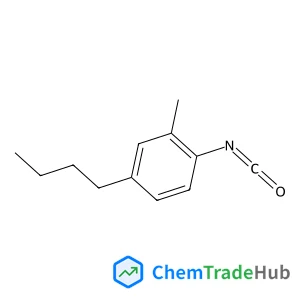
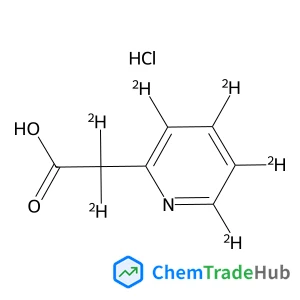
2,2-dideuterio-2-(3,4,5,6-tetradeuterio-2-pyridyl)acetic acid;hydrochloride
CAS号:
1329799-67-8
分子式:
C7H2ClD6NO2
推荐供应商




免责声明
本页面提供的学术期刊信息仅供参考和研究使用。我们与任何期刊出版商均无关联,也不处理投稿事宜。如有投稿相关咨询,请直接联系相关期刊出版商。
如发现页面信息有误,请发送邮件至 support@chemtradehub.com 联系我们。我们将及时核实并处理您的问题。