









BAR-based multi-dimensional nonequilibrium pulling for indirect construction of QM/MM free energy landscapes: from semi-empirical to ab initio
文献信息
发布日期
2019-09-25
DOI
10.1039/C9CP04113C
影响因子
3.676
作者
查看原文
摘要
The indirect method for the construction of quantum mechanics (QM)/molecular mechanics (MM) free energy landscapes provides a cheaper alternative for free energy simulations at the QM level. The indirect method features a direct calculation of the free energy profile with a computationally efficient but less accurate Hamiltonian (i.e. low-level Hamiltonian) and a low-level-to-high-level correction. In the thermodynamic cycle, the direct low-level calculation along the physically meaningful reaction coordinate is corrected via the alchemical method, which is often achieved with perturbation-based techniques. In our previous work, a multi-dimensional nonequilibrium pulling framework is proposed for the indirect construction of QM/MM free energy landscapes. Previously, we focused on obtaining semi-empirical QM (SQM) results indirectly from direct MM simulations and MM to SQM corrections. In this work, we apply this method to obtain results under ab initio QM Hamiltonians by combining direct SQM results and SQM to QM corrections. A series of SQM and QM Hamiltonians are benchmarked. It is observed that PM6 achieves the best performance among the low-level Hamiltonians. Therefore, we recommend using PM6 as the low-level theory in the indirect free energy simulation. Considering its higher similarity to the high-level Hamiltonians, PM6 corrected with the bond charge correction could be more accurate than the existing AM1-BCC model. Another central result in the current work is a basic protocol of choosing the strength of restraints and an appropriate time step in nonequilibrium free energy simulation at the stiff spring limit. We provide theoretical derivations to emphasize the importance of using a sufficiently large force constant and choosing an appropriate time step. It is worth noting that a general rule of thumb for choosing the time step, according to our derivation, is that a time step of 1 fs or smaller should be used, as long as the stiff spring approximation is employed, even in simulations with constraints on bonds involving hydrogen atoms.
相关文献
Phosphaacene as a structural analogue of thienoacenes for organic semiconductors
Kyohei Matsuo, Rina Okumura, Hironobu Hayashi, Naoki Aratani, Seihou Jinnai, Yutaka Ie, Akinori Saeki, Hiroko Yamada
2022-11-14
Communication
DOI: 10.1039/D2CC05122B
Low quantum efficiency of μ-oxo iron bisporphyrin photocatalysts explained with femtosecond M-edge XANES
Kori M. Sye, Clare A. Leahy, Josh Vura-Weis
2022-09-02
Paper
DOI: 10.1039/D2CY01081J
Formation mechanism of twinned β-form anhydrous guanine platelets in scallop eyes
Dongmei Guo, Yiqun Liu, Xiubin Hou, Xubo Wang, Chenge Fan, Lixia Bao, Xinpeng He, Hongmei Zhang, Yurong Ma
2023-07-04
Paper
DOI: 10.1039/D3CE00485F
Conversion of glucose and cellulose into value-added products in water and ionic liquids
Jinliang Song, Honglei Fan, Jun Ma, Buxing Han
2013-07-31
Tutorial Review
DOI: 10.1039/C3GC41141A
Machine learning for non-additive intermolecular potentials: quantum chemistry to first-principles predictions
Richard S. Graham, Richard J. Wheatley
2022-05-24
Communication
DOI: 10.1039/D2CC01820A
An enantioselective fluorescence sensing assay for quantitative analysis of chiral carboxylic acids and amino acid derivatives
Christian Wolf, Shuanglong Liu, Brian C. Reinhardt
2006-09-01
Communication
DOI: 10.1039/B609880K
Engineering the outcome of cofermentation processes by altering the feedstock sugar-to-protein ratio
R. Bevilacqua, M. Mauricio-Iglesias, S. Balboa, J. M. Lema, M. Carballa
2022-05-26
Paper
DOI: 10.1039/D2EW00144F
Nickel catalyzed Grob fragmentation: ω-dienyl aldehydes synthesis
Masahiko Mori, Masanari Kimura, Yushi Takahashi, Yoshinao Tamaru
2006-09-01
Communication
DOI: 10.1039/B610164J
Nitrile hydrogenation to secondary amines under ambient conditions over palladium–platinum random alloy nanoparticles
Yoshihide Nishida, Chandan Chaudhari, Hiroshi Yamada, Takaaki Toriyama, Tomokazu Yamamoto, Susan Meñez Aspera, Hiroshi Nakanishi, Katsutoshi Nagaoka
2022-03-01
Paper
DOI: 10.1039/D1CY02302K
您可能还喜欢
化合物问答
如何储存1,2-环己二酮环乙缩醛(CAS号:4746-96-7)?
1,2-环己二酮环乙缩醛应储存在阴凉、干燥、通风良好的地方,避免阳光直射。建议使用密封容器保存,并保持环境温度在室温范围内,远离火源和热源。
4746-96-71,4-Dioxaspiro[4.5]d...
化合物问答
Ecopladib(CAS号:381683-92-7)的市场或研究趋势如何?
Ecopladib作为一种新型的药物,主要应用于治疗高胆固醇等疾病。目前,市场和研究趋势显示,Ecopladib因其独特的药理作用而受到关注。随着对心血管疾病治...
381683-92-7Ecopladib
化合物问答
2,3-Dimethyl-3H-imidazo[4,5-c]pyridine(CAS号:52538-09-7)通常如何合成?
2,3-二甲基-3H-咪唑[4,5-c]吡啶通常通过咪唑和2,3-二甲基吡啶的缩合反应合成。具体来说,将咪唑和2,3-二甲基吡啶在适当的溶剂中进行加热或加压反应...
52538-09-72,3-Dimethyl-3H-imid...
化合物问答
2,3,4,5-tetrahydro-1H-3-苯并氮杂环;盐酸盐(CAS号:17379-01-0)的市场或研究趋势如何?
该化合物在药物化学和有机合成中有一定的应用。近年来,随着对新型药物化合物的需求增加,该化合物的研究趋势主要集中在探索其生物活性,尤其是其在神经系统疾病治疗中的潜...
17379-01-02,3,4,5-Tetrahydro-1...
68-90-6(2-Ethyl-1-benzofura...
化合物问答
如何储存盐酸甘氨酸丁酯(CAS号:13048-99-2)?
盐酸甘氨酸丁酯应储存在阴凉、干燥、通风良好的地方,避免阳光直射和高温环境,温度应控制在25℃以下。储存容器应密封,避免与空气中的水分和酸性物质接触,以防发生水解...
13048-99-2Butyl glycinate hydr...
化合物问答
什么是2-Iodo-N,N-dimethylbenzamide(CAS号:54616-46-5)?
2-碘-N,N-二甲基苯胺是一种有机化合物,化学名为2-Iodo-N,N-dimethylbenzamide。其分子式为C<sub>9</sub>H<sub>1...
54616-46-52-Iodo-N,N-dimethylb...
16817-90-6N-Cyclohexylglycinam...
化合物问答
5-溴-2-(4H-1,2,4-三唑-4-基)吡啶(CAS号:959240-99-4)的市场或研究趋势如何?
随着医药、农药和新材料领域的发展,该化合物作为关键中间体的应用日益增多。特别是在药物合成中,由于其独特的化学性质,可以用于合成多种药物分子。未来的研究趋势可能集...
959240-99-45-Bromo-2-(4H-1,2,4-...
化合物问答
2,4-二溴-6-三氟甲基嘧啶(CAS号:785778-00-9)通常如何合成?
2,4-二溴-6-三氟甲基嘧啶通常通过溴化反应合成。首先,将6-三氟甲基嘧啶与溴化剂(如液溴)在适当的溶剂(如二氯甲烷、四氢呋喃)中反应,加入适当的催化剂(如四...
785778-00-92,4-Dibromo-6-(trifl...
来源期刊
Physical Chemistry Chemical Physics

CiteScore:
5.5
自引率:
10.3%
年发文量:
3036
Physical Chemistry Chemical Physics (PCCP) is an international journal co-owned by 19 physical chemistry and physics societies from around the world. This journal publishes original, cutting-edge research in physical chemistry, chemical physics and biophysical chemistry. To be suitable for publication in PCCP, articles must include significant innovation and/or insight into physical chemistry; this is the most important criterion that reviewers and Editors will judge against when evaluating submissions. The journal has a broad scope and welcomes contributions spanning experiment, theory, computation and data science. Topical coverage includes spectroscopy, dynamics, kinetics, statistical mechanics, thermodynamics, electrochemistry, catalysis, surface science, quantum mechanics, quantum computing and machine learning. Interdisciplinary research areas such as polymers and soft matter, materials, nanoscience, energy, surfaces/interfaces, and biophysical chemistry are welcomed if they demonstrate significant innovation and/or insight into physical chemistry. Joined experimental/theoretical studies are particularly appreciated when complementary and based on up-to-date approaches.
推荐化合物
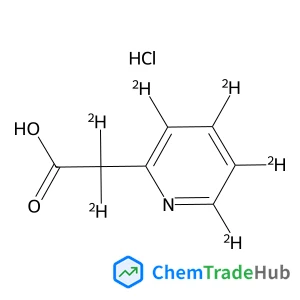
2,2-dideuterio-2-(3,4,5,6-tetradeuterio-2-pyridyl)acetic acid;hydrochloride
CAS号:
1329799-67-8
分子式:
C7H2ClD6NO2
![(2E)-3-(3-Chlorophenyl)-N-{2-[4-(methylsulfonyl)-1-piperazinyl]-2-oxoethyl}acrylamide structure](https://cnstatic.chemtradehub.com/structs/250/2505001-54-5-c1e9.webp "(2E)-3-(3-Chlorophenyl)-N-{2-[4-(methylsulfonyl)-1-piperazinyl]-2-oxoethyl}acrylamide structure")
推荐供应商



免责声明
本页面提供的学术期刊信息仅供参考和研究使用。我们与任何期刊出版商均无关联,也不处理投稿事宜。如有投稿相关咨询,请直接联系相关期刊出版商。
如发现页面信息有误,请发送邮件至 support@chemtradehub.com 联系我们。我们将及时核实并处理您的问题。