




Implications of the fractional charge of hydroxide at the electrochemical interface
文献信息
发布日期
2020-03-03
DOI
10.1039/C9CP05952K
影响因子
3.676
作者
Leanne D. Chen, Michal Bajdich, Karen Chan
查看原文
摘要
Rational design of materials that efficiently convert electrical energy into chemical bonds will ultimately depend on a thorough understanding of the electrochemical interface at the atomic level. Towards this goal, the use of density functional theory (DFT) at the generalized gradient approximation (GGA) level has been applied widely in the past 15 years. In the calculation of electrochemical reaction energetics using GGA-DFT, it is frequently implicitly assumed that ions in the Helmholtz plane have unit charge. However, the ion charge is observed to be fractional near the interface through both a capacitor model and through Bader charge partitioning. In this work, we show that this spurious charge transfer can be effectively mitigated by continuum charging of the electrolyte. We then show that, similar to hydronium, the observed fractional charge of hydroxide is not due to a GGA level self-interaction error, as the partial charge is observed even when using hybrid level exchange–correlation functionals.
相关文献
Simple silver(i)-salt catalyzed selective hydroboration of isocyanates, pyridines, and quinolines
Vipin K. Pandey, Sangita Sahoo, Arnab Rit
2022-04-05
Communication
DOI: 10.1039/D2CC00491G
Growing Co–Ni–Se nanosheets on 3D carbon frameworks as advanced dual functional electrodes for supercapacitors and sodium ion batteries
Mingyue Gao, Yanchun Xue, Yutang Zhang, Chengxing Zhu, Haiwei Yu, Xingmei Guo, Shasha Sun, Shenglin Xiong, Qinghong Kong, Junhao Zhang
2022-06-13
Research Article
DOI: 10.1039/D2QI00695B
Temperature distribution and the laser performance of LD end-pumped LuYSGG/Er:LuYSGG composite crystal
2023-07-28
Paper
DOI: 10.1039/D3CE00374D
Investigating the role of interstitial water molecules in copper hexacyanoferrate for sodium-ion battery cathodes
Donghyeon Kim, Ahreum Choi, Changhyun Park, Min-Ho Kim, Hyun-Wook Lee
2023-05-29
Paper
DOI: 10.1039/D3TA02417B
Phosphaacene as a structural analogue of thienoacenes for organic semiconductors
Kyohei Matsuo, Rina Okumura, Hironobu Hayashi, Naoki Aratani, Seihou Jinnai, Yutaka Ie, Akinori Saeki, Hiroko Yamada
2022-11-14
Communication
DOI: 10.1039/D2CC05122B
Solvent-dependent self-assembly of N-annulated perylene diimides. From dimers to supramolecular polymers
Cristina Naranjo, Azahara Doncel-Giménez, Rafael Gómez, Juan Aragó, Enrique Ortí, Luis Sánchez
2023-08-29
Edge Article
DOI: 10.1039/D3SC03372D
Coupling electrocatalytic cathodic nitrate reduction with anodic formaldehyde oxidation at ultra-low potential over Cu2O
Lei Xiao, Weidong Dai, Shiyong Mou, Xiaoyan Wang, Qin Cheng
2023-05-10
Paper
DOI: 10.1039/D3EE00635B
Hydrophosphinylation of unactivated alkenes with secondary phosphineoxides under visible-light photocatalysis
Woo-Jin Yoo, Shū Kobayashi
2013-05-01
Communication
DOI: 10.1039/C3GC40482J
Electronic Ni–N interaction enhanced reductive amination on an N-doped porous carbon supported Ni catalyst
Wenjing Song, Yujie Wan, Yuefeng Li, Xin Luo, Weiping Fang, Quanxing Zheng, Pengfei Ma, Jianping Zhang, Weikun Lai
2022-10-18
Paper
DOI: 10.1039/D2CY01551J
N-Alkylation of amines with alcohols over nanosized zeolite beta
Marri Mahender Reddy, Macharla Arun Kumar, Peraka Swamy, Mameda Naresh, Kodumuri Srujana, Lanka Satyanarayana, Akula Venugopal, Nama Narender
2013-09-09
Paper
DOI: 10.1039/C3GC41345D
您可能还喜欢
化合物问答
如何储存1,2-环己二酮环乙缩醛(CAS号:4746-96-7)?
1,2-环己二酮环乙缩醛应储存在阴凉、干燥、通风良好的地方,避免阳光直射。建议使用密封容器保存,并保持环境温度在室温范围内,远离火源和热源。
4746-96-71,4-Dioxaspiro[4.5]d...
化合物问答
Ecopladib(CAS号:381683-92-7)的市场或研究趋势如何?
Ecopladib作为一种新型的药物,主要应用于治疗高胆固醇等疾病。目前,市场和研究趋势显示,Ecopladib因其独特的药理作用而受到关注。随着对心血管疾病治...
381683-92-7Ecopladib
化合物问答
2,3-Dimethyl-3H-imidazo[4,5-c]pyridine(CAS号:52538-09-7)通常如何合成?
2,3-二甲基-3H-咪唑[4,5-c]吡啶通常通过咪唑和2,3-二甲基吡啶的缩合反应合成。具体来说,将咪唑和2,3-二甲基吡啶在适当的溶剂中进行加热或加压反应...
52538-09-72,3-Dimethyl-3H-imid...
化合物问答
2,3,4,5-tetrahydro-1H-3-苯并氮杂环;盐酸盐(CAS号:17379-01-0)的市场或研究趋势如何?
该化合物在药物化学和有机合成中有一定的应用。近年来,随着对新型药物化合物的需求增加,该化合物的研究趋势主要集中在探索其生物活性,尤其是其在神经系统疾病治疗中的潜...
17379-01-02,3,4,5-Tetrahydro-1...
68-90-6(2-Ethyl-1-benzofura...
化合物问答
如何储存盐酸甘氨酸丁酯(CAS号:13048-99-2)?
盐酸甘氨酸丁酯应储存在阴凉、干燥、通风良好的地方,避免阳光直射和高温环境,温度应控制在25℃以下。储存容器应密封,避免与空气中的水分和酸性物质接触,以防发生水解...
13048-99-2Butyl glycinate hydr...
化合物问答
什么是2-Iodo-N,N-dimethylbenzamide(CAS号:54616-46-5)?
2-碘-N,N-二甲基苯胺是一种有机化合物,化学名为2-Iodo-N,N-dimethylbenzamide。其分子式为C<sub>9</sub>H<sub>1...
54616-46-52-Iodo-N,N-dimethylb...
16817-90-6N-Cyclohexylglycinam...
化合物问答
5-溴-2-(4H-1,2,4-三唑-4-基)吡啶(CAS号:959240-99-4)的市场或研究趋势如何?
随着医药、农药和新材料领域的发展,该化合物作为关键中间体的应用日益增多。特别是在药物合成中,由于其独特的化学性质,可以用于合成多种药物分子。未来的研究趋势可能集...
959240-99-45-Bromo-2-(4H-1,2,4-...
化合物问答
2,4-二溴-6-三氟甲基嘧啶(CAS号:785778-00-9)通常如何合成?
2,4-二溴-6-三氟甲基嘧啶通常通过溴化反应合成。首先,将6-三氟甲基嘧啶与溴化剂(如液溴)在适当的溶剂(如二氯甲烷、四氢呋喃)中反应,加入适当的催化剂(如四...
785778-00-92,4-Dibromo-6-(trifl...
来源期刊
Physical Chemistry Chemical Physics

CiteScore:
5.5
自引率:
10.3%
年发文量:
3036
Physical Chemistry Chemical Physics (PCCP) is an international journal co-owned by 19 physical chemistry and physics societies from around the world. This journal publishes original, cutting-edge research in physical chemistry, chemical physics and biophysical chemistry. To be suitable for publication in PCCP, articles must include significant innovation and/or insight into physical chemistry; this is the most important criterion that reviewers and Editors will judge against when evaluating submissions. The journal has a broad scope and welcomes contributions spanning experiment, theory, computation and data science. Topical coverage includes spectroscopy, dynamics, kinetics, statistical mechanics, thermodynamics, electrochemistry, catalysis, surface science, quantum mechanics, quantum computing and machine learning. Interdisciplinary research areas such as polymers and soft matter, materials, nanoscience, energy, surfaces/interfaces, and biophysical chemistry are welcomed if they demonstrate significant innovation and/or insight into physical chemistry. Joined experimental/theoretical studies are particularly appreciated when complementary and based on up-to-date approaches.
推荐化合物
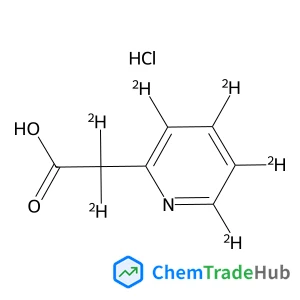
2,2-dideuterio-2-(3,4,5,6-tetradeuterio-2-pyridyl)acetic acid;hydrochloride
CAS号:
1329799-67-8
分子式:
C7H2ClD6NO2
![(2E)-3-(3-Chlorophenyl)-N-{2-[4-(methylsulfonyl)-1-piperazinyl]-2-oxoethyl}acrylamide structure](https://cnstatic.chemtradehub.com/structs/250/2505001-54-5-c1e9.webp "(2E)-3-(3-Chlorophenyl)-N-{2-[4-(methylsulfonyl)-1-piperazinyl]-2-oxoethyl}acrylamide structure")
推荐供应商




免责声明
本页面提供的学术期刊信息仅供参考和研究使用。我们与任何期刊出版商均无关联,也不处理投稿事宜。如有投稿相关咨询,请直接联系相关期刊出版商。
如发现页面信息有误,请发送邮件至 support@chemtradehub.com 联系我们。我们将及时核实并处理您的问题。