




Taming quantum interference in single molecule junctions: induction and resonance are key
文献信息
发布日期
2020-01-31
DOI
10.1039/C9CP06384F
影响因子
3.676
作者
查看原文
摘要
We have joined two fundamental concepts of organic chemistry to provide a deep, yet intuitive, understanding of how side groups influence destructive quantum interference (DQI) in the transport through conjugated molecules. Using density functional theory combined with Green's function techniques, and employing tight-binding models in which all the π-systems are considered, we elucidate the separate roles of bond-resonance and induction in tuning DQI. We show that the position of the anti-resonances produced by DQI is sensitive to the number of side groups, but not in a simple additive way. Instead, addition of multiple groups results in a weaker overall contribution per group, and this can be understood using a straight forward graphical analysis. Furthermore, we show that additional fine tuning of DQI is possible via attachment of a chain of atoms to a second site around the ring. DQI is controlled by modifying the length of the chain, thus providing exquisite control over the anti-resonance position. This insight provides chemists with a large number of options to tune DQI for unprecedented device optimization.
相关文献
Fe3O4nanoparticle-supported Cu(ii)-β-cyclodextrin complex as a magnetically recoverable and reusable catalyst for the synthesis of symmetrical biaryls and 1,2,3-triazoles from aryl boronic acids
Babak Kaboudin, Ramin Mostafalu, Tsutomu Yokomatsu
2013-06-07
Paper
DOI: 10.1039/C3GC40753E
Potential application of metallacarboranes as an internal reference: an electrochemical comparative study to ferrocene
Jewel Ann Maria Xavier, Clara Viñas, Francesc Teixidor
2022-03-04
Communication
DOI: 10.1039/D2CC00424K
Water-in-salt electrolytes – molecular insights to the high solubility of lithium-ion salts
Aleksandar Tot, Lars Kloo
2022-08-01
Communication
DOI: 10.1039/D2CC03062D
Novel fluorene-based functional ‘click polymers’ for quasi-solid-state dye-sensitized solar cells
Md. Anwarul Karim, Yong-Rae Cho, Jin Su Park, Sung Chul Kim, Hee Joo Kim, Jae Wook Lee, Yeong-Soon Gal, Sung-Ho Jin
2008-03-06
Communication
DOI: 10.1039/B800032H
Coupling electrocatalytic cathodic nitrate reduction with anodic formaldehyde oxidation at ultra-low potential over Cu2O
Lei Xiao, Weidong Dai, Shiyong Mou, Xiaoyan Wang, Qin Cheng
2023-05-10
Paper
DOI: 10.1039/D3EE00635B
Arsonium ylides (with some mention also of arsinimines, stibonium and bismuthonium ylides)
Review Article
DOI: 10.1039/CS9871600045
Enhanced accumulation of microalgal pigments using metal nanoparticle solutions as light filtering devices
Paul K. Eggers, Matthew Winslade, Steven M. Smith, Colin L. Raston
2013-09-13
Communication
DOI: 10.1039/C3GC41291A
Construction of and electrophoretic fluorescence imaging with a nano-porous polyaniline–fluorescein conducting particle system
Ki-Whan Chi, Ho Yun Hwang, Sung Ho Jin, Han Mo Jeong, Koo Sik Yoon, Jong-Man Kim, Chan Woo Lee
2009-02-09
Communication
DOI: 10.1039/B818773H
Pillararene-functionalized rhodium nanoparticles for efficient catalytic reduction and photothermal sterilization
Qinglan Li, Li Ji, Beibei Jiang, Xiangguang Li, Zhaoji Lv, Jinpo Xie, Siping Chen, Kailin Xu, Yingwei Yang, Suqing Zhao
2022-11-01
Communication
DOI: 10.1039/D2CC05642A
您可能还喜欢
化合物问答
如何储存1,2-环己二酮环乙缩醛(CAS号:4746-96-7)?
1,2-环己二酮环乙缩醛应储存在阴凉、干燥、通风良好的地方,避免阳光直射。建议使用密封容器保存,并保持环境温度在室温范围内,远离火源和热源。
4746-96-71,4-Dioxaspiro[4.5]d...
化合物问答
Ecopladib(CAS号:381683-92-7)的市场或研究趋势如何?
Ecopladib作为一种新型的药物,主要应用于治疗高胆固醇等疾病。目前,市场和研究趋势显示,Ecopladib因其独特的药理作用而受到关注。随着对心血管疾病治...
381683-92-7Ecopladib
化合物问答
2,3-Dimethyl-3H-imidazo[4,5-c]pyridine(CAS号:52538-09-7)通常如何合成?
2,3-二甲基-3H-咪唑[4,5-c]吡啶通常通过咪唑和2,3-二甲基吡啶的缩合反应合成。具体来说,将咪唑和2,3-二甲基吡啶在适当的溶剂中进行加热或加压反应...
52538-09-72,3-Dimethyl-3H-imid...
化合物问答
2,3,4,5-tetrahydro-1H-3-苯并氮杂环;盐酸盐(CAS号:17379-01-0)的市场或研究趋势如何?
该化合物在药物化学和有机合成中有一定的应用。近年来,随着对新型药物化合物的需求增加,该化合物的研究趋势主要集中在探索其生物活性,尤其是其在神经系统疾病治疗中的潜...
17379-01-02,3,4,5-Tetrahydro-1...
68-90-6(2-Ethyl-1-benzofura...
化合物问答
如何储存盐酸甘氨酸丁酯(CAS号:13048-99-2)?
盐酸甘氨酸丁酯应储存在阴凉、干燥、通风良好的地方,避免阳光直射和高温环境,温度应控制在25℃以下。储存容器应密封,避免与空气中的水分和酸性物质接触,以防发生水解...
13048-99-2Butyl glycinate hydr...
化合物问答
什么是2-Iodo-N,N-dimethylbenzamide(CAS号:54616-46-5)?
2-碘-N,N-二甲基苯胺是一种有机化合物,化学名为2-Iodo-N,N-dimethylbenzamide。其分子式为C<sub>9</sub>H<sub>1...
54616-46-52-Iodo-N,N-dimethylb...
16817-90-6N-Cyclohexylglycinam...
化合物问答
5-溴-2-(4H-1,2,4-三唑-4-基)吡啶(CAS号:959240-99-4)的市场或研究趋势如何?
随着医药、农药和新材料领域的发展,该化合物作为关键中间体的应用日益增多。特别是在药物合成中,由于其独特的化学性质,可以用于合成多种药物分子。未来的研究趋势可能集...
959240-99-45-Bromo-2-(4H-1,2,4-...
化合物问答
2,4-二溴-6-三氟甲基嘧啶(CAS号:785778-00-9)通常如何合成?
2,4-二溴-6-三氟甲基嘧啶通常通过溴化反应合成。首先,将6-三氟甲基嘧啶与溴化剂(如液溴)在适当的溶剂(如二氯甲烷、四氢呋喃)中反应,加入适当的催化剂(如四...
785778-00-92,4-Dibromo-6-(trifl...
来源期刊
Physical Chemistry Chemical Physics

CiteScore:
5.5
自引率:
10.3%
年发文量:
3036
Physical Chemistry Chemical Physics (PCCP) is an international journal co-owned by 19 physical chemistry and physics societies from around the world. This journal publishes original, cutting-edge research in physical chemistry, chemical physics and biophysical chemistry. To be suitable for publication in PCCP, articles must include significant innovation and/or insight into physical chemistry; this is the most important criterion that reviewers and Editors will judge against when evaluating submissions. The journal has a broad scope and welcomes contributions spanning experiment, theory, computation and data science. Topical coverage includes spectroscopy, dynamics, kinetics, statistical mechanics, thermodynamics, electrochemistry, catalysis, surface science, quantum mechanics, quantum computing and machine learning. Interdisciplinary research areas such as polymers and soft matter, materials, nanoscience, energy, surfaces/interfaces, and biophysical chemistry are welcomed if they demonstrate significant innovation and/or insight into physical chemistry. Joined experimental/theoretical studies are particularly appreciated when complementary and based on up-to-date approaches.
推荐化合物
![(2E)-3-(3-Chlorophenyl)-N-{2-[4-(methylsulfonyl)-1-piperazinyl]-2-oxoethyl}acrylamide structure](https://cnstatic.chemtradehub.com/structs/250/2505001-54-5-c1e9.webp "(2E)-3-(3-Chlorophenyl)-N-{2-[4-(methylsulfonyl)-1-piperazinyl]-2-oxoethyl}acrylamide structure")
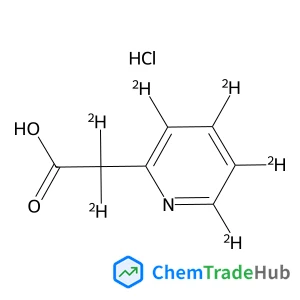
2,2-dideuterio-2-(3,4,5,6-tetradeuterio-2-pyridyl)acetic acid;hydrochloride
CAS号:
1329799-67-8
分子式:
C7H2ClD6NO2
推荐供应商





免责声明
本页面提供的学术期刊信息仅供参考和研究使用。我们与任何期刊出版商均无关联,也不处理投稿事宜。如有投稿相关咨询,请直接联系相关期刊出版商。
如发现页面信息有误,请发送邮件至 support@chemtradehub.com 联系我们。我们将及时核实并处理您的问题。