



Importance of intersystem crossing in the C(3P) + SiH4 reaction
文献信息
发布日期
2020-03-31
DOI
10.1039/C9CP06680B
影响因子
3.676
作者
Mrinmoy Mandal, Prabhash Mahata, Biswajit Maiti
查看原文
摘要
The contribution of intersystem crossing (ISC) in the C(3P) + SiH4 reaction that leads to products formation in the singlet electronic state is investigated using a direct dynamics trajectory surface hopping (TSH) method with Tully's fewest switches algorithm. Interestingly, in contrast to the O(3P) + SiH4 reaction with no ISC effect, for the title reaction we observed ∼7% product formation through ISC despite weak spin–orbit coupling interactions (less than 25 cm−1) between the ground singlet and triplet states. This is presumably because of the topological differences in the potential energy surfaces of the two reactions at the entrance channel. The O(3P) + SiH4 reaction follows either an addition reaction (with shallow attractive potential and a late singlet–triplet crossing) or a direct abstraction pathway with singlet–triplet crossing at near or after the top of the barrier making ISC ineffective. On the other hand, an insertion mechanism is exclusively followed by the C(3P) + SiH4 reaction with no entrance barrier to the reaction in the triplet state. The triplet insertion complex initially formed (3H3SiCH) can go to the singlet state through ISC due to the fact that the triplet–singlet crossing is accessed several times during the course of the reaction. Our computed overall product angular distributions for H and H2 elimination channels are found to be broad and flat or nearly isotropic in nature indicating the formation of stable intermediate complexes, which corroborates the most recent crossed molecular-beam study.
期刊推荐

Saudi Pharmaceutical Journal
Russian Journal of Applied Chemistry

Drug Discovery Today
Russian Journal of Organic Chemistry
Nature Medicine
Russian Journal of Coordination Chemistry
Organic Process Research & Development
Russian Journal of Bioorganic Chemistry

Chemistry Education Research and Practice

Chemical Communications
相关文献
Kinetics of the unimolecular reaction of CH2OO and the bimolecular reactions with the water monomer, acetaldehyde and acetone under atmospheric conditions
Torsten Berndt, Ralf Kaethner, Jens Voigtländer, Frank Stratmann, Mark Pfeifle, Patrick Reichle, Mikko Sipilä, Markku Kulmala, Matthias Olzmann
2015-07-01
Paper
DOI: 10.1039/C5CP02224J
A first-principles study of pressure-induced phase transformation in a rare-earth formate framework
Soumya S. Bhat, Wei Li, Anthony K. Cheetham, Umesh V. Waghmare
2016-06-23
Paper
DOI: 10.1039/C6CP03028A
Conformational steering in dicarboxy acids: the native structure of succinic acid‡
Michaela K. Jahn, Estibaliz Méndez, K. P. Rajappan Nair, Peter D. Godfrey, Don McNaughton, Patricia Écija, Francisco J. Basterretxea, Emilio J. Cocinero, Jens-Uwe Grabow
2015-03-13
Paper
DOI: 10.1039/C4CP05905K
Preparation and unique dielectric properties of nanoporous materials with well-controlled closed-nanopores
Xiaonan Wei, Yawen Huang, Jiajun Ma, Ke Cao, Guanjun Chang, Junxiao Yang
2016-06-20
Paper
DOI: 10.1039/C6CP00465B
Origins of optical absorption characteristics of Cu2+ complexes in aqueous solutions
S. Roger Qiu, Brandon C. Wood, Paul R. Ehrmann, Stavros G. Demos, Philip E. Miller, Kathleen I. Schaffers, Tayyab I. Suratwala, Richard K. Brow
2015-06-01
Paper
DOI: 10.1039/C5CP01688F
Locating the nucleation sites for protein encapsulated gold nanoclusters: a molecular dynamics and fluorescence study
B. A. Russell, K. Kubiak-Ossowska, P. A. Mulheran, D. J. S. Birch, Y. Chen
2015-07-28
Paper
DOI: 10.1039/C5CP02380G
Density functional theory with modified dispersion correction for metals applied to molecular adsorption on Pt(111)
2016-06-27
Paper
DOI: 10.1039/C6CP03289C
The reaction current distribution in battery electrode materials revealed by XPS-based state-of-charge mapping
Alexander J. Pearse, Eleanor Gillette, Sang Bok Lee, Gary W. Rubloff
2016-06-22
Paper
DOI: 10.1039/C6CP03271K
A full-dimensional model of ozone forming reaction: the absolute value of the recombination rate coefficient, its pressure and temperature dependencies
Alexander Teplukhin, Dmitri Babikov
2016-06-16
Paper
DOI: 10.1039/C6CP02224C
您可能还喜欢
化合物问答
P11(CAS号:848644-86-0)安全吗?
P11作为一种化学化合物,需要谨慎处理。一般来说,该化合物无毒,但在操作过程中仍需遵循实验室安全规定,避免皮肤接触和吸入。建议在通风良好的环境中操作,并佩戴适当...
848644-86-0L-Histidyl-L-seryl-L...
化合物问答
氨甲环酸杂质C(CAS号:330838-52-3)通常如何合成?
氨甲环酸杂质C通常通过氨甲环酸的衍生物与环己烯进行缩合反应合成。常见的合成方法包括一步合成法和多步合成法,其中多步合成法可以提高产物的选择性和产率。反应通常在无...
330838-52-34-(Aminomethyl)-1-cy...
化合物问答
(±)-茉莉酸(CAS号:221682-41-3)通常如何合成?
(±)-茉莉酸的合成通常采用生物合成或者化学合成的方法。化学合成方法中,可以通过2-戊烯-1-醇与环戊酮的缩合反应,再经过氧化反应得到目标产物。该反应需要温和的...
221682-41-3{3-Oxo-2-[(2E)-2-pen...
化合物问答
(4S,4'S)-2,2'-(1,1-环己烷二基)双(4-异丙基-4,5-二氢-1,3-噁唑)(CAS号:1373357-00-6)安全吗?
(4S,4'S)-2,2'-(1,1-环己烷二基)双(4-异丙基-4,5-二氢-1,3-噁唑)属于有机化合物,应遵循实验室安全规范。在操作时应佩戴适当的个人防护...
1373357-00-6(4S,4'S)-2,2'-(1,1-C...
化合物问答
什么是6-苄氧基-5-甲氧基-2-羧基吲哚(CAS号:2495-92-3)?
6-苄氧基-5-甲氧基-2-羧基吲哚是一种有机化合物,分子式为C16H15NO3。它是一种含有苄氧基、甲氧基和羧基官能团的吲哚衍生物。
2495-92-36-(Benzyloxy)-5-meth...
化合物问答
丙二酸丁酯乙酯(CAS号:17373-84-1)安全吗?
丙二酸丁酯乙酯属于易燃物质,具有一定的毒性。在操作时应佩戴防护眼镜和手套,避免接触皮肤和眼睛。储存时应远离热源和火源,避免阳光直射,以减少火灾和爆炸的风险。
17373-84-1Butyl ethyl malonate
化合物问答
2-碘-3-甲基吡嗪(CAS号:58139-08-5)的市场或研究趋势如何?
2-碘-3-甲基吡嗪作为一种特殊结构的化合物,目前在工业和学术研究中的应用相对有限。然而,随着对特定化学结构及其潜在应用的深入研究,预计未来可能在农药、医药等领...
58139-08-52-Iodo-3-methylpyraz...
化合物问答
千层纸素A-7-0-β-D-葡萄糖醛酸苷甲酯(CAS号:82475-01-2)的物理化学性质是什么?
千层纸素A-7-0-β-D-葡萄糖醛酸苷甲酯是一种白色结晶固体,分子量为616.27 g/mol。该化合物在水中溶解度较低,在有机溶剂中溶解度较高。其反应活性主...
82475-01-25-Hydroxy-8-methoxy-...
化合物问答
什么是7-苄基-4,7-二氮杂螺[2.5]辛烷(CAS号:1222106-45-7)?
7-苄基-4,7-二氮杂螺[2.5]辛烷是一种有机化合物,其结构由一个环状的7-苄基-4,7-二氮杂螺环和一个苯基组成。该化合物的分子式为C14H16N2。它具...
1222106-45-77-Benzyl-4,7-diazasp...
化合物问答
在合成中是否有丁酰胺酸甲酯(CAS号:53171-39-4)的替代品?
丁酰胺酸甲酯的合成中可能的替代品包括其他氨基酸衍生物,如乙酰胺酸甲酯或丙酰胺酸甲酯。这些替代品在某些合成路线中可能更为便利或成本更低。
53171-39-4Methyl 4-amino-4-oxo...
来源期刊
Physical Chemistry Chemical Physics

CiteScore:
5.5
自引率:
10.3%
年发文量:
3036
Physical Chemistry Chemical Physics (PCCP) is an international journal co-owned by 19 physical chemistry and physics societies from around the world. This journal publishes original, cutting-edge research in physical chemistry, chemical physics and biophysical chemistry. To be suitable for publication in PCCP, articles must include significant innovation and/or insight into physical chemistry; this is the most important criterion that reviewers and Editors will judge against when evaluating submissions. The journal has a broad scope and welcomes contributions spanning experiment, theory, computation and data science. Topical coverage includes spectroscopy, dynamics, kinetics, statistical mechanics, thermodynamics, electrochemistry, catalysis, surface science, quantum mechanics, quantum computing and machine learning. Interdisciplinary research areas such as polymers and soft matter, materials, nanoscience, energy, surfaces/interfaces, and biophysical chemistry are welcomed if they demonstrate significant innovation and/or insight into physical chemistry. Joined experimental/theoretical studies are particularly appreciated when complementary and based on up-to-date approaches.
推荐化合物
![N-[2,6-Di(9-anthryl)-4-oxido-8,9,10,11,12,13,14,15-octahydrodinaphtho[2,1-d:1',2'-f][1,3,2]dioxaphosphepin-4-yl]-1,1,1-trifluoromethanesulfonamide structure](https://cnstatic.chemtradehub.com/structs/122/1227374-64-2-cdb5.webp "N-[2,6-Di(9-anthryl)-4-oxido-8,9,10,11,12,13,14,15-octahydrodinaphtho[2,1-d:1',2'-f][1,3,2]dioxaphosphepin-4-yl]-1,1,1-trifluoromethanesulfonamide structure")
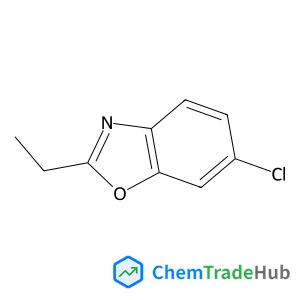

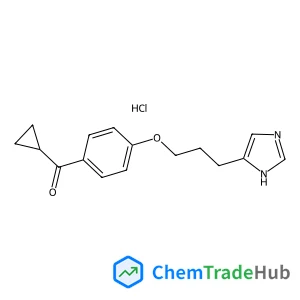
推荐供应商





免责声明
本页面提供的学术期刊信息仅供参考和研究使用。我们与任何期刊出版商均无关联,也不处理投稿事宜。如有投稿相关咨询,请直接联系相关期刊出版商。
如发现页面信息有误,请发送邮件至 support@chemtradehub.com 联系我们。我们将及时核实并处理您的问题。