










Cleavable coumarin-based oxime esters with terminal heterocyclic moieties: photobleachable initiators for deep photocuring under visible LED light irradiation
文献信息
发布日期
2020-01-02
DOI
10.1039/C9PY01690B
影响因子
5.582
作者
Mengqi Li, Yinan Yang, Kurt Dietliker
查看原文
摘要
Development of efficient unimolecular visible light photoinitiators (PIs) with photobleaching capabilities, which is essential for various biomedical applications and photopolymerization of thick materials, remains an emerging challenge. Based on the photochemistry of heteroaromatic compounds, unimolecular visible light oxime ester PIs (2-O, 2-S, 3-O, and 3-S), which contain coumarin derivatives as visible light chromophores, were designed and synthesized. Photophysical and photochemical properties of these PIs have been investigated using UV-Vis spectroscopy, fluorescence spectroscopy and electron spin resonance (ESR). The oxime-esters photolyse rapidly under 450 nm LED light irradiation, especially 2-S, and have good photobleaching capabilities. Also, we have, for the first time, shown that heterocyclic radicals efficiently initiate free radical polymerization of acrylate monomers. Notably, these photobleaching initiators can be used to induce thiol-based click photopolymerization to prepare materials with a thickness of up to 10 mm.
相关文献
Ruthenium and ruthenium oxide nanofiber supports for enhanced activity of platinum electrocatalysts in the methanol oxidation reaction
Geon-Hyoung An, Eun-Hwan Lee
2016-05-03
Paper
DOI: 10.1039/C6CP01964A
Structural investigations on a linear isolated depsipeptide: the importance of dispersion interactions
A. Stamm, D. Bernhard, M. Gerhards
2016-05-05
Paper
DOI: 10.1039/C6CP01675H
Phase transitions in hydrophobe/phospholipid mixtures: hints at connections between pheromones and anaesthetic activity
Silvia Borsacchi, Marco Geppi, Sara Macchi, Emiliano Fratini, Moira Ambrosi
2016-05-06
Paper
DOI: 10.1039/C6CP00659K
Mechanisms of charge accumulation in the dark operation of perovskite solar cells
Teresa S. Ripolles, Ajay K. Baranwal, Koji Nishinaka, Yuhei Ogomi, Germà Garcia-Belmonte, Shuzi Hayase
2016-04-28
Paper
DOI: 10.1039/C6CP01427E
Protonation induces base rotation of purine nucleotides pdGuo and pGuo
R. R. Wu, C. C. He, L. A. Hamlow, Y.-w. Nei, G. Berden, M. T. Rodgers
2016-05-09
Paper
DOI: 10.1039/C6CP01354F
II. Dissociation free energies in drug–receptor systems via nonequilibrium alchemical simulations: application to the FK506-related immunophilin ligands
Francesca Nerattini, Riccardo Chelli, Piero Procacci
2016-04-27
Paper
DOI: 10.1039/C5CP05521K
Theory of diffusion-influenced reactions in complex geometries
Sergey D. Traytak, Francesco Piazza
2016-05-17
Paper
DOI: 10.1039/C6CP01147K
The S1 ← S0 fluorescence excitation spectrum and structure of propanal in the S1 excited electronic state
I. A. Godunov, N. N. Yakovlev, R. V. Terentiev, D. V. Maslov, A. V. Abramenkov
2016-05-03
Paper
DOI: 10.1039/C6CP02138G
您可能还喜欢
化合物问答
处理2-异丙基-5-羧基-1,3-二氧六环(CAS号:116193-72-7)时应注意哪些实验室安全事项?
处理2-异丙基-5-羧基-1,3-二氧六环时应注意以下安全事项:1. 戴上防护眼镜和手套,避免直接接触皮肤和眼睛。2. 在通风橱中操作,确保空气流通。3. 防止...
116193-72-72-Isopropyl-1,3-diox...
化合物问答
2-Hydroxy-N,N-dimethyl-2-phenylacetamide(CAS号:2019-71-8)的市场或研究趋势如何?
该化合物在制药和精细化工领域具有一定的应用,特别是在药物合成中作为中间体。随着环保意识的提高,市场对更安全、更环保的化学品的需求增加,因此该化合物的研究趋势倾向...
2019-71-82-Hydroxy-N,N-dimeth...
化合物问答
4-(1H-吡唑-3-基)哌啶(CAS号:278798-08-6)应用于哪些行业?
4-(1H-吡唑-3-基)哌啶在医药领域有潜在应用,可用于合成药物中间体。此外,在聚合物和传感器领域也有一定的应用前景,可以作为功能材料的一部分。
278798-08-64-(1H-Pyrazol-3-yl)p...
化合物问答
什么是三氯噻嗪(CAS号:133-67-5)?
三氯噻嗪是一种化学物质,其英文名称为6-Chloro-3-(dichloromethyl)-3,4-dihydro-2H-1,2,4-benzothiadiaz...
133-67-56-Chloro-3-(dichloro...
化合物问答
阿螺旋霉素(CAS号:467214-20-6)通常如何合成?
阿螺旋霉素的合成通常采用生物发酵技术,首先从特定的链霉菌提取前体物质,然后通过一系列化学修饰步骤,如酰胺化、环化等,最终得到阿螺旋霉素。常用的催化剂包括有机酸等...
467214-20-6Alvespimycin Hydroch...
化合物问答
什么是2-(二甲基氨基)-5-硝基苯甲酸(CAS号:4405-28-1)?
2-(二甲基氨基)-5-硝基苯甲酸是一种化学化合物,其分子式为C9H11N2O4。该化合物具有一定的生物活性和化学性质,常用于医药、农药及研究领域。
4405-28-12-(Dimethylamino)-5-...
化合物问答
1-苯基-1H-吡唑-4-甲酸甲酯(CAS号:7188-96-7)应用于哪些行业?
1-苯基-1H-吡唑-4-甲酸甲酯主要应用于医药行业,用作合成其他药物的中间体。此外,它还可能在聚合物、传感器等领域有应用。
7188-96-7Methyl 1-phenyl-1h-p...
化合物问答
1-(三异丙基甲硅烷基氧基)环丙烷羧酸甲酯(CAS号:83010-83-7)应用于哪些行业?
该化合物主要用于有机合成中间体领域,特别是在医药合成中作为关键中间体。它也可用于聚合物合成和传感器材料制备。由于其特殊的环丙烷结构和甲硅烷基氧基团,它在半导体材...
83010-83-77-Methoxy-8-nitroqui...
215319-47-4Balanophonin, (+)-
化合物问答
如何处理含有对甲苯氧基乙酸肼(CAS号:36304-39-9)的废料?
含有对甲苯氧基乙酸肼的废料应首先通过中和或沉淀等方法进行预处理,以降低其毒性。然后,可以采用焚烧或交由专业废物处理公司进行安全处置。根据当地法规和环境标准,务必...
36304-39-92-(4-Methylphenoxy)a...
来源期刊
Polymer Chemistry

CiteScore:
8.6
自引率:
7.3%
年发文量:
457
Polymer Chemistry welcomes submissions in all areas of polymer science that have a strong focus on macromolecular chemistry. Manuscripts may cover a broad range of fields, yet no direct application focus is required.
推荐化合物
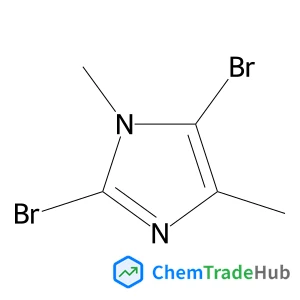
![5-Fluoro-4-(4-fluoro-2-methoxyphenyl)-N-{4-[(S-methylsulfonimidoyl)methyl]-2-pyridinyl}-2-pyridinamine structure](https://cnstatic.chemtradehub.com/structs/161/1610358-53-6-afd1.webp "5-Fluoro-4-(4-fluoro-2-methoxyphenyl)-N-{4-[(S-methylsulfonimidoyl)methyl]-2-pyridinyl}-2-pyridinamine structure")
推荐供应商




免责声明
本页面提供的学术期刊信息仅供参考和研究使用。我们与任何期刊出版商均无关联,也不处理投稿事宜。如有投稿相关咨询,请直接联系相关期刊出版商。
如发现页面信息有误,请发送邮件至 support@chemtradehub.com 联系我们。我们将及时核实并处理您的问题。