


![(2E)-4-[(1R,2S,8R,19S,21R)-14-Hydroxy-11-isopropenyl-8,23,23-trimethyl-5-(3-methyl-2-buten-1-yl)-16,20-dioxo-3,7,22-trioxaheptacyclo[17.4.1.1~8,12~.0~2,17~.0~2,21~.0~4,15~.0~6,13~]pentacosa-4(15),5,13
,17-tetraen-21-yl]-2-methyl-2-butenoic acid structure](https://cnstatic.chemtradehub.com/structs/173/173867-04-4-d2d3.webp "(2E)-4-[(1R,2S,8R,19S,21R)-14-Hydroxy-11-isopropenyl-8,23,23-trimethyl-5-(3-methyl-2-buten-1-yl)-16,20-dioxo-3,7,22-trioxaheptacyclo[17.4.1.1~8,12~.0~2,17~.0~2,21~.0~4,15~.0~6,13~]pentacosa-4(15),5,13
,17-tetraen-21-yl]-2-methyl-2-butenoic acid structure")
Immobilization of manganese dioxide nanoparticles on modified poly 2,4-dichlorostyrene microspheres: a highly efficient and recyclable catalyst for borrowing hydrogen reactions
文献信息
发布日期
2019-09-03
DOI
10.1039/C9QO00892F
影响因子
5.281
作者
Yilin Zhang, Lu Jin, Le Pan, Guangming Du, Dongdong Ye
查看原文
摘要
Manganese dioxide nanoparticles have been fabricated using a facile approach and immobilized onto the surface of modified poly 2,4-dichlorostyrene microspheres. The resulting multifunctional hybrid materials were characterized by scanning electron microscopy, transmission electron microscopy, energy dispersive X-ray spectroscopy, X-ray power diffraction and X-ray photoelectron spectrometry. This cheap heterogeneous manganese catalyst revealed excellent reactivity and stability for the direct alkylation of primary alcohols with ketones via a hydrogen borrowing pathway. In addition, this catalytic system could be readily recycled more than five times with high reactivity retained, which provided a practical atom-economical approach for C–C bond formation and 1-benzyl-2-aryl-1H-benzo[d]imidazole synthesis. Mechanism investigations were conducted to better understand this catalyst system and these transformations.
期刊推荐

Current Opinion in Colloid & Interface Science

Organic Process Research & Development
Russian Journal of Bioorganic Chemistry
Nature Medicine

Chemistry Education Research and Practice

Acta Materialia

Saudi Pharmaceutical Journal

Journal of Peptide Science

New Journal of Chemistry
Russian Journal of Applied Chemistry
相关文献
Two-dimensional infrared spectroscopy from the gas to liquid phase: density dependent J-scrambling, vibrational relaxation, and the onset of liquid character
Aritra Mandal
2019-09-13
Paper
DOI: 10.1039/C9CP04101J
A DNP-hyperpolarized solid-state water NMR MASER: observation and qualitative analysis
Emmanuelle M. M. Weber, Dennis Kurzbach, Daniel Abergel
2019-09-11
Paper
DOI: 10.1039/C9CP03334C
Ultrafast polaron-pair dynamics in a poly(3-hexylthiophene-2,5-diyl) device influenced by a static electric field: insights into electric-field-related charge loss
Debkumar Rana, Patrice Donfack, Vladislav Jovanov, Veit Wagner, Arnulf Materny
2019-09-11
Paper
DOI: 10.1039/C9CP03736E
Suppressing triplet decay in quinoidal singlet fission materials: the role of molecular planarity and rigidity
Guangchao Han, Qian Peng
2020-03-09
Paper
DOI: 10.1039/C9CP06987A
Two-sites are better than one: revisiting the OER mechanism on CoOOH by DFT with electrode polarization
Antton Curutchet, Pauline Colinet, Carine Michel, Stephan N. Steinmann, Tangui Le Bahers
2020-02-28
Paper
DOI: 10.1039/D0CP00281J
Coalescence and wetting mechanism of Al droplets on different types of carbon for developing wettable cathodes: a molecular dynamics simulation
Xiaojun Lv, Chaohong Guan, Zexun Han, Chang Chen, Qidong Sun
2019-09-06
Paper
DOI: 10.1039/C9CP03673C
Raman shift, Néel temperature, and optical band gap of NiO nanoparticles
Bai Pan, Xianshang Meng, Yidong Xia, Haiming Lu, Hui Li
2020-02-20
Paper
DOI: 10.1039/C9CP06989E
Quantitative analysis of the coupling between proton and electron transport in peptide/manganese oxide hybrid films
Misong Ju, Ouk Hyun Cho, Jaehun Lee, Mani Balamurugan, Ki Tae Nam
2020-03-10
Paper
DOI: 10.1039/C9CP05581A
您可能还喜欢
化合物问答
(3-氨苯基)环丙基甲酮(CAS号:162174-75-6)的主要用途是什么?
(3-氨苯基)环丙基甲酮主要用于合成化学中间体,特别是在药物化学领域作为原料。它还可以用于有机合成反应中,作为催化剂或反应物。
162174-75-6(3-Aminophenyl)(cycl...
化合物问答
如何储存亚胺菌(CAS号:136470-79-6)?
亚胺菌应储存在干燥、阴凉处,避免直接暴露于光线下。建议使用密封容器储存,防止吸潮和污染。具体的储存条件应参考产品的安全数据表(MSDS)或药品说明书。
136470-79-6Abacavir EP Impurity...
化合物问答
2-氯-2,2-二氟乙酰胺(CAS号:354-28-9)应用于哪些行业?
2-氯-2,2-二氟乙酰胺在医药、聚合物、传感器、半导体等领域有广泛应用。在医药领域,它作为中间体用于合成其他药物;在聚合物领域,用作聚合引发剂或稳定剂;在传感...
354-28-92-Chloro-2,2-difluor...
化合物问答
处理4-甲基-3-硝基-1,1-联苯(CAS号:53812-68-3)时应注意哪些实验室安全事项?
在处理4-甲基-3-硝基-1,1-联苯时,应佩戴手套、护目镜和实验室外套等个人防护装备(PPE),确保在通风橱中操作以减少吸入风险。若发生泄露,应立即使用沙子或...
53812-68-34'-Methyl-3-nitro-1,...
化合物问答
(2S)-羟基(苯基)乙酸 (2R)-N-苄基-1-(4-甲氧基苯基)丙-2-胺盐(CAS号:188690-84-8)应用于哪些行业?
该化合物广泛应用于医药、聚合物和半导体行业。在医药领域,它是某些药物中间体的重要组成部分;在聚合物领域,可用作增塑剂;在半导体行业,可用于制造光刻胶。
188690-84-8Benzeneacetic acid, ...
化合物问答
在合成中是否有芬苯哒唑砜-D3标准品(CAS号:1228182-49-7)的替代品?
芬苯哒唑砜-D3标准品的替代品可能包括类似的苯并咪唑类化合物,如芬苯哒唑本身或其非同位素标记版本。这些替代品在结构上与芬苯哒唑砜-D3相似,但在具体应用中需进行...
1228182-49-7(~2~H_3_)Methyl [5-(...
化合物问答
2-氟-4-硝基苯乙酸(CAS号:315228-19-4)通常如何合成?
2-氟-4-硝基苯乙酸可以通过一系列化学反应合成,通常是从4-氟苯胺开始,首先进行硝化反应生成4-氟-2-硝基苯胺,然后进行乙酰化反应得到目标产物。具体的合成步...
315228-19-42-(2-fluoro-4-nitrop...
化合物问答
2-氟-4-甲氧基苯乙酸(CAS号:883531-28-0)通常如何合成?
2-氟-4-甲氧基苯乙酸通常通过将4-甲氧基苯乙酸与氟化试剂(如氟化氰)反应来合成。反应通常在无水条件下进行,使用催化剂如六氟磷酸锂或四氟硼酸锂以提高选择性和产...
883531-28-02-Fluoro-4-methoxyph...
化合物问答
什么是4SC 202;4SC202(CAS号:1186222-89-8)?
4SC 202;4SC202是一种化学化合物,其化学名称为(2E)-N-(2-氨基苯基)-3-(1-{[4-(1-甲基-1H-吡唑-4-基)苯基]磺酰基}-1H...
1186222-89-8(2E)-N-(2-Aminopheny...
132980-99-53,5-Difluorobenzamid...
来源期刊
Organic Chemistry Frontiers

CiteScore:
7.8
自引率:
8.7%
年发文量:
724
Organic Chemistry Frontiers publishes high-quality research from across organic chemistry. Emphases are placed on studies that make significant contributions to the field of organic chemistry by reporting either new or significantly improved protocols or methodologies. Topics include, but are not limited to the following: Organic synthesis Development of synthetic methodologies Catalysis Natural products Functional organic materials Supramolecular and macromolecular chemistry Physical and computational organic chemistry
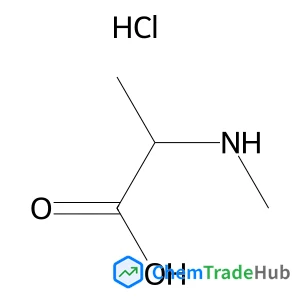
推荐化合物

推荐供应商






免责声明
本页面提供的学术期刊信息仅供参考和研究使用。我们与任何期刊出版商均无关联,也不处理投稿事宜。如有投稿相关咨询,请直接联系相关期刊出版商。
如发现页面信息有误,请发送邮件至 support@chemtradehub.com 联系我们。我们将及时核实并处理您的问题。