


![[5-fluoro-2-(morpholine-4-carbonyl)phenyl]boronic acid structure](https://cnstatic.chemtradehub.com/structs/121/1217501-26-2-505c.webp "[5-fluoro-2-(morpholine-4-carbonyl)phenyl]boronic acid structure")
Unimolecular photolysis mechanisms of formamide: the effect of thermal energy
文献信息
发布日期
2020-10-28
DOI
10.1039/D0CP03718D
影响因子
3.676
作者
Parichart Suwannakham, Kritsana Sagarik
查看原文
摘要
The photochemistry of molecules with peptide bonds is of both theoretical and experimental interest. Among these molecules, formamide (HCONH2) has been frequently selected as a representative in the study of proteins. Because several fundamental questions remained unanswered, particularly the role of thermal energy, the unimolecular photodissociations of HCONH2 were studied using the CASPT2(6,9)/aug-cc-pVDZ method and transition state theory (TST). The theoretical results verify that C–N dissociation is both kinetically and thermodynamically favorable in the S1 state. In addition, the dissociated radical products (HCO and NH2) could be precursors in the other dissociation channels owing to their high reactivities. The NH3–CO and NH3–OC H-bond complexes were reportedly observed to display the highest quantum yield in a UV experiment because the processes for determining the rates of isomerization dissociations of HCO and NH2 (which involve formyl hydrogen transfer) are spontaneous and kinetically favorable. Similarly, the van der Waals complex between HNCO and H2 represents the common end product with HCO and NH2 as the precursors. This is because the S1 and T1 relax-scan potential energy curves for the dehydrogenation straightforwardly intersect the S0 state with approximately similar structures at the intersection points. Therefore, the promotion of the intersystem crossing by a noble-gas cryogenic matrix appears inessential as previously reported. In contrast, we conjectured that the xenon matrix used in the UV experiment helps promote the van der Waals complex by reducing the energy barriers for dehydrogenation rather than by enhancing the rate of intersystem crossing from the singlet to triplet state. It was concluded that HCN, HNC, and H2O (dehydration) were formed via a two-step process, wherein, the cleavage of the C–O bond in formamidic acid first occurs in the S1 state. This is followed by the hydrogen/proton transfer from HCNH to OH on barrierless potentials. Overall, the mechanisms proposed in this work reveal the role of thermal energy and effects of variations in the multiconfigurational characteristics along the potential energy curves in detail. The available information on these aspects is limited, and the present results could provide insights into unimolecular photodissociations; these could be beneficial in future theoretical and experimental studies on this and other similar systems.
期刊推荐
Photochemical & Photobiological Sciences
Contact Lens & Anterior Eye
Nature Reviews Drug Discovery

Physical Chemistry Chemical Physics
Journal of Enzyme inhibition and Medicinal Chemistry
Molecular Diversity
Faraday Discussions
Environmental Toxicology and Pharmacology
Foundations of Chemistry
Journal of Medical Biochemistry
相关文献
Huperzine alkaloids: forty years of total syntheses
Lili Song
2023-10-11
Review Article
DOI: 10.1039/D3NP00029J
Emerging disorder in Gd2(Ti1−xZrx)2O7 pyrochlores matrices for radioactive waste disposal: symmetry lowering versus defect clustering
Armando di Biase, Carlo Castellano, Giorgia Confalonieri, Patrizia Fumagalli, Simone Tumiati, Davide Ceresoli
2023-10-26
Paper
DOI: 10.1039/D3TA04847K
Cu2ZnSnS4 monograin layer solar cells for flexible photovoltaic applications
Marit Kauk-Kuusik, Kristi Timmo, Maris Pilvet, Katri Muska, Mati Danilson, Jüri Krustok, Raavo Josepson, Valdek Mikli, Maarja Grossberg-Kuusk
2023-10-23
Review Article
DOI: 10.1039/D3TA04541B
Unraveling ligand exchange reactions in linear neutral Au(i) and Cu(i) N-heterocyclic carbene complexes for biological applications
Gustavo C. Rodrigues, Manoel V. F. Barrionuevo, Miguel A. San-Miguel, Camilla Abbehausen
2023-12-27
Paper
DOI: 10.1039/D3NJ04945K
Synthesis and spontaneous self-assembly of non-planar aromatic amide macrocycles
Rabban Rabban, Jinti Moni Kumar, Naiwrit Karmodak, Bappaditya Gole
2023-11-27
Communication
DOI: 10.1039/D3NJ05283D
Strategies and tactics for the synthesis of lipid I and II and shortened analogues: functional building blocks of bacterial cell wall biosynthesis
Christina Braun, Lukas Martin Wingen, Dirk Menche
2023-07-26
Review Article
DOI: 10.1039/D3NP00018D
Remarkable thermoelectric efficiency of cubic antiperovskites Rb3X(Se & Te)I with strong anharmonicity
Shuming Zeng, Qian Shen, Lina Guo, Yinchang Zhao, Hao Huang, Yusong Tu
2023-10-16
Paper
DOI: 10.1039/D3TA04338J
您可能还喜欢
化合物问答
4-[[6-(3-苯基苯基)-7H-嘌呤-2-基]氨基]苯磺酰胺(CAS号:2079895-42-2)适用哪些法规指南?
该化合物需遵循REACH法规以确保其安全使用和管理。同时,根据其潜在的生物降解性和毒性,也需要符合GHS分类中的相应要求。此外,若用于医药或食品相关领域,则还需...
2079895-42-24-{[6-(3-Biphenylyl)...
化合物问答
反式-度骨化醇(CAS号:74007-20-8)的物理化学性质是什么?
反式-度骨化醇是一种脂溶性维生素D3的衍生物,呈无色或白色结晶性粉末,不溶于水,溶于乙醇、丙酮、氯仿等有机溶剂。其分子式为C28H44O,分子量为404.65。...
74007-20-8trans-Doxercalcifero...
化合物问答
莲花掌苷(CAS号:59282-56-3)的市场或研究趋势如何?
莲花掌苷作为一种天然产物,近年来在抗炎、抗癌等生物活性研究方面显示出一定的潜力,因此市场需求逐渐增长。市场动态方面,随着天然产物开发的深入,预计该化合物的研究会...
59282-56-3Lindleyin
化合物问答
2-溴-6-(吡咯烷-1-基)吡啶-4-硼酸频那醇酯(CAS号:1150271-64-9)应用于哪些行业?
2-溴-6-(吡咯烷-1-基)吡啶-4-硼酸频那醇酯在医药领域有着广泛的应用,它可以用作药物合成中的中间体。此外,它还可以用于有机合成,特别是在构建复杂杂环化合...
1150271-64-92-Bromo-6-(1-pyrroli...
化合物问答
什么是methyl 2-(4-bromophenyl)-3-methylbutanoate(CAS号:1061284-70-5)?
methyl 2-(4-溴苯基)-3-甲基丁酸甲酯是一种化学物质,分子式为C12H13BrO2。它是一种有机化合物,具有一定的挥发性和易燃性。
1061284-70-52-(4-Bromo-phenyl)-3...
化合物问答
CJC1-295(CAS号:863288-34-0)的物理化学性质是什么?
CJC1-295是一种具有复杂肽链结构的化合物,其分子量约为1875 Da。该化合物在水中具有一定的溶解性,但在有机溶剂中的溶解性不佳。它是一种反应活性化合物,...
863288-34-0L-tyrosyl-D-alanyl-L...
化合物问答
三正丁基锍碘(CAS号:18146-62-8)的市场或研究趋势如何?
三正丁基锍碘作为一种重要的有机硫化合物,主要用于有机合成中作为亲电试剂。近年来,由于其在合成中的广泛应用,市场对其需求持续增长。此外,随着绿色化学的发展,对其替...
18146-62-8Tributylsulfonium io...
化合物问答
雌二醇-[13C3]同位素内标(CAS号:1261254-48-1)通常如何合成?
雌二醇-[13C3]同位素内标通常通过在雌二醇分子中引入[13C3]同位素来合成。常见的方法是通过化学标记反应,如与[13C3]标记的甲基溴化物进行亲核取代反应...
1261254-48-117beta-Estradiol-2,3...
化合物问答
N1-(2-吡啶甲基)-N2-(2-甲基-1-萘基)草酰胺(CAS号:2611225-93-3)的物理化学性质是什么?
N1-(2-吡啶甲基)-N2-(2-甲基-1-萘基)草酰胺为固体化合物,具有良好的结晶形态,分子量为340.34 g/mol。该化合物在水中的溶解度较低,但在有...
2611225-93-3N-(2-Methyl-1-naphth...
化合物问答
如何处理含有十五碳烯酸甲酯(顺-10)(C15:1)标准品(CAS号:90176-52-6)的废料?
含有十五碳烯酸甲酯(顺-10)(C15:1)标准品的废料应首先进行适当收集和储存,避免与其他化学品混合。然后,可采用焚烧或交由专业废物处理公司进行处理。处理过程...
90176-52-6(Z)-10-Pentadecenoic...
来源期刊
Physical Chemistry Chemical Physics
CiteScore:
5.5
自引率:
10.3%
年发文量:
3036
Physical Chemistry Chemical Physics (PCCP) is an international journal co-owned by 19 physical chemistry and physics societies from around the world. This journal publishes original, cutting-edge research in physical chemistry, chemical physics and biophysical chemistry. To be suitable for publication in PCCP, articles must include significant innovation and/or insight into physical chemistry; this is the most important criterion that reviewers and Editors will judge against when evaluating submissions. The journal has a broad scope and welcomes contributions spanning experiment, theory, computation and data science. Topical coverage includes spectroscopy, dynamics, kinetics, statistical mechanics, thermodynamics, electrochemistry, catalysis, surface science, quantum mechanics, quantum computing and machine learning. Interdisciplinary research areas such as polymers and soft matter, materials, nanoscience, energy, surfaces/interfaces, and biophysical chemistry are welcomed if they demonstrate significant innovation and/or insight into physical chemistry. Joined experimental/theoretical studies are particularly appreciated when complementary and based on up-to-date approaches.
推荐化合物
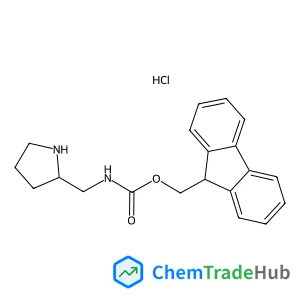
(S)-(9H-Fluoren-9-yl)methyl (pyrrolidin-2-ylmethyl)carbamate hydrochloride
CAS号:
1217813-15-4
分子式:
C20H23ClN2O2
推荐供应商





免责声明
本页面提供的学术期刊信息仅供参考和研究使用。我们与任何期刊出版商均无关联,也不处理投稿事宜。如有投稿相关咨询,请直接联系相关期刊出版商。
如发现页面信息有误,请发送邮件至 support@chemtradehub.com 联系我们。我们将及时核实并处理您的问题。