








![2-Methyl-2-propanyl [(2S)-1-hydroxy-3-(4-hydroxyphenyl)-2-propanyl]carbamate structure](https://cnstatic.chemtradehub.com/structs/833/83345-46-4-eec2.webp "2-Methyl-2-propanyl [(2S)-1-hydroxy-3-(4-hydroxyphenyl)-2-propanyl]carbamate structure")
Entropic stabilization plays a key role in the non-uniform distribution of oxygen ions and vacancy defects in gadolinium-doped ceria
文献信息
发布日期
2020-11-25
DOI
10.1039/D0CP03743E
影响因子
3.676
作者
Methary Jaipal, Bharathi Bandi, Abhijit Chatterjee
查看原文
摘要
Gadolinium-doped ceria (GDC) is an important fast oxygen ion conductor. O2−-ion hopping in different cation environments of GDC is probed using molecular dynamics (MD). We find that at equilibrium, the O2−-ions and vacancy defects arrange themselves around the relatively immobile cations in a way such that pairs of O2−-ions and vacancy defect (O2−–vac pair) are in greater numbers in some cation environments than others. The difference in O2−–vac pair numbers is shown to originate from entropic effects in the cation environments. As a consequence of the entropic effect, the O2−–vac pair distribution is practically independent of temperature between 974 and 1874 K. Even the O2− ion hopping rate and barrier are influenced by the entropic effect. This observation is in stark contrast with the standard belief that energetic interactions dominate in solid oxide materials, and entropic factors can be ignored. By analyzing the cation environment effect using k-means clustering, nine environment clusters are identified that are associated with unique values of the activation barrier and entropy. Comparisons to yttria stabilized zirconia (YSZ), yet another popular fast oxygen ion conductor, are made.
相关文献
Ab initio study of the electrochemical H2SO4/Pt(111) interface
Aleix Comas-Vives, Jochen Bandlow, Timo Jacob
2012-11-12
Paper
DOI: 10.1039/C2CP43054A
Products of the quenching of NO A 2Σ+ (v = 0) by N2O and CO2
Maximiliano A. Burgos Paci, Julian Few, Sarah Gowrie, Gus Hancock
2013-01-08
Paper
DOI: 10.1039/C2CP43878J
CO2 capture in poly(ionic liquid) membranes: atomistic insight into the role of anions
Weijie Fang, Zhonglin Luo, Jianwen Jiang
2012-11-27
Paper
DOI: 10.1039/C2CP42837G
Proton conductivity of columnar ceria thin-films grown by chemical vapor deposition
Tae-Sik Oh, David A. Boyd, David G. Goodwin
2012-12-03
Paper
DOI: 10.1039/C2CP43036C
Local structure of ionic liquids probed by self-quenching of thiobenzophenone
Miyuki Tanaka, Tomoaki Yago, Masanobu Wakasa
2012-11-14
Paper
DOI: 10.1039/C2CP42766D
Coherent transient spectroscopy with continuous wave quantum cascade lasers
James M. R. Kirkbride, Sarah K. Causier, Elin A. McCormack, Grant A. D. Ritchie
2013-01-04
Paper
DOI: 10.1039/C2CP44116K
Formation and infrared absorption of protonated naphthalenes (1-C10H9+ and 2-C10H9+) and their neutral counterparts in solid para-hydrogen
Mohammed Bahou, Yu-Jong Wu
2012-12-03
Paper
DOI: 10.1039/C2CP43143B
Recent progress in the development and use of organic ionic plastic crystal electrolytes
Jennifer M. Pringle
2012-11-26
Perspective
DOI: 10.1039/C2CP43267F
A quantum mechanics/molecular dynamics study of electric field gradient fluctuations in the liquid phase. The case of Na+ in aqueous solution
Kęstutis Aidas, Hans Ågren, Jacob Kongsted
2012-11-26
Paper
DOI: 10.1039/C2CP41993A
Theoretical investigations of ferrocene/ferrocenium solvation in imidazolium-based room-temperature ionic liquids
Yang Yang, Lei Yu
2012-12-14
Paper
DOI: 10.1039/C2CP42876H
您可能还喜欢
化合物问答
(3-氨苯基)环丙基甲酮(CAS号:162174-75-6)的主要用途是什么?
(3-氨苯基)环丙基甲酮主要用于合成化学中间体,特别是在药物化学领域作为原料。它还可以用于有机合成反应中,作为催化剂或反应物。
162174-75-6(3-Aminophenyl)(cycl...
化合物问答
如何储存亚胺菌(CAS号:136470-79-6)?
亚胺菌应储存在干燥、阴凉处,避免直接暴露于光线下。建议使用密封容器储存,防止吸潮和污染。具体的储存条件应参考产品的安全数据表(MSDS)或药品说明书。
136470-79-6Abacavir EP Impurity...
化合物问答
2-氯-2,2-二氟乙酰胺(CAS号:354-28-9)应用于哪些行业?
2-氯-2,2-二氟乙酰胺在医药、聚合物、传感器、半导体等领域有广泛应用。在医药领域,它作为中间体用于合成其他药物;在聚合物领域,用作聚合引发剂或稳定剂;在传感...
354-28-92-Chloro-2,2-difluor...
化合物问答
处理4-甲基-3-硝基-1,1-联苯(CAS号:53812-68-3)时应注意哪些实验室安全事项?
在处理4-甲基-3-硝基-1,1-联苯时,应佩戴手套、护目镜和实验室外套等个人防护装备(PPE),确保在通风橱中操作以减少吸入风险。若发生泄露,应立即使用沙子或...
53812-68-34'-Methyl-3-nitro-1,...
化合物问答
(2S)-羟基(苯基)乙酸 (2R)-N-苄基-1-(4-甲氧基苯基)丙-2-胺盐(CAS号:188690-84-8)应用于哪些行业?
该化合物广泛应用于医药、聚合物和半导体行业。在医药领域,它是某些药物中间体的重要组成部分;在聚合物领域,可用作增塑剂;在半导体行业,可用于制造光刻胶。
188690-84-8Benzeneacetic acid, ...
化合物问答
在合成中是否有芬苯哒唑砜-D3标准品(CAS号:1228182-49-7)的替代品?
芬苯哒唑砜-D3标准品的替代品可能包括类似的苯并咪唑类化合物,如芬苯哒唑本身或其非同位素标记版本。这些替代品在结构上与芬苯哒唑砜-D3相似,但在具体应用中需进行...
1228182-49-7(~2~H_3_)Methyl [5-(...
化合物问答
2-氟-4-硝基苯乙酸(CAS号:315228-19-4)通常如何合成?
2-氟-4-硝基苯乙酸可以通过一系列化学反应合成,通常是从4-氟苯胺开始,首先进行硝化反应生成4-氟-2-硝基苯胺,然后进行乙酰化反应得到目标产物。具体的合成步...
315228-19-42-(2-fluoro-4-nitrop...
化合物问答
2-氟-4-甲氧基苯乙酸(CAS号:883531-28-0)通常如何合成?
2-氟-4-甲氧基苯乙酸通常通过将4-甲氧基苯乙酸与氟化试剂(如氟化氰)反应来合成。反应通常在无水条件下进行,使用催化剂如六氟磷酸锂或四氟硼酸锂以提高选择性和产...
883531-28-02-Fluoro-4-methoxyph...
化合物问答
什么是4SC 202;4SC202(CAS号:1186222-89-8)?
4SC 202;4SC202是一种化学化合物,其化学名称为(2E)-N-(2-氨基苯基)-3-(1-{[4-(1-甲基-1H-吡唑-4-基)苯基]磺酰基}-1H...
1186222-89-8(2E)-N-(2-Aminopheny...
132980-99-53,5-Difluorobenzamid...
来源期刊
Physical Chemistry Chemical Physics

CiteScore:
5.5
自引率:
10.3%
年发文量:
3036
Physical Chemistry Chemical Physics (PCCP) is an international journal co-owned by 19 physical chemistry and physics societies from around the world. This journal publishes original, cutting-edge research in physical chemistry, chemical physics and biophysical chemistry. To be suitable for publication in PCCP, articles must include significant innovation and/or insight into physical chemistry; this is the most important criterion that reviewers and Editors will judge against when evaluating submissions. The journal has a broad scope and welcomes contributions spanning experiment, theory, computation and data science. Topical coverage includes spectroscopy, dynamics, kinetics, statistical mechanics, thermodynamics, electrochemistry, catalysis, surface science, quantum mechanics, quantum computing and machine learning. Interdisciplinary research areas such as polymers and soft matter, materials, nanoscience, energy, surfaces/interfaces, and biophysical chemistry are welcomed if they demonstrate significant innovation and/or insight into physical chemistry. Joined experimental/theoretical studies are particularly appreciated when complementary and based on up-to-date approaches.
推荐化合物
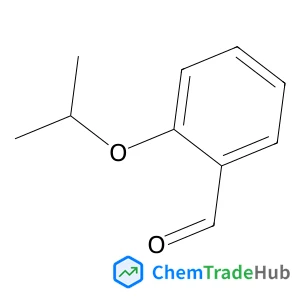
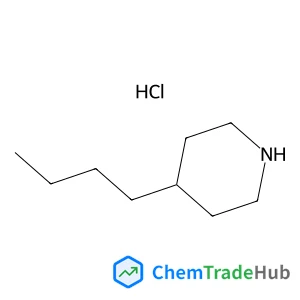
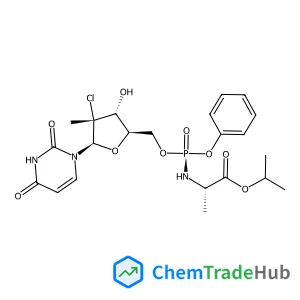
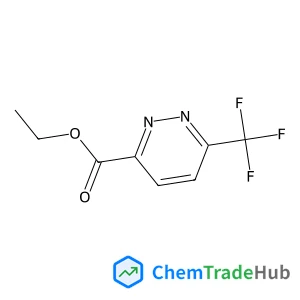
推荐供应商




免责声明
本页面提供的学术期刊信息仅供参考和研究使用。我们与任何期刊出版商均无关联,也不处理投稿事宜。如有投稿相关咨询,请直接联系相关期刊出版商。
如发现页面信息有误,请发送邮件至 support@chemtradehub.com 联系我们。我们将及时核实并处理您的问题。