










![(2E)-4-[(1R,2S,8R,19S,21R)-14-Hydroxy-11-isopropenyl-8,23,23-trimethyl-5-(3-methyl-2-buten-1-yl)-16,20-dioxo-3,7,22-trioxaheptacyclo[17.4.1.1~8,12~.0~2,17~.0~2,21~.0~4,15~.0~6,13~]pentacosa-4(15),5,13
,17-tetraen-21-yl]-2-methyl-2-butenoic acid structure](https://cnstatic.chemtradehub.com/structs/173/173867-04-4-d2d3.webp "(2E)-4-[(1R,2S,8R,19S,21R)-14-Hydroxy-11-isopropenyl-8,23,23-trimethyl-5-(3-methyl-2-buten-1-yl)-16,20-dioxo-3,7,22-trioxaheptacyclo[17.4.1.1~8,12~.0~2,17~.0~2,21~.0~4,15~.0~6,13~]pentacosa-4(15),5,13
,17-tetraen-21-yl]-2-methyl-2-butenoic acid structure")
Photoisomerization-mechanism-associated excited-state hydrogen transfer in 2′-hydroxychalcone revealed by on-the-fly trajectory surface-hopping molecular dynamics simulation
文献信息
发布日期
2021-01-26
DOI
10.1039/D0CP06668K
影响因子
3.676
作者
Ying Hu, Ling Yue, Feng Long Gu
查看原文
摘要
By performing global-switching on-the-fly trajectory surface-hopping molecular dynamics simulation at the OM2/MRCI (14,15) quantum level, we probed the S3(ππ*) photoisomerization mechanisms associated with excited-state intramolecular hydrogen transfer for 2′-hydroxychalcone (2HC) within the interwoven conical intersection networks from four singlet electronic states (S3, S2, S1, and S0). The simulated quantum yields of 0.03 for cis-to-trans and zero for trans-to-cis photoisomerization were due to almost all the conical intersections being localized either in the cis-2HC or in trans-2HC region, and there was little chance for sampling trajectories to reach the rotation conical intersection (S1/S0) in between cis-2HC and trans-2HC that is key for reactive isomerization. The potential energy well on the S1 state in the trans-2HC region prevents trajectories from trans-to-cis photoisomerization, while the fact there is no well on S1 state in cis-2HC region opens a few chances for trajectories to reach the rotation conical intersections. The present simulation found that excited-state intramolecular hydrogen transfers in 2HC have a negative impact for reactive isomerization, and that hydrogen transfers take place on the S1 state, while back-transfer on the S0 state prevents sampling trajectories reaching rotational conical intersections. It was realized that it could be possible to enhance the quantum yield of 2HC photoisomerization by suppressing the hydrogen transfer (such as by changing an electron-donating substitution or adjusting the substitution position to decrease the acidity of the phenol group). From a perspective view of the potential energy surfaces, the theoretical design of such 2HC derivatives could enhance (control) the quantum yield by shifting the conical intersections away from the cis- and trans-region.
相关文献
The reactivity of N-vinylcarbazole in RAFT polymerization: trithiocarbonates deliver optimal control for the synthesis of homopolymers and block copolymers
Carlos Guerrero-Sanchez, Graeme Moad
2013-04-30
Paper
DOI: 10.1039/C3PY00487B
A novel cyclodextrin-containing pH-responsive star polymer for nanostructure fabrication and drug delivery
Mingming Zhang, Qingqing Xiong, Jinqian Chen, Yinsong Wang
2013-07-05
Paper
DOI: 10.1039/C3PY00656E
Thiourea-functionalized poly(phenyleneethynylene): fluorescent chemosensors for anions and cations
Xue Yong, Wen Wan, Mingjian Su, Wenwei You, Xinwei Lu, Yichen Yan, Jinqing Qu, Ruiyuan Liu, Toshio Masuda
2013-05-09
Paper
DOI: 10.1039/C3PY00359K
Orderly arranged NLO materials on exfoliated layered templates based on dendrons with alternating moieties at the periphery
Ya-Yu Siao, Shi-Min Shau, Wei-Hsiang Tsai, Yung-Chung Chen, Tain-Hao Wu, Jiang-Jen Lin, Tzong-Ming Wu, Rong-Ho Lee, Ru-Jong Jeng
2013-02-14
Paper
DOI: 10.1039/C3PY00034F
Hybrid organic–inorganic nanomaterial sensors for selective detection of Au3+ using rhodamine-based modified polyacrylic acid (PAA)-coated FeNPs
Noi Niamsa, Chatthai Kaewtong, Weerapol Srinonmuang, Banchob Wanno, Buncha Pulpoka, Thawatchai Tuntulani
2013-03-04
Paper
DOI: 10.1039/C3PY00229B
Solventannealing induced phase separation and dewetting in PMMA/SAN blend films: composition dependence
Shuangshuang Zhang, Tongfei Shi, Jichun You, Yongjin Li
2013-05-01
Paper
DOI: 10.1039/C3PY00290J
Post-polymerization modification of reactive polymers derived from vinylcyclopropane: 1. synthesis and thermo-responsive behaviour
Denis H. Seuyep N., Gerrit A. Luinstra, Patrick Theato
2013-02-18
Paper
DOI: 10.1039/C3PY00109A
An efficient method to synthesize vinyl ethers (VEs) that bear various halogenated or functional groups and their radical copolymerization with chlorotrifluoroethylene (CTFE) to yield functional poly(VE-alt-CTFE) alternated copolymers
Ali Alaaeddine, Guillaume Couture, Bruno Ameduri
2013-05-09
Paper
DOI: 10.1039/C3PY00443K
High molar mass segmented macromolecular architectures by nitroxide mediated polymerisation
Lionel Petton, Edwin P. C. Mes, Hanno Van Der Wal, Sven Claessens, Freddy Van Damme, Sam Verbrugghe, Filip E. Du Prez
2013-06-14
Paper
DOI: 10.1039/C3PY00600J
SET-LRP of 2-hydroxyethyl acrylate in protic and dipolar aprotic solvents
Xuefei Leng, Nga H. Nguyen, Virgil Percec
2013-02-07
Paper
DOI: 10.1039/C3PY00048F
您可能还喜欢
化合物问答
(3-氨苯基)环丙基甲酮(CAS号:162174-75-6)的主要用途是什么?
(3-氨苯基)环丙基甲酮主要用于合成化学中间体,特别是在药物化学领域作为原料。它还可以用于有机合成反应中,作为催化剂或反应物。
162174-75-6(3-Aminophenyl)(cycl...
化合物问答
如何储存亚胺菌(CAS号:136470-79-6)?
亚胺菌应储存在干燥、阴凉处,避免直接暴露于光线下。建议使用密封容器储存,防止吸潮和污染。具体的储存条件应参考产品的安全数据表(MSDS)或药品说明书。
136470-79-6Abacavir EP Impurity...
化合物问答
2-氯-2,2-二氟乙酰胺(CAS号:354-28-9)应用于哪些行业?
2-氯-2,2-二氟乙酰胺在医药、聚合物、传感器、半导体等领域有广泛应用。在医药领域,它作为中间体用于合成其他药物;在聚合物领域,用作聚合引发剂或稳定剂;在传感...
354-28-92-Chloro-2,2-difluor...
化合物问答
处理4-甲基-3-硝基-1,1-联苯(CAS号:53812-68-3)时应注意哪些实验室安全事项?
在处理4-甲基-3-硝基-1,1-联苯时,应佩戴手套、护目镜和实验室外套等个人防护装备(PPE),确保在通风橱中操作以减少吸入风险。若发生泄露,应立即使用沙子或...
53812-68-34'-Methyl-3-nitro-1,...
化合物问答
(2S)-羟基(苯基)乙酸 (2R)-N-苄基-1-(4-甲氧基苯基)丙-2-胺盐(CAS号:188690-84-8)应用于哪些行业?
该化合物广泛应用于医药、聚合物和半导体行业。在医药领域,它是某些药物中间体的重要组成部分;在聚合物领域,可用作增塑剂;在半导体行业,可用于制造光刻胶。
188690-84-8Benzeneacetic acid, ...
化合物问答
在合成中是否有芬苯哒唑砜-D3标准品(CAS号:1228182-49-7)的替代品?
芬苯哒唑砜-D3标准品的替代品可能包括类似的苯并咪唑类化合物,如芬苯哒唑本身或其非同位素标记版本。这些替代品在结构上与芬苯哒唑砜-D3相似,但在具体应用中需进行...
1228182-49-7(~2~H_3_)Methyl [5-(...
化合物问答
2-氟-4-硝基苯乙酸(CAS号:315228-19-4)通常如何合成?
2-氟-4-硝基苯乙酸可以通过一系列化学反应合成,通常是从4-氟苯胺开始,首先进行硝化反应生成4-氟-2-硝基苯胺,然后进行乙酰化反应得到目标产物。具体的合成步...
315228-19-42-(2-fluoro-4-nitrop...
化合物问答
2-氟-4-甲氧基苯乙酸(CAS号:883531-28-0)通常如何合成?
2-氟-4-甲氧基苯乙酸通常通过将4-甲氧基苯乙酸与氟化试剂(如氟化氰)反应来合成。反应通常在无水条件下进行,使用催化剂如六氟磷酸锂或四氟硼酸锂以提高选择性和产...
883531-28-02-Fluoro-4-methoxyph...
化合物问答
什么是4SC 202;4SC202(CAS号:1186222-89-8)?
4SC 202;4SC202是一种化学化合物,其化学名称为(2E)-N-(2-氨基苯基)-3-(1-{[4-(1-甲基-1H-吡唑-4-基)苯基]磺酰基}-1H...
1186222-89-8(2E)-N-(2-Aminopheny...
132980-99-53,5-Difluorobenzamid...
来源期刊
Physical Chemistry Chemical Physics

CiteScore:
5.5
自引率:
10.3%
年发文量:
3036
Physical Chemistry Chemical Physics (PCCP) is an international journal co-owned by 19 physical chemistry and physics societies from around the world. This journal publishes original, cutting-edge research in physical chemistry, chemical physics and biophysical chemistry. To be suitable for publication in PCCP, articles must include significant innovation and/or insight into physical chemistry; this is the most important criterion that reviewers and Editors will judge against when evaluating submissions. The journal has a broad scope and welcomes contributions spanning experiment, theory, computation and data science. Topical coverage includes spectroscopy, dynamics, kinetics, statistical mechanics, thermodynamics, electrochemistry, catalysis, surface science, quantum mechanics, quantum computing and machine learning. Interdisciplinary research areas such as polymers and soft matter, materials, nanoscience, energy, surfaces/interfaces, and biophysical chemistry are welcomed if they demonstrate significant innovation and/or insight into physical chemistry. Joined experimental/theoretical studies are particularly appreciated when complementary and based on up-to-date approaches.
推荐化合物
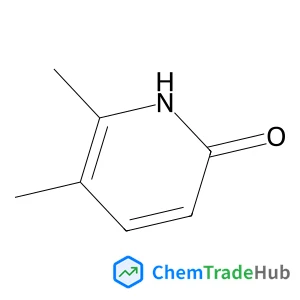
![Benzyl spiro[indole-3,4'-piperidine]-1(2H)-carboxylate hydrochloride (1:1) structure](https://cnstatic.chemtradehub.com/structs/159/159635-46-8-8de0.webp "Benzyl spiro[indole-3,4'-piperidine]-1(2H)-carboxylate hydrochloride (1:1) structure")
Benzyl spiro[indole-3,4'-piperidine]-1(2H)-carboxylate hydrochloride (1:1)
CAS号:
159635-46-8
分子式:
C20H23ClN2O2
![4-[(2,4-Dihydroxyphenyl)diazenyl]-5-hydroxy-2,7-naphthalenedisulfonic acid structure](https://cnstatic.chemtradehub.com/structs/362/3627-01-8-79ac.webp "4-[(2,4-Dihydroxyphenyl)diazenyl]-5-hydroxy-2,7-naphthalenedisulfonic acid structure")
4-[(2,4-Dihydroxyphenyl)diazenyl]-5-hydroxy-2,7-naphthalenedisulfonic acid
CAS号:
3627-01-8
分子式:
C16H12N2O9S2
推荐供应商






免责声明
本页面提供的学术期刊信息仅供参考和研究使用。我们与任何期刊出版商均无关联,也不处理投稿事宜。如有投稿相关咨询,请直接联系相关期刊出版商。
如发现页面信息有误,请发送邮件至 support@chemtradehub.com 联系我们。我们将及时核实并处理您的问题。